Even Korean Air, the last stronghold, shifts to emergency management as Middle East crisis spreads
- Input
- 2026-03-31 11:28:43
- Updated
- 2026-03-31 11:28:43
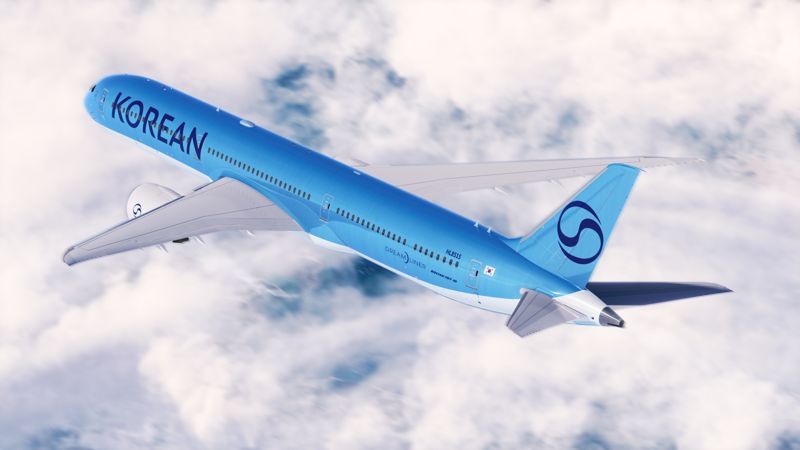
According to The Financial News, Korean Air Co., Ltd. (Korean Air), the country’s largest airline, is placing the entire company under an emergency management regime in response to a sharp rise in oil prices triggered by the Middle East crisis. It is the third carrier to do so, following T'way Air and Asiana Airlines, signaling that crisis-response measures are spreading across the aviation industry. Surging fuel costs are directly eroding profitability and heightening a sense of crisis throughout the sector.
On the 31st, the aviation industry reported that Kee Hong Woo, vice chairman of Korean Air, announced via the company’s intranet that an emergency management system would take effect from April. The market had believed Korean Air was in a relatively better position than Asiana Airlines, which had already moved to emergency management, but the prolonged conflict appears to have prompted the airline to act more swiftly than expected.
Woo stated, "At the corporate level, we will shift to an emergency management system starting in April to prepare for rising costs caused by the surge in fuel prices, and we will immediately implement phased response measures tailored to different oil price levels to drive company-wide cost efficiencies." He added, "If this period of high oil prices continues for a long time, it is likely to cause serious disruption to achieving the annual business targets we have set."
Korean Air had based its annual business plan on a fuel price of 220 cents per gallon. However, due to the spike in oil prices driven by the war in the Middle East, the refueling price for April is projected to soar to around 450 cents per gallon, dramatically increasing the airline’s monthly fuel burden.
Woo emphasized, "These measures are not about one-off cost cutting. Our aim is to use this as an opportunity to strengthen our structural fundamentals, successfully complete our integration, and lay the groundwork for stable future growth." He continued, "I believe that, drawing on our underlying strength, we will be able to overcome this crisis wisely as well."
Following the outbreak of war in the Middle East, T'way Air was the first in the industry to declare an emergency management regime on the 16th. Asiana Airlines, the nation’s second-largest carrier, followed on the 25th.
Industry observers expect that if the war drags on, other airlines will also move into emergency management one after another. Fuel costs used to account for about 30% of aircraft operating expenses, but with the recent surge in oil prices, that share is projected to rise to around 50%.
Low-cost carrier (LCC) operators such as Air Busan, Jin Air, and Air Premia are already reducing the number of flights they operate in an effort to minimize losses.
In response, the government has reportedly begun reviewing possible support measures for airlines, including the use of government-held jet fuel reserves. This marks a shift from its previous stance of refraining from direct intervention in airfare issues stemming from soaring fuel costs.
Fuel surcharges are additional fees that airlines add to ticket prices to offset higher fuel costs, and they are adjusted monthly. They are set in stages based on the Mean of Platts Singapore Kerosene (MOPS Kerosene) price and are only imposed when prices exceed a certain threshold.
For April, the fuel surcharge jumped to level 18, up 12 levels from the previous month, as the average benchmark price rose sharply. This is the highest level since the system was introduced. Once each airline’s cost structure is factored in, the actual burden on passengers becomes even greater.
As a result, the fuel surcharge on Korean Air’s Tokyo route has surged by about 171% in just one month, from 21,000 won to 57,000 won.
hoya0222@fnnews.com Kim Dong-ho Reporter