Deaths from occupational accidents rose by 16 to 605 last year... 52 more deaths from falls, collisions and collapses
- Input
- 2026-03-31 12:00:00
- Updated
- 2026-03-31 12:00:00
Over the same period, 872 fatal accident cases were approved for survivors' benefits, up 45 from a year earlier. Authorities attribute this mainly to an increase in approvals for labor providers.
To reduce occupational accidents, the government plans to devote more administrative resources to vulnerable areas such as small businesses, while simultaneously pursuing institutional reforms including the Safe Workplace Reporting Reward Program.
According to supplementary statistics on occupational accidents released on the 31st by the Ministry of Employment and Labor (MOEL), there were 605 deaths from accidents subject to accident investigations last year, across 573 cases. This represents an increase of 16 people, or 2.7%, compared with 2024, when there were 589 deaths.
By industry, deaths increased in the Construction industry and other sectors, excluding the manufacturing industry. Deaths in the Construction industry rose by 10 to 286, while other industries saw an increase of 23 to 161. In construction, a rise of 25 deaths at small construction sites with a project value under 500 million won drove much of the overall increase. Among other sectors, deaths in Wholesale and Retail Trade (25 deaths) and in forestry and fisheries (18 deaths) rose by 9 and 11, respectively.
In the manufacturing industry, the number of deaths fell by 17 to 158.
By workplace size, smaller businesses saw larger increases in fatalities. At workplaces with 50 or more employees, deaths from occupational accidents rose by 4 to 254, while at workplaces with fewer than 50 employees, they increased by 12 to 351.
Workplaces with fewer than five employees recorded the sharpest rise, with deaths increasing by 22 to 174.
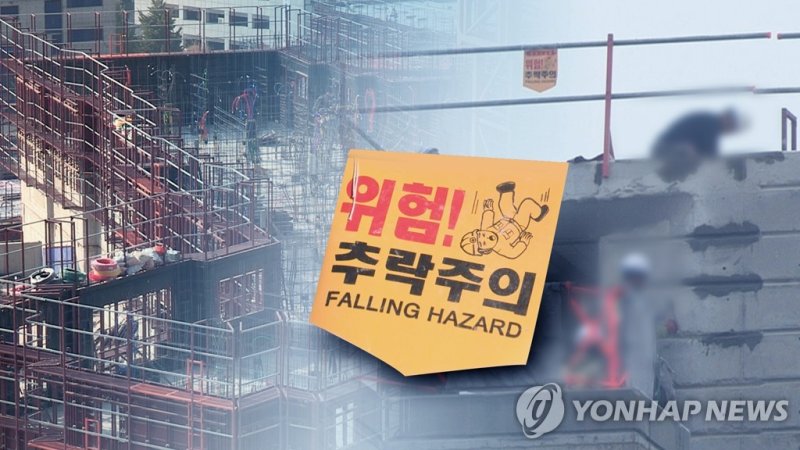
By type of accident, deaths caused by falls, collisions and collapses showed the largest increases. Falls and collisions are among the most frequent accident types at small businesses and worksites.
Deaths from falls totaled 72, from collisions 62, and from collapses 38. These figures represent increases of 22 people (9.7%), 12 people (24%), and 18 people (90%), respectively, compared with the previous year. In contrast, deaths from being struck by objects (72) and from entrapment (50) decreased by 11 and 16, respectively, over the same period.
Meanwhile, the number of deaths approved for survivors' benefits last year reached 872, an increase of 45. By industry, the Construction industry and Transport, Storage and Communications accounted for the largest shares, and by workplace size, workplaces with fewer than five employees showed the biggest increase.
By type of worker, approvals for labor providers rose sharply, increasing by 36 to a total of 137.
To curb occupational accidents, MOEL will ramp up the intensity of its administrative and financial efforts starting this year. It plans to fully implement dedicated management for small workplaces in high-risk industries (23,000 sites), conduct regular patrols, and deploy 1,000 Safe Workplace Guardians using private-sector resources.
Legal and institutional reforms will also proceed in parallel, with the aim of spreading a stronger safety culture.
The ministry plans to introduce the Safe Workplace Reporting Reward Program within the year, which will provide rewards to members of the public who identify and report workplace hazards. It will also continue to push for amendments to the Occupational Safety and Health Act that were included in the Comprehensive Occupational Safety Plan announced last September. Among the proposed changes is a provision allowing authorities to impose an administrative fine of up to 5% of operating profit on companies where three or more workers die from occupational accidents in a single year.
jhyuk@fnnews.com Jun-hyuk Kim Reporter