Government to Introduce Strategic Oil Reserve Swap Once Alternative Crude Is Secured
- Input
- 2026-03-31 11:30:00
- Updated
- 2026-03-31 11:30:00
[The Financial News]
The government will introduce a "government strategic oil reserve swap" system under which it first lends Middle Eastern crude from its strategic reserves to domestic refiners and later receives repayment in the form of alternative crude. The measure is intended to encourage refiners to secure substitute crude and to bridge the time gap caused by delays in its arrival. Rather than simply releasing reserves as in the past, the government aims to minimize supply shocks by operating the system as an "emergency lending" scheme.
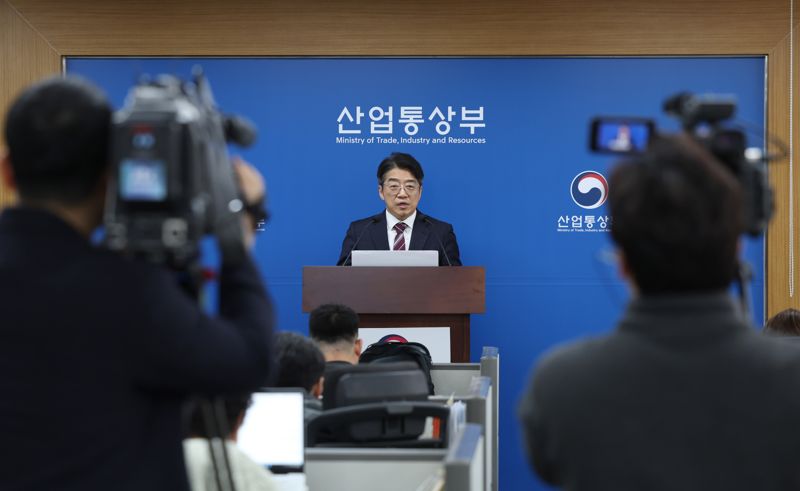
At a briefing of the Task Force on the Middle East Situation on March 31, Yang Ki-uk said, "We will operate the strategic oil reserves flexibly to bridge the time gap that arises while refiners are securing alternative supplies," adding, "We will supply oil in advance only when incoming volumes have been confirmed, and then receive repayment afterward."
The new system was designed in light of the fact that, if imports of Middle Eastern crude are disrupted, refiners may secure alternative cargoes from Africa, the Americas, or Central Asia, but it still takes several weeks for those shipments to arrive in Korea.
Once the government confirms that a refiner has secured and loaded alternative crude, it will provide oil from the strategic reserves first and then be repaid in crude when the alternative cargo reaches Korea. This is a "time swap" rather than a physical release, and the key objective is to minimize any gap in crude supply.
In particular, the swap system is designed not only to top up volumes but also to ease operational constraints on refiners. Refining facilities are optimized for specific crude characteristics, so even if a refiner secures alternative crude, it may not be able to feed it directly into the system if the blend ratio with existing Middle Eastern crude is not appropriate. By allowing refiners to exchange their alternative crude for Middle Eastern crude held in government reserves, the scheme is intended to remove these "blending constraints."
Yang explained, "Even if refiners secure alternative supplies from around the world, there are cases where they cannot be used immediately because of facility characteristics," and added, "The idea is to increase usability by allowing them to swap those volumes for Middle Eastern crude from the government’s strategic reserves."
The government has set the initial operating period of the system for April and May and plans to consider an extension depending on developments. A preliminary survey found that all four domestic refiners intend to participate, with total demand estimated at around 20 million barrels. Formal applications will be accepted starting today.
Yang said, "Based on the demand identified so far, we judge that there will be no major problems with crude supply through May," and noted, "If we combine the strategic oil reserve swap with efforts to secure alternative supplies, short-term supply instability should remain manageable."
The government stressed, however, that the purpose of the system is not to conserve strategic reserves, but to spur the private sector to secure alternative crude. By supplying reserves first but making this conditional on securing replacement volumes, the scheme is intended to promote diversification of supply sources.
Yang stated, "Rather than being a system to save strategic reserves, its significance lies in encouraging private refiners to actively search for alternative supplies," and added, "By allowing the government to swap the volumes that companies secure, we aim to strengthen the resilience of the supply chain."
The government also understands that refiners are working to bring in alternative crude from a wide range of regions, including Africa (Algeria, the Gabonese Republic, the Republic of the Congo), Central Asia (Kazakhstan), the Americas (the United States of America, Brazil, Colombia), and Asia-Oceania (Australia, the Independent State of Papua New Guinea).
Meanwhile, the government is keeping open the possibility of managing supply and demand not only for naphtha but for petrochemical products more broadly, and is reviewing response measures. Building on the export restrictions currently in place mainly for naphtha, it plans to monitor supply and demand across the petrochemical sector and consider additional steps if necessary.
In addition, to prevent supply disruptions in petrochemical products used in essential industries such as daily necessities and healthcare, the government plans to implement market-stabilizing measures, including a ban on hoarding. A government official said, "Because petrochemical products are linked to many industries, any export controls will be decided after comprehensively considering their impact on the broader industrial sector," and added, "We will devise the most efficient response measures by looking at both domestic supply stability and the implications for global supply chains."
[email protected] Reporter Park Ji-young Reporter