President Lee: "Middle East war has triggered an emergency warning... We may invoke the constitutional Emergency Financial and Economic Executive Order"
- Input
- 2026-03-31 10:56:08
- Updated
- 2026-03-31 10:56:08
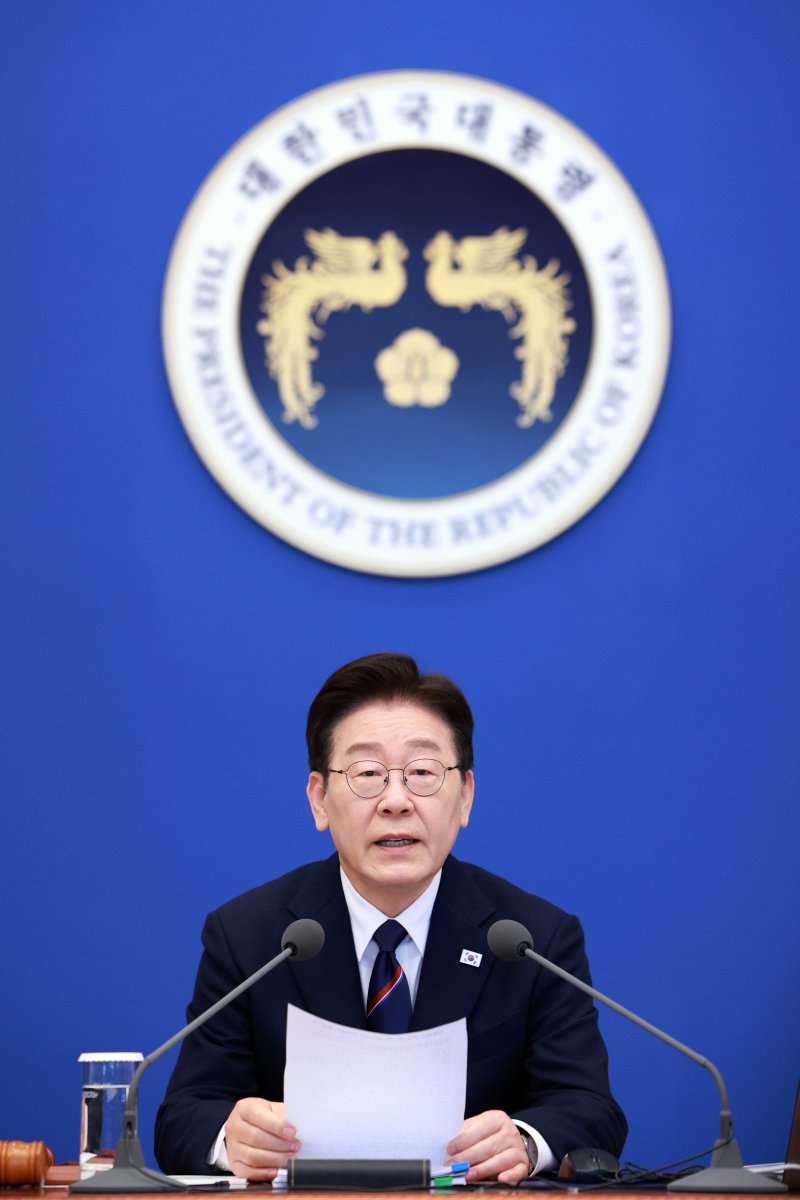
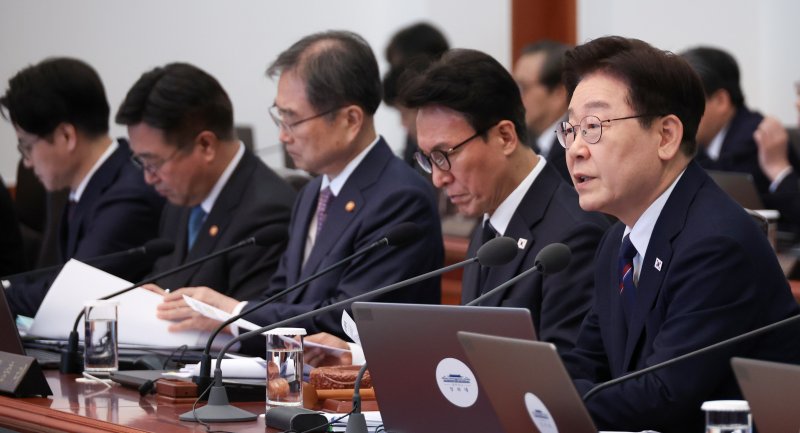
[Financial News] South Korean President Lee Jae Myung said on the 31st, in connection with the continued economic shock from the Middle East crisis, that "in an emergency, we may invoke the Emergency Financial and Economic Executive Order stipulated by the Constitution."
Presiding over the State Council of South Korea at Cheong Wa Dae that day, President Lee stated, "If necessary, we should legislate, and we must strive to exercise our authority and capabilities to the fullest. There is no need to be tied down by existing practices."
Article 76 of the Constitution of the Republic of Korea provides that, in cases of domestic unrest, foreign invasion, natural disasters, or a grave financial or economic crisis, when urgent measures are needed to safeguard national security or public order and there is no time to wait for the National Assembly to convene, the president may take the minimum necessary financial and economic measures or issue orders having the effect of law on such matters. This is being interpreted as indicating that, if the economic impact of the Middle East war intensifies, the government may consider taking financial and economic measures without separate legislation by the National Assembly.
However, actual use of this power has been extremely rare. The most recent example cited is when the late former President Kim Young-sam invoked it in 1993 to implement the real-name financial system.
President Lee warned, "The Middle East war has switched on an emergency warning light for the global economy," adding, "The Organisation for Economic Co-operation and Development (OECD) has simultaneously lowered this year’s growth forecasts for major countries and warned that oil prices in the second quarter of this year could surge to 135 dollars."
He continued, "Given our high external dependence and the large share of our energy supplies that comes from the Middle East, we need even more thorough inspections and meticulous emergency measures," and instructed, "Each government ministry should closely monitor trends in its respective items on a daily basis, and respond preemptively and boldly to any concerns about supply instability."
President Lee noted, "When we face a particular situation and consider countermeasures, we generally tend to keep relying on existing practices and routine procedures. We need a more proactive and active response," and added, "Since last week, an emergency supply adjustment measure for naphtha has been in effect. Key raw materials such as urea, urea solution, helium and aluminum must also be managed as strictly as wartime supplies."
[email protected] Reporter Choi Jong-geun Reporter