Trump warns of 'devastating strike' on Iran, vows to 'utterly destroy' it if no deal is reached
- Input
- 2026-03-31 09:31:57
- Updated
- 2026-03-31 09:31:57
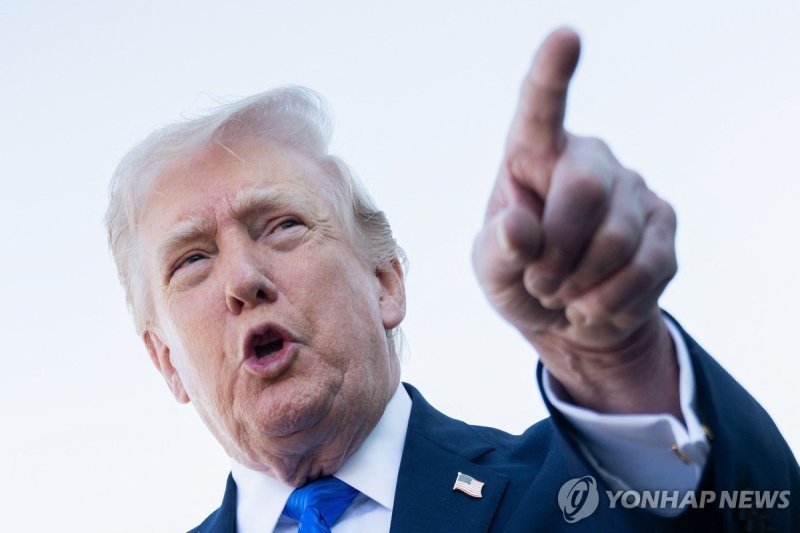
According to The Financial News, Donald John Trump, President of the United States, has warned the Islamic Republic of Iran of a "devastating strike," ratcheting up pressure to the highest level ahead of a deadline for negotiations. While demanding that Iran abandon its nuclear program and reopen the Strait of Hormuz, he has issued an extremely hardline message that, if no deal is reached, he will strike core civilian infrastructure such as energy and drinking water facilities.
On the 30th local time, Trump stated on the social media platform Truth Social, "If an agreement is not reached quickly, we can blow up and utterly destroy all of Iran’s power plants and oil wells, Kharg Island, and its desalination facilities." His remarks simultaneously target the country’s electricity, water supply, and oil production and export base, and are being interpreted as a threat to paralyze the Islamic Republic of Iran’s overall state functions.
This goes further than his comments on the 21st, when he mentioned a more limited strike focused mainly on power plants under a "48‐hour deadline." By expanding potential targets to include civilian survival infrastructure, he has raised the threat to a level that would likely draw intense international condemnation if carried out.
Analysts, however, largely view his latest remarks as aimed more at exerting negotiating pressure than signaling imminent military action. They interpret them as a strategic message designed to secure maximum concessions for the United States in ongoing talks to end the war being mediated by third countries. Speaking to reporters aboard his plane, Trump stressed the terms of the talks, saying, "We have made 15 demands, and there will be additional demands as well."
At the same time, Trump noted, "We have made significant progress through serious discussions," and added, "We will probably reach an agreement," leaving the door open, at least publicly, to a deal. Yet he maintained a hard line, warning, "If we do not reach an agreement soon and the Strait of Hormuz is not immediately opened for commercial use, we will carry out an attack."
His core demands boil down to two points: that the Islamic Republic of Iran give up its nuclear materials and that normal traffic through the Strait of Hormuz be restored. He has warned that if these are not implemented within a week, he will move ahead with military options.
The key question now is what Iran chooses to do. It stands at a crossroads between accepting a negotiated compromise or sticking to a military response. If it maintains a hardline stance, it will inevitably face internal strategic debates, given the risk of suffering massive damage.
Another notable element is Trump’s mention of a possible withdrawal. He said that after a scorched‐earth operation, he would "end our presence in Iran." This is seen as suggesting that the United States could wrap up an airstrike‐centered campaign without deploying large ground forces and bring the war to an early close.
Trump had initially suggested that the war would last four to six weeks, and it has now entered its fifth week. The political burden grows as the conflict drags on. Around 7,000 ground troops have been deployed, but a full‐scale ground war would carry a high risk of U.S. casualties and is therefore highly burdensome. If talks collapse, a scenario in which the United States destroys key facilities through large‐scale airstrikes, then declares victory and ends the operation, is being widely discussed.
Trump’s recent claim that the Iranian regime has effectively been replaced is also being interpreted in this context. Citing the removal of Ali Hosseini Khamenei, Supreme Leader of Iran, and top military commanders, as well as a weakening of the line of succession, he has used the phrase "a new and more reasonable regime" to underscore what he portrays as the war’s achievements.
However, even if the United States halts its offensive, the war is unlikely to end immediately. Multiple escalation scenarios remain, including clashes between the State of Israel and Iran and a prolonged closure of the Strait of Hormuz. Some observers also warn that if the United States pulls back, Iran could use its control over the strait to seize the initiative.
km@fnnews.com Reporter Kim Kyung-min Reporter