‘Power of Semiconductors’ Lifts Both Output and Construction in February, Setting New Record High
- Input
- 2026-03-31 08:59:06
- Updated
- 2026-03-31 08:59:06
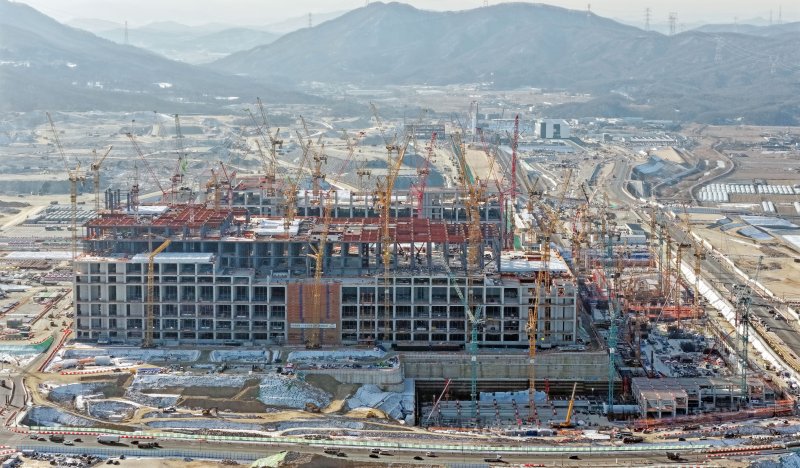
According to Financial News, semiconductors played a decisive role. In February, both production and investment increased, centered on manufacturing and construction. The growth in total output reached its highest level in more than five years, and semiconductor production hit a record high since statistics began in 1988. As construction and civil engineering work for semiconductor plants and industrial complexes expanded, the value of construction completed turned positive for the first time in 22 months. However, consumption stagnated as sales of clothing and related items declined.
On the 31st, the Ministry of Data and Statistics reported in its February Industrial Activity Trends that overall industrial output, including mining and manufacturing and services, rose 2.5% from the previous month. This is the largest increase in 5 years and 8 months, since June 2020, when it grew 2.9%.
In particular, semiconductor output surged 28.2% from the previous month. This is the biggest jump in more than 38 years, since January 1988, when it rose 36.8%. The increase was driven by higher production of memory semiconductors such as Dynamic Random Access Memory (DRAM) and flash memory.
Lee Doo-won, Director-General for Economic Trend Statistics, National Data Office, said, "The semiconductor sector itself is doing very well, and some plants have reached peak production, so capacity utilization is also at its highest level," adding, "The semiconductor production index set a new all-time high last September."
As civil engineering and construction work increased, output in non-metallic mineral products such as ready-mixed concrete and asphalt concrete also rose by 15.3%.
The average operating rate in manufacturing was 74.4%, up 3.6 percentage points from the previous month.
Service-sector output grew 0.5% month-on-month, as production increased in wholesale and retail (2.5%) and in professional, scientific and technical services (3.3%).
Investment rebounded sharply.
Facility investment climbed 13.5% from the previous month, as investment in transportation equipment rose 40.4% and in machinery such as electronic equipment increased 3.8%. This is the largest gain in 11 years and 3 months, since November 2014, when it grew 14.1%.
Recently, helped by subsidies for electric vehicles, facility investment in the automobile sector jumped 65.4%.
The construction sector is also showing signs of recovery. Construction completed, a key indicator of construction conditions based on actual work performed, increased 19.5% from the previous month. This is the largest rise since the statistics began in 1997. Both building construction (up 17.1%) and civil engineering (up 25.7%) contributed to the gain.
Lee explained, "Civil engineering work has increased across the board, including for semiconductor plants and logistics centers, apartment and residential buildings, and site development for the Yongin Semiconductor Cluster."
Compared with the same month a year earlier, the construction sector turned to growth for the first time in 22 months, since April 2024, when it rose 0.4%.
Consumption, which had been gradually recovering, stalled again. Due to the Lunar New Year holidays in February, sales of food, beverages and pharmaceuticals increased, but sales of clothing and footwear declined, leaving overall retail sales unchanged from the previous month at 0% growth. Compared with a year earlier, retail sales were up 4.7%. On a year-on-year basis, however, sales of durable goods such as telecommunications devices and computers fell 8.3%.
However, these statistics do not reflect the impact of the Middle East war that broke out at the end of February. The effects of the Middle East war are expected to become pronounced from March onward. Lee said, "Some impact of the Middle East war may appear in March, but its full effect on operating rates and inventories is likely to come after April."
skjung@fnnews.com Jung Sang-geun, Kim Chan-mi Reporter