After Samsung Electronics, SK hynix in the crosshairs: US targets Korean chipmakers with patent infringement claims
- Input
- 2026-03-31 07:18:22
- Updated
- 2026-03-31 07:18:22
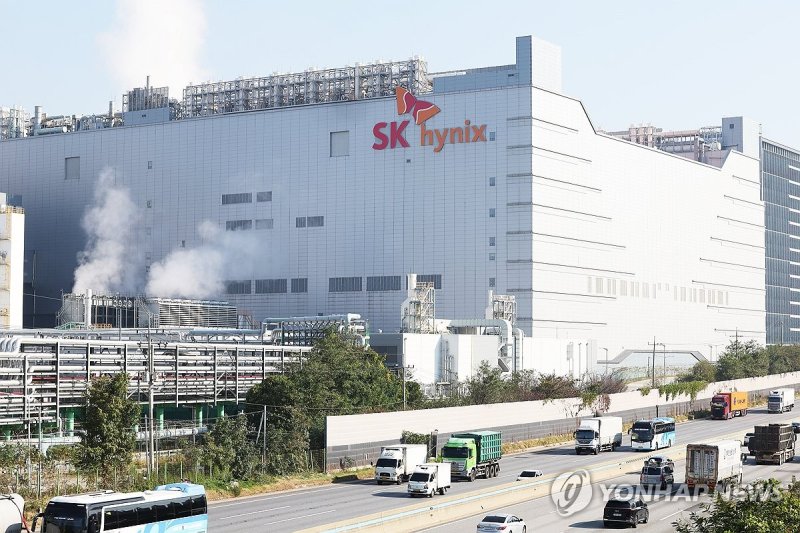
[Financial News] The United States International Trade Commission (USITC) has launched a patent dispute investigation into SK hynix Inc.'s High Bandwidth Memory (HBM) and NAND flash memory products.
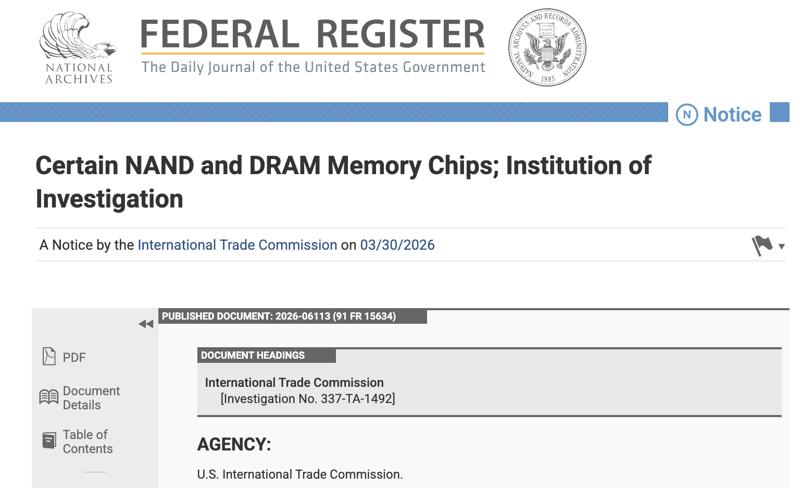
The Federal Register on the 30th (local time) published the USITC's decision, made on the 26th, to institute an investigation into an alleged violation of Section 337 of the Tariff Act of 1930. The complaint was filed by Monolithic 3D, a patent management Non-Practicing Entity (NPE) based in Allen, Texas, against SK hynix Inc. and Japan's KIOXIA Corporation.
Monolithic 3D claims the two companies infringed its patents related to HBM and NAND flash memory, thereby violating the Tariff Act. It petitioned the USITC to open an investigation and to ban the importation, distribution, and sale of the accused products in the United States.
In response, the USITC has begun investigating certain NAND flash memory and HBM DRAM chips. The case is Investigation No. 337-TA-1492, and the respondents include three entities: SK hynix Inc.'s headquarters in Icheon, Gyeonggi Province, SK hynix America in San Jose, California, and SK hynix memory solutions America, also in San Jose.
Although the case is still at the investigation stage, concerns are being raised because this is not a typical damages lawsuit but a trade remedy procedure that can block the products from entering the United States at the border.
At the same time, critics point out that NPEs, which extract settlement money solely through patent portfolios without producing products or developing technology, are now squarely targeting Korean semiconductor companies.
An NPE purchases patent rights and then makes money by demanding royalties or filing lawsuits against companies that use the related technologies. Fields where Korean companies are strong—such as memory semiconductors, Advanced Packaging, and artificial intelligence (AI) semiconductors—are becoming prime targets.
Samsung Electronics has also been embroiled in an HBM patent lawsuit with US NPE Netlist, founded by former LG Semicon executive Chun K. Hong, since May last year.
Prime Minister of South Korea Kim Min-seok stated at the 39th meeting of the Presidential Council on Intellectual Property, held at Government Complex Seoul on the 20th, that "a whole-of-government response is needed to address patent lawsuits involving our semiconductor companies in the United States."
[email protected] Seo Yoon-kyung Reporter