Despite Chung Dong-young’s Opposition, South Korea Joins UN Resolution on North Korean Human Rights, Exposing Rift Between Unification and Foreign Ministries
- Input
- 2026-03-30 11:49:45
- Updated
- 2026-03-30 11:49:45
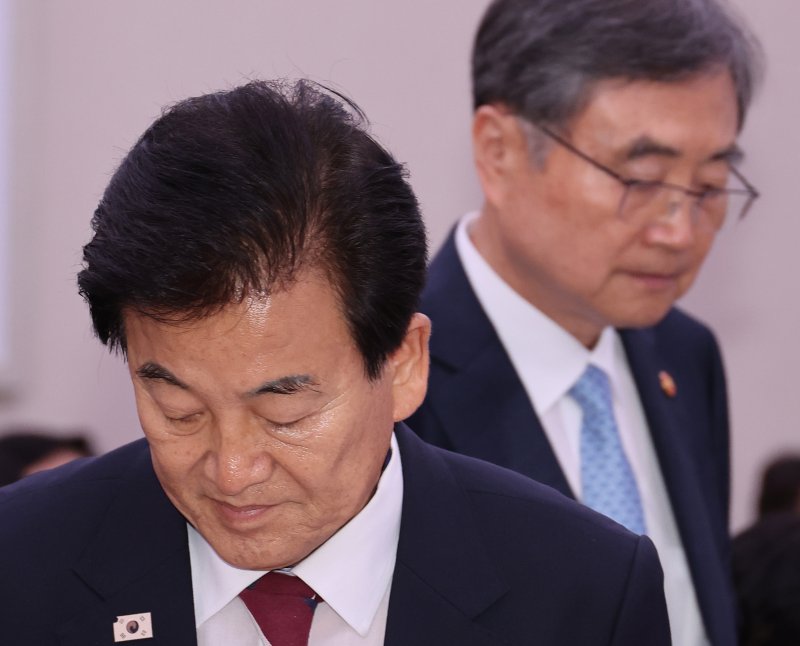
Despite the Lee Jae-myung administration’s consistent peace-oriented statements, Kim Jong Un, President of the State Affairs Commission, has continued to threaten nuclear war and has declared that South Korea will be permanently excluded from the North Korean concept of a single Korean people.
According to the political establishment on the 30th, the Ministry of Foreign Affairs and the Ministry of Unification have taken completely opposite positions over whether to join as a co-sponsor of the UNHRC resolution on North Korean human rights. This divergence is expected to lead to a diversification of North Korea policy.
Previously, Minister of Unification Chung Dong-young had called for South Korea not to join as a co-sponsoring country of the UN resolution on North Korean human rights, arguing that this was necessary to facilitate inter-Korean dialogue. The People Power Party (PPP) denounced this stance as humiliating, sparking controversy.
After internal deliberations, the Ministry of Foreign Affairs announced on the 28th that, following consultations between ministries, it had decided to participate as a co-sponsor of the resolution on North Korean human rights. However, confusion between ministries during the final decision-making process has drawn criticism from conservative circles and left lingering regret.
Until now, the Ministry of Unification and the Ministry of Foreign Affairs have often clashed over North Korea policy, particularly regarding communication with the United States and how to respond to the North Korean nuclear issue.
The Ministry of Unification, however, drew a line regarding any broader shift in North Korea policy. Minister Chung argued that joining as a co-sponsor of the UNHRC resolution on North Korean human rights "does not affect the government’s policy of peaceful coexistence." He added, "The Ministry of Unification has consistently maintained the same position, and the decision to join as a co-sponsoring country was made through coordination among the various ministries within the government."
Minister Chung also stated, "I see this as a compromise between our position of respecting the authority of the United Nations and our effort to respect, as much as possible, the other side’s sovereignty."
The draft resolution on North Korean human rights, prepared by the European Union (EU) and Australia, is scheduled to be adopted on the 30th (local time in Geneva) at the 61st session of the UNHRC.
Every year, the United Nations adopts a resolution on North Korean human rights at the UNHRC in the first half and at the UN General Assembly in the second half. South Korea participated as a co-sponsoring country from 2008 to 2018, but under the Moon Jae-in administration it refrained from joining between 2019 and 2021, citing inter-Korean relations. It then returned as a co-sponsor in 2022 following the inauguration of President Yoon Suk Yeol. After the launch of the Lee Jae-myung administration, some again argued that South Korea should not participate, in order to restart the inter-Korean dialogue that had been cut off.
rainman@fnnews.com Kim Kyung-soo Reporter