"Yen–dollar exchange rate breaks through ¥160" – Japan's Finance Ministry says "decisive action may now be necessary"
- Input
- 2026-03-30 09:56:07
- Updated
- 2026-03-30 09:56:07
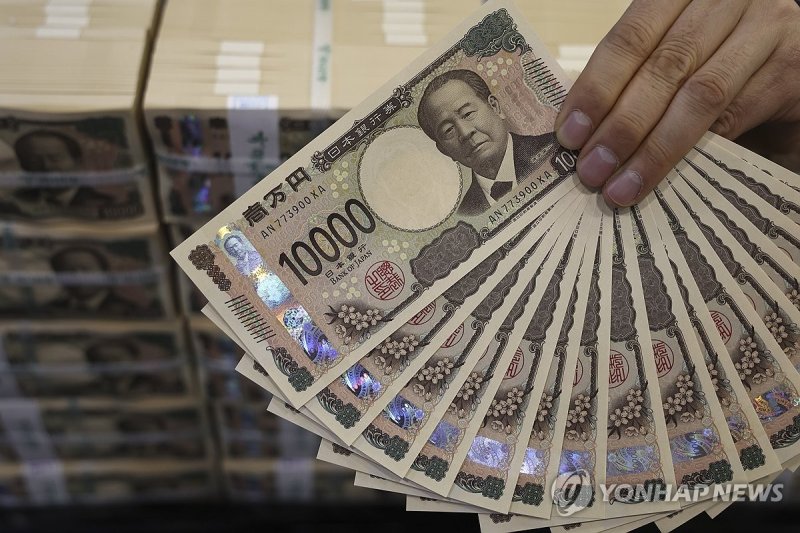
Reporting from Tokyo for The Financial News, Seo Hye-jin – In Tokyo’s foreign exchange market on the 30th, the yen–dollar exchange rate broke through ¥160 to the dollar. Japan’s Ministry of Finance Japan (MOF) hinted at possible intervention, saying, "If this situation continues, decisive action may now be necessary."
According to the Nihon Keizai Shimbun, Atsushi Mimura, vice minister for international affairs at the Ministry of Finance (Japan), told reporters, "We are hearing that speculative moves are increasing not only in the crude oil futures market but also in the foreign exchange market."
It was the first time since he took office in July 2024 that Mimura has used the phrase "decisive action." The Nikkei Stock Average (Nikkei 225) reported that markets interpreted this as a warning that currency intervention is on the table.
At 8:30 a.m. in Tokyo’s foreign exchange market, the yen–dollar exchange rate stood at ¥160.33–¥160.35 per dollar, up ¥0.39 from the previous trading day, meaning a weaker yen. At one point it climbed to ¥160.47 to the dollar, the weakest level for the yen in about one year and eight months, since July 2024.
As the United States of America (US) prepared to deploy ground troops to the Islamic Republic of Iran and Houthi rebels moved to join the conflict, tensions in the Middle East surged to a peak. This drove strong dollar buying. Soaring international oil prices, in turn, stoked concerns about a worsening Japanese trade deficit and stronger downward pressure on the economy, accelerating selling of the yen.
On the New York Mercantile Exchange (NYMEX), as of 6:20 p.m. on the 29th local time, West Texas Intermediate (WTI) crude futures had jumped 3.50% to $103.10 per barrel. Brent Crude Oil futures were also up 3.05%, trading at $116.10 per barrel.
Commenting on the yen’s weakness, Atsushi Mimura noted, "I have already said that we will respond in every possible way," stressing that "our objective is to address the situation on all fronts."
Earlier, on the 23rd, the Ministry of Finance (Japan) reportedly gathered opinions from several financial institutions regarding the possibility of intervening in the crude oil futures market.
Meanwhile, as risk-off sentiment intensified due to the deteriorating situation in the Middle East, the Japanese stock market also moved lower.
The Nikkei 225 Stock Average, Japan’s benchmark equity index, stood at 50,566.99 as of 9:13 a.m., down 2,806.08 points, or 5.26%, from the previous trading day.
sjmary@fnnews.com Seo Hye-jin Reporter