End of 42 Years of Subsidy Wars: Korea’s Three Mobile Carriers Take Diverging Paths with AI
- Input
- 2026-03-30 11:31:59
- Updated
- 2026-03-30 11:31:59
Based on reporting by The Financial News on the 30th, KT Corporation (KT), SK Telecom Co., Ltd. (SK Telecom), and LG Uplus have all completed organizational reshuffles, including shareholder meetings and changes of chief executive officers. They are now moving in earnest into the execution phase to achieve their shared goal of transforming into AI companies.
Unlike in the past, when all three carriers pursued the same strategy of fighting over domestic subscribers, their AI strategies now differ and follow separate paths. After all three carriers suffered large-scale personal data breaches last year, they are also signaling a strong intention to use AI to tackle long-pending tasks such as strengthening network security and restoring user trust.
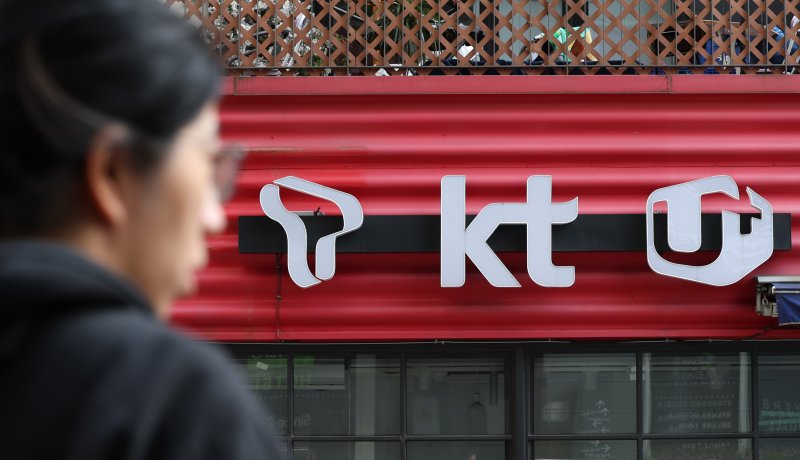
KT: "Partner for enterprise AX innovation"... even its networks will be run by AI
KT will hold its regular shareholders’ meeting on the 31st to officially appoint Park Yoon-young as president, ending about five months of leadership vacuum and tightening the reins on its transition into an AI company. At the Mobile World Congress (MWC) held earlier this year in Barcelona, Spain, KT put "AI transformation (AX)" front and center and presented an AI platform strategy focused on the enterprise and public sectors. At the core of KT’s AI business strategy, which aims to provide AI-based productivity innovation platforms for companies, is "Agentic Fabric," an AI operating system (OS) concept. It enables companies to create their own AI agents and implement workflow automation. The solution can be applied to real-world environments such as AI contact centers (AICC), civil service processing at public institutions, and financial consultations.Through this, KT plans to shift its revenue structure from one centered on telecom lines to a software-based subscription model. In other words, it aims to evolve from a company that sells network connectivity into a company that automates customers’ business processes.
KT, which operates the country’s top fixed and mobile networks, is also pursuing AX on the infrastructure side. It has identified "AI for Networks," where AI intelligently operates the network, and "Network-for-AI," which meets the demands of AI services, as its two main directions, and it defines sixth-generation mobile communication (6G) as an "AI network." The company plans to build the foundation for next-generation communications by combining integrated satellite–terrestrial networks with quantum cryptography technology.
SK Telecom seeks dominance in AI infrastructure... full-stack strategy aimed at the global market
SK Telecom is pursuing an aggressive AI strategy built around "full-stack AI," which integrates everything from AI models to data centers, cloud, and GPUs. Its plan is to evolve into an AI infrastructure company based on its existing telecom networks and then use that to attack global markets.Among the three carriers, SK Telecom is the only one participating in the national flagship AI project. Centered on its large-scale language model "A.X," the company is building a structure that commercializes infrastructure itself by combining AI data centers (AIDC), GPU as a Service (GPUaaS), and AI cloud offerings. In particular, it has set a goal of supplying this infrastructure to global customers, signaling its determination to expand what has traditionally been a domestic telecom market into a global arena.
SK Telecom also plans to enhance its global competitiveness by lowering AI computation costs through designs that maximize power and cooling efficiency in next-generation AI data centers. In parallel, it is working with global telecom alliances to spread the "Sovereign AI" model. By providing AI infrastructure packages tailored to each country’s data regulations, the company aims to increase its chances of entering overseas markets.
LG Uplus focuses on tangible AI services... enhancing customer experience and security
LG Uplus is seeking differentiation with an AI strategy centered on customer experience (CX), security, and synergy through collaboration within the group’s affiliates. Large-scale infrastructure and investments will be handled at the group level, while LG Uplus is seen as planning to compete with services that consumers can tangibly experience in their daily lives.First, the company plans to highlight its hyper-personalized voice AI and call-based service "ixi-O," which understands the context of users’ calls and provides information in real time, and to concentrate on strengthening AI services embedded in everyday life.
Under LG Corporation (LG Group)’s "ONE LG" strategy, which pools the capabilities of its affiliates, maximizing synergy in the AIDC business is another key task for LG Uplus. At the shareholders’ meeting on the 24th, LG Uplus CEO Hong Beom-sik said, "The core competitive edge of the LG Uplus AI Data Center lies in the ‘ONE LG’ synergy that brings together the group’s capabilities," adding, "We will build a state-of-the-art data center that meets global standards and secure a first-mover advantage in the market."
Strengthening security through AI is also a major pillar of LG Uplus’s strategy. By applying AI to areas closely tied to everyday life—such as voice phishing prevention technologies and abnormal call detection systems—the company aims to first address users’ sense of insecurity.
“Same AI, different paths”... the real contest will be decided by monetization
As Korea’s telecom industry ends its 42-year run of undifferentiated subscriber-acquisition marketing and reorganizes around differentiated AI strategies based on each carrier’s strengths and resources, attention is focusing on how effectively the three companies can convert the world’s best IT infrastructure into AI infrastructure and what results they can achieve in borderless AI competition.Experts say the success or failure of the carriers’ transition into AI companies will hinge on whether they can generate returns in areas where they have no prior business experience, such as building AI data centers and AI platforms, despite the massive investments required. Because AI infrastructure entails heavy upfront costs and long payback periods, a clear monetization model is essential.
An industry expert noted, "The era when a telecom company’s competitiveness was judged by the number of subscribers is over, so the way these companies compete is bound to change," adding, "How much new value they can create through AI will become the key yardstick for telecom competitiveness."
The expert also observed, "Telecom has been a business where you lay down the network and then fees naturally flow in, but in the AI industry, you can only survive if you build your own revenue model," and went on, "A fundamental shift in mindset about revenue models is needed." In other words, the current revenue structure centered on telecom and data fees must be fundamentally transformed into one that monetizes the value of the network itself. While overseas operators have already begun experimenting with new revenue models using 5G Standalone mode (5G SA) and network slicing, Korean telecom companies are still struggling to find viable business models.
In this new era of competition over AI infrastructure, platforms, customer experience, and the commercialization of networks, strategies for securing profitability are expected to reshape the landscape of Korea’s telecom industry.
cafe9@fnnews.com Lee Gu-soon Reporter