Man in His 20s Suffers Chest Pain and Cardiac Arrest After Taking Painkillers [Health Talk]
- Input
- 2026-03-30 05:20:00
- Updated
- 2026-03-30 05:20:00
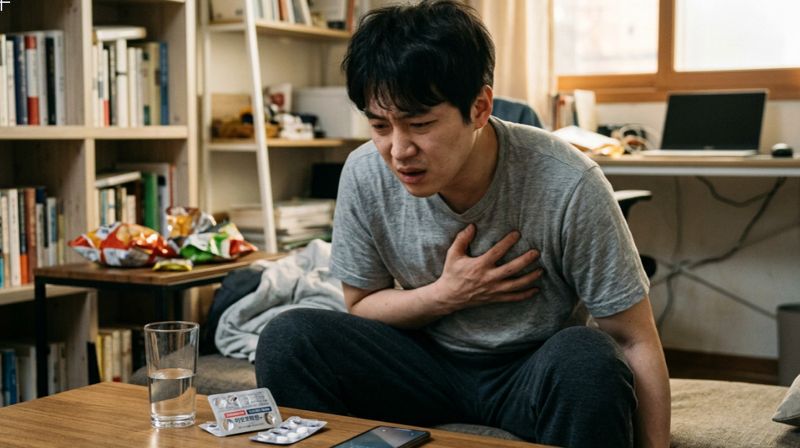
[The Financial News] A case has been reported of a man in his 20s who went to the emergency room with chest pain after taking painkillers and ended up experiencing cardiac arrest.
According to a research team at the University of Sassari Faculty of Medicine and Surgery in Italy, a 28-year-old man took a Nonsteroidal anti-inflammatory drug (NSAID) to relieve lower back pain that appeared after exercise. However, immediately after taking the medication, he developed severe chest pain and rushed to the emergency room.
His condition deteriorated rapidly during examination. He suddenly went into cardiac arrest after developing Ventricular fibrillation (VF), a type of life-threatening arrhythmia. Medical staff immediately performed defibrillation and Cardiopulmonary resuscitation (CPR), and emergency treatment narrowly saved his life.
Coronary angiography was then performed for a detailed evaluation, but it showed no structural abnormalities such as vascular occlusion. Instead, doctors observed Coronary artery vasospasm, in which the coronary arteries that supply blood to the heart muscle constrict abruptly.
The man had no usual risk factors such as hypertension or diabetes. However, about a month earlier, he had visited a hospital with similar chest pain after taking an NSAID. At that time, he was diagnosed with myocardial infarction (MI) without coronary artery obstruction, but the exact cause was not identified and he was discharged. Based on detailed test results and his medical history, the medical team ultimately diagnosed him with Type I Kounis syndrome.
Kounis syndrome is a condition in which an allergic reaction and Acute Coronary Syndrome (ACS) occur together. When an allergic reaction to a specific substance develops, mast cells in the body become activated and release inflammatory mediators. These substances affect the coronary arteries, triggering vascular spasms or blood clot formation, which can then cause sudden changes on an electrocardiogram and severe chest pain.
The man immediately stopped taking the NSAID that had triggered the reaction and began anti-allergic treatment. As a result, his heart function fully recovered within a week, and he was able to be discharged. A one-month follow-up after discharge confirmed that he had no recurrence or significant complications and had made a complete recovery.
The research team stated, "Kounis syndrome can be treated if detected early, but delayed diagnosis may lead to myocardial infarction or cardiac arrest," and emphasized, "If chest pain occurs after exposure to certain foods or medications, you should immediately consult a specialist."
hsg@fnnews.com Han Seung-gon Reporter