[Editorial] Extra Budget Must Balance Swift Execution and Rigorous Review
- Input
- 2026-03-29 19:36:48
- Updated
- 2026-03-29 19:36:48
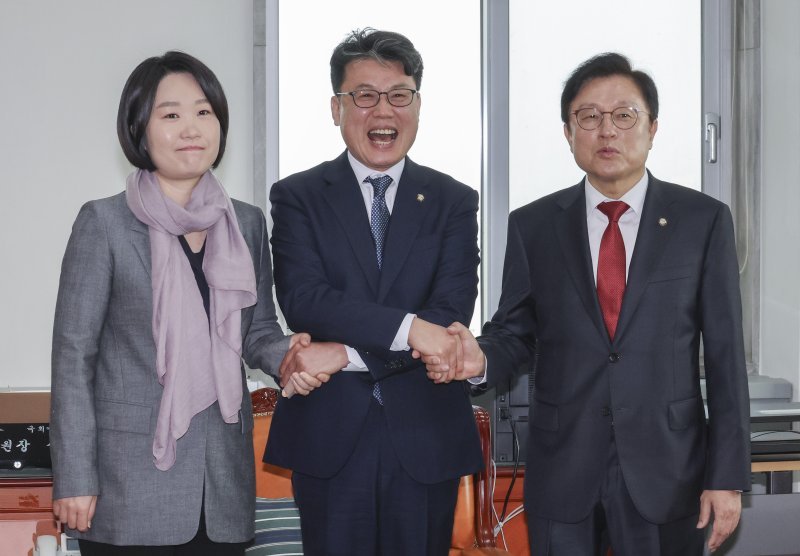
An extra budget is a policy tool that demands both timing and precision. If the timing is missed, its impact is greatly reduced. Yet if it is executed in a slapdash way without careful scrutiny, it leads to wasteful spending. The current debate over the extra budget can be seen as a process of trying to find the right balance between these two perspectives.
The ruling party’s call for swift passage has both strengths and weaknesses. Under the triple burden of high oil prices, a weak currency, and high inflation, people’s livelihoods are already at the breaking point. This fuels the view that the longer fiscal support is delayed, the greater the damage will be. Given the possibility that the war involving Iran could drag on, there is some validity to the argument that rapid policy execution is needed to respond effectively to external shocks.
However, weakening the National Assembly of the Republic of Korea’s review function simply because "time is short" creates another kind of risk. After all, an extra budget is funded by taxpayers’ money. This is why meticulous verification is needed of where, how much, and in what form public funds will be injected. Once fiscal spending is unleashed, it is hard to reverse. Poorly designed expenditures can accumulate into a structural fiscal burden. The risk is even greater if cash handouts or pork-barrel projects are included, as they invite political temptation. This is why thorough scrutiny is essential. If funds are spent unnecessarily or in the wrong places, who will be held accountable?
Of course, a careful review process is indispensable, but if execution itself is excessively delayed, that too becomes a serious problem. In crisis management, timing is crucial. If procedures are used merely as a pretext to drag things out, that is also a dereliction of duty by the National Assembly of the Republic of Korea.
Ultimately, the ruling and opposition parties must reach a wise compromise that secures both swift execution of the extra budget and a thorough review process. A realistic middle ground could be to conduct sufficient deliberations without going beyond the timetable proposed by the opposition PPP. If such a process is followed, the public will be able to accept the outcome.
For the parties to reach this kind of political agreement, they must resist the temptation to use the extra budget as a weapon in partisan conflict. If the ruling party pushes through pork-barrel spending with an eye on local elections, or if the opposition blocks the bill under the banner of checking the administration, this extra budget will lose its legitimacy from the outset. The National Assembly of the Republic of Korea is an institution that deliberates and approves the budget. It should uphold the principle that fiscal resources are deployed where they are truly needed, and both parties should work together to pass a reasonable extra budget plan.