"Even if the war ends, oil prices won’t fall"...warning from oil CEOs
- Input
- 2026-03-29 12:49:02
- Updated
- 2026-03-29 12:49:02
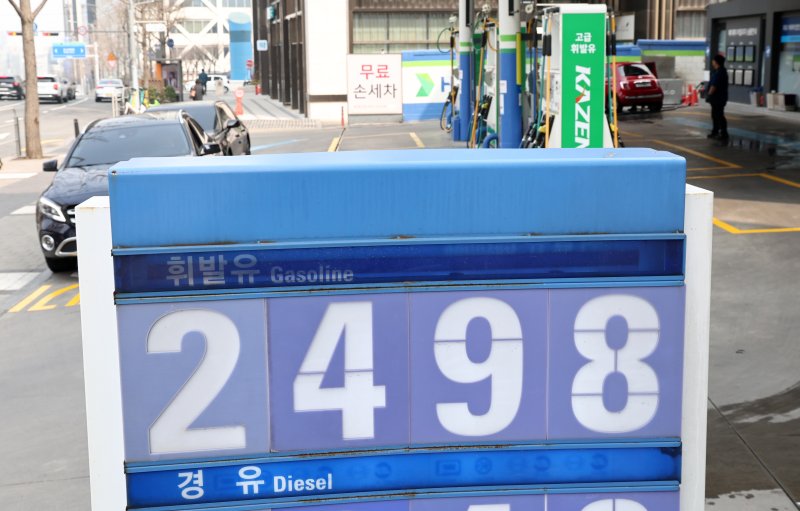
[The Financial News] Chief executives in the global oil industry predict that even if the war between the United States and the Islamic Republic of Iran comes to an end, international oil prices will not easily stabilize.
According to Consumer News and Business Channel (CNBC) on the 28th (local time), major oil company CEOs attending the CERAWeek by S&P Global energy conference in Houston, Texas, said that even the current level of oil prices does not fully reflect the risks surrounding supply.
Mike Wirth, chairman and chief executive officer of Chevron, stated, "The actual crude supply situation is much tighter than what futures prices suggest," and pointed out, "The market is reacting based on incomplete information."
He specifically referred to the impact of a potential blockade of the Strait of Hormuz, saying, "Physical shocks are spreading across the global energy system, but they are not being fully priced into the futures curve."
Ryan Lance, CEO of ConocoPhillips, also raised the possibility that the downside for oil prices could move higher, projecting that a quick return to pre-war levels would be difficult. This view runs counter to the Trump administration’s "short-term shock" scenario and instead anticipates prolonged structural instability on the supply side.
Industry leaders warned that shortages of refined products could become an even more serious problem than crude itself. Wael Sawan, CEO of Shell, observed, "Fuel supply chains are taking a bigger hit than crude oil," and predicted, "We are likely to see shortages spread, starting with jet fuel and then moving to diesel and gasoline." He noted that a chain reaction of fuel shortages is already emerging in parts of Asia, and analysts warn that the impact could reach Europe as early as April.
Damage to energy infrastructure in the Middle East is also cited as a factor that will delay recovery. Missile and drone attacks by the Islamic Republic of Iran have struck key facilities in the United Arab Emirates (UAE), Qatar and Saudi Arabia, and production has been halted at some oil fields. Analysts expect that even if the war ends, it will take considerable time for production to return to normal.
Sheikh Nawaf Saud Al-Nasir Al-Sabah, CEO of Kuwait Petroleum Corporation (KPC), said, "Because Gulf countries have shut in their oil fields, it will take three to four months to restore production to previous levels."
km@fnnews.com Kim Kyung-min Reporter