"Are You Selling or Not?" How Far Will These 'Testing-the-Market Listings' Go?
- Input
- 2026-03-30 06:00:00
- Updated
- 2026-03-30 06:00:00
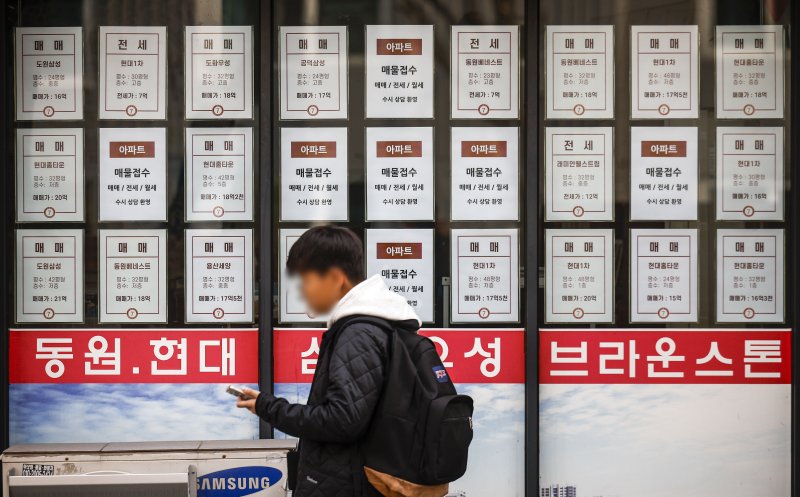
According to The Financial News, apartment listings in Seoul are piling up quickly, but deals are barely happening, making the current market look increasingly like a standoff. As the temporary easing of heavier capital gains tax for multiple-home owners nears its end, more owners are putting their homes up for sale. However, many are refusing to cut prices, leading to a prolonged tug-of-war with buyers.
Real estate big data platform Asil reported on the 29th that there were 78,739 apartment listings in Seoul as of that day, up 9.2% from 72,049 a month earlier. This was the highest growth rate among all provinces and major cities nationwide. Within Seoul, the concentration in prime areas was clear. Listings in Gangnam District jumped 20.5% in a month, the largest increase among all districts. Gangdong District followed with 19.5%, then Seocho District with 16.6% and Seongdong District with 15.9%, as areas along the Han River all posted double-digit growth and led the spread of listings. In contrast, outer districts such as Gangbuk District, Jungnang District, and Jongno District saw listings decline, highlighting a clear divergence between regions.
While listings are increasing, transactions remain limited, causing price trends to diverge even within the same area. In Nonhyeon-dong, Gangnam District, a 79-square-meter unit at the Gyeongnam Nonhyeon Apartment Complex recently sold for 900 million won, 570 million won lower than a month earlier. By contrast, a 52-square-meter unit at the nearby Nonhyeon Shindonga Familier Apartment Complex changed hands for 1.4 billion won, up 170 million won over the same period. A similar mixed pattern is visible in Seongdong District. An 85-square-meter unit at the Oksu Samsung Apartment Complex sold for 2.05 billion won, 190 million won higher than a month ago, while a 172-square-meter unit at Oksu Geukdong Apartments was traded for 1.8 billion won, down 699 million won.
On the ground, many agents point out that a significant number of listings are out of sync with actual market conditions. A representative at a real estate office near Raemian Daechi Palace in Daechi-dong said, "Some of the listings posted online are essentially testing-the-market listings, with owners having little real intention to sell." The person added, "Asking prices are kept high, and in many cases they never lead to actual transactions." The agent went on to explain, "In fact, most of the genuinely urgent sales were absorbed in early March. There are still a few listings where some price negotiation is possible, but once this period passes, many owners are likely to pull their properties from the market or shift into a holding pattern."
Seongdong District is seeing a similar situation. An agent at a real estate office in Oksu-dong noted, "Despite reports that listings are increasing, homeowners are not easily lowering their prices." The agent continued, "Many insist on holding their asking prices or even quoting higher, which makes it difficult for deals to go through." Another agent in the same area said, "Some sellers are clearly choosing to hold out rather than cut prices," and added, "Because prices are not being adjusted much, buyers are hesitant to make decisions, and as a result transactions are not happening."
Meanwhile, with the deadline for the temporary suspension of heavier capital gains tax on multiple-home owners set for May 9, early April is widely seen as the last practical window for selling. Whether the market can absorb the current wave of listings during this period is expected to be a key turning point for short-term trends. If it does not, observers warn that many owners may start withdrawing their properties, reducing supply and once again increasing upward pressure on prices.
[email protected] Jang In-seo Reporter