After the Strait of Hormuz, the Red Sea Faces Houthi Threats as Fears of Saudi Involvement Grow
- Input
- 2026-03-29 09:36:55
- Updated
- 2026-03-29 09:36:55
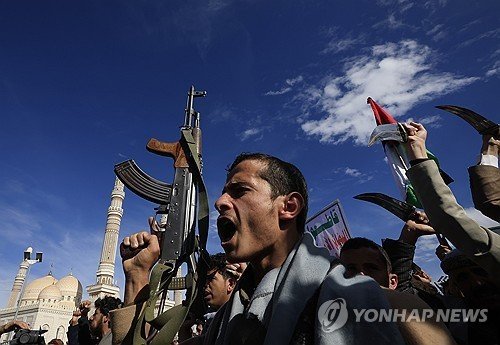
The Financial News reported that as Ansar Allah (Houthis), also known as Ansar Allah, joins attacks on Israel, concerns are mounting that the Middle East crisis—sparked by a conflict between the United States of America (U.S.), Israel and Iran—could further escalate.
Ansar Allah (Houthis) officially announced on the 28th (local time) that it had launched missile attacks toward Israel. Israel stated that it activated its air defense systems and intercepted all missiles heading for its territory.
Ansar Allah (Houthis) said it entered the fight out of a sense of loyalty to Iran. However, mindful of the possibility of massive retaliation by the U.S. and others, it is believed to have limited itself so far to small-scale, long-range missile strikes of symbolic significance against Israel.
Ansar Allah (Houthis) is a pro-Iran armed faction in the Republic of Yemen and part of the Iran-led "Axis of Resistance." Following Hezbollah in Lebanon and the Popular Mobilization Forces (PMF) in Iraq, the Houthis have now also formally declared their participation in the conflict. If, similar to Iran’s closure of the Strait of Hormuz, the Houthis were to block and attack the Bab el-Mandeb Strait at the southern entrance to the Red Sea, additional shocks to the global crude oil market are expected.
After the Gaza War in 2023, Ansar Allah (Houthis) expressed support for Palestine and carried out drone and missile attacks on oil tankers and other commercial vessels in the Bab el-Mandeb Strait, the gateway to the Red Sea that handles about 10% of global seaborne crude flows. These attacks temporarily paralyzed maritime traffic in the area.
In response, the U.S. launched large-scale airstrikes, and the U.S. and the Houthis agreed to a ceasefire last year. Since then, the Houthis had largely refrained from attacking commercial ships in the Red Sea.
Iran has declared that it intends to activate a "second front," warning that by mobilizing the Houthis it could also block oil transport routes in the Red Sea.
The Strait of Hormuz in the Persian Gulf is a chokepoint through which about 20% of the world’s seaborne crude oil passes. The Red Sea connects the Bab el-Mandeb Strait to the Suez Canal and serves as a key route for Middle Eastern oil and gas bound for Europe. Even aside from energy cargoes, it is a vital maritime trade corridor linking Asia and Europe. Fears are growing that if the Red Sea passage is also blocked by the Houthis, there will be severe disruptions to global oil distribution.
The Financial Times (FT) noted, "One of Iran’s most powerful armed allies has joined a conflict that has now entered its fourth week," assessing that the fighting has moved into a phase where it could spread across the entire Gulf region.
Farea Al-Muslimi, a Yemen expert at Chatham House, the Royal Institute of International Affairs, told FT, "The Houthis’ decision to join the broader conflict in the Middle East is a serious and deeply worrying escalation," adding, "It risks further spreading an already unstable war and will have significant implications for regional stability and global trade."
He stressed, "The potential impact on key commercial shipping lanes, especially the Red Sea and the Bab el-Mandeb Strait, cannot be overstated."
According to the U.S. Energy Information Administration (EIA), crude oil flows through the Bab el-Mandeb Strait averaged 9.3 million barrels per day in 2023, accounting for about 12% of global seaborne crude shipments.
When Ansar Allah (Houthis) intensified attacks on commercial vessels in the Red Sea in 2023, many shipping companies chose an alternative route via the Cape Route off the Cape of Good Hope. As a result, from 2024 onward, crude flows through the Bab el-Mandeb Strait have fallen to around 4 million barrels per day.
Unlike the Strait of Hormuz, where there is virtually no alternative route, the Red Sea does have an option via the Cape Route off the Cape of Good Hope. However, the shipping time from the Arabian Sea to Europe becomes about 15 days longer, sharply increasing transport time and costs and adding further upward pressure on international oil prices.
There is also growing speculation that the Kingdom of Saudi Arabia (KSA) and other Gulf states could be drawn into the conflict. Until now, despite suffering significant damage from Iran’s unilateral missile and drone attacks, Saudi Arabia and other Gulf countries have exercised extreme restraint in their military responses, seeking to avoid escalation out of fear of economic devastation.
In particular, KSA has led a Middle Eastern coalition against the Houthis since they seized Sanaa, the capital of the Republic of Yemen, in 2015. For the past four years, however, Riyadh has maintained an uneasy ceasefire with the group.
Recently, KSA has been using overland pipelines to reroute oil exports through Yanbu Port on the Red Sea in an effort to cushion the impact of disruptions in the Strait of Hormuz.
At the same time, the Houthis appear torn between a sense of obligation to help Iran—which has supported their organization on multiple fronts for decades and is now under pressure—and an instinct for survival that makes them wary of being crushed by the overwhelming military power of major states.
Unlike Hezbollah or Shia militias within Iraq’s Popular Mobilization Forces (PMF), which moved quickly to attack Israel and support Iran immediately after the war broke out on the 28th of last month, Ansar Allah (Houthis) initially watched developments for some time before belatedly declaring its participation.
Even now, the Houthis have not launched military operations in the Red Sea itself and are instead carrying out sporadic long-range missile attacks only on Israel. If they attempt to blockade the Red Sea as Iran intends, they would have to accept the risk of massive attacks not only from the U.S. and Israel but also from neighboring countries such as KSA.
FT reported that KSA has kept communication channels with the Houthis open and has been urging them not to get involved in Iran’s war.
Mohammed al-Basha, founder of the risk consultancy Vasha Report in the U.S., told FT, "The Houthis’ focus is primarily fixed on Israel, while at the same time sending a signal to the U.S. and Saudi Arabia that, at least for now, they are not targeting them," adding, "Their aim is to reinsert themselves into the game without triggering an immediate large-scale response."
chlee1@fnnews.com Lee Chang-hoon Reporter