Japan and France to Cooperate on Dual-Use AI Technologies, Accelerating Tech Alliance to Reduce Dependence on China
- Input
- 2026-03-29 09:18:04
- Updated
- 2026-03-29 09:18:04
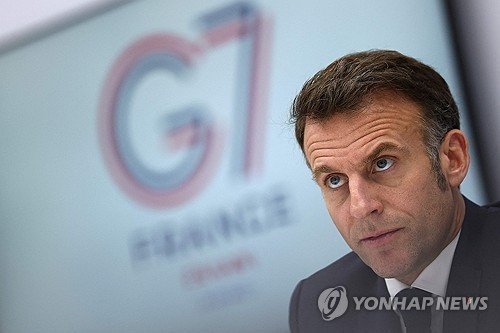
The Financial News correspondent in Tokyo, Seo Hye-jin, reported that Japan and France have agreed to cooperate in the field of dual-use artificial intelligence (AI) technologies, according to a report by Nihon Keizai Shimbun (The Nikkei) on the 29th. The move is aimed at reducing dependence on China, and the two governments plan to establish a new high-level dialogue at the vice-ministerial level among relevant ministries to design policies that promote cooperation between companies.
According to The Nikkei, French President Emmanuel Macron, who will visit Japan on the 31st, is scheduled to hold a summit meeting with Japanese Prime Minister Sanae Takaichi on April 1 and issue a "joint leaders’ statement on AI cooperation." The main themes will include international governance, security, and capacity building in third countries.
In particular, on security, the two countries have decided to deepen cooperation in the area of dual-use technologies.
At present, technologies such as autonomous driving, robotics, and data analytics, which are developed for industry and everyday life, can also be used for military purposes. In the Russo-Ukrainian War, AI-enabled drones and battlefield analysis systems have been playing a crucial role.
Japan and France will also support cooperation between startups involved in AI development and operation. Through the vice-ministerial dialogue framework, the two sides will review the progress of business projects and discuss any necessary responses. Depending on the outcome of these talks, participation by private companies is expected, and The Nikkei noted that this could lead to regulatory reforms or direct business deals.
Timed with the summit, Sakana AI, which develops domestically produced AI in Japan, and the French nonprofit organization Current AI will sign a memorandum of understanding (MOU) in Japan. The two sides plan to cooperate across all stages, including research, development, and demonstration.
From an economic security perspective, the joint initiative will also include measures to strengthen the resilience of AI supply chains. The goal is to reduce dependence on China for key components such as AI semiconductors and to build procurement networks among like-minded countries that share common values.
Capacity building in third countries will focus on cooperation with emerging and developing nations such as those in Southeast Asia. Currently, AI development is led by the United States of America (U.S.) and China, making it difficult to reflect the languages, cultures, and values of developing countries. Japan and France therefore plan to call on companies to develop models that incorporate a wide range of languages and cultures, including the Khmer language.
In the field of international governance, the two governments intend to promote safe and trustworthy AI. They will identify issues such as information manipulation by AI and its military applications as key challenges to address.
The governments of Japan and France will establish a new high-level dialogue composed of vice-minister-level officials from relevant ministries, including the Ministry of Foreign Affairs of Japan, the Ministry of Economy, Trade and Industry (METI), and the Ministry of Internal Affairs and Communications. Through this framework, they plan to coordinate policies that will encourage corporate cooperation related to the joint statement.
According to The Nikkei, the initiative to pursue a joint leaders’ statement on AI cooperation between Japan and France was taken at the request of the French side.
President Macron places particular emphasis on cooperation among mid-sized powers other than the United States within the Group of Seven (G7).
[email protected] Seo Hye-jin Reporter