Naphtha, Not Gas Station Fuel Prices, Is the Bigger Inflation Risk
- Input
- 2026-03-29 04:04:25
- Updated
- 2026-03-29 04:04:25
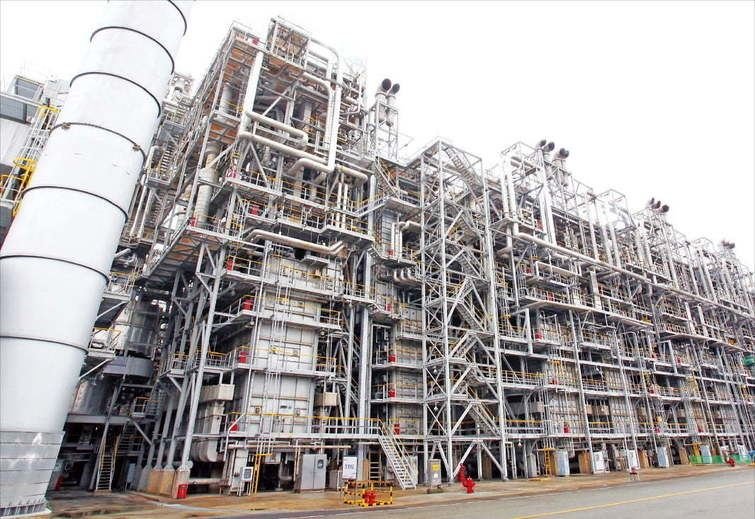
Consumer News and Business Channel (CNBC) reported on the 28th (local time) that many people in the United States are worried as gas station prices surge amid a war in Iran sparked together with the State of Israel. However, it warned that an even more serious problem is petrochemical products like Naphtha.
Prices of petroleum-derived byproducts such as benzene, butadiene, ammonia, styrene, and Naphtha are all rising together, pushing overall prices higher.
These byproducts from crude oil are used almost everywhere in daily life, from medical silicone gloves to food packaging materials.
Year-end shopping season also at risk
Stanislav Krykun, chief executive officer (CEO) of Polish packaging company DST-Pack, said production costs are already climbing. He noted, "Chinese plastic suppliers recently raised prices by about 15%," adding, "They cited higher raw material costs and general market uncertainty as the reasons."
The packaging materials produced by DST-Pack are exported across the world, including to the United States. Consumer prices may not rise immediately, but higher costs will ultimately be unavoidable.
Price increases are also expected during this year’s Christmas shopping season. Companies are already placing orders for packaging materials in preparation for the year-end rush.
If it is not wood, it is oil-based
Tom Sung, assistant professor of energy finance at the Ralph Lowe Energy Institute at Texas Christian University, expressed concern that the shock from higher petrochemical costs will be substantial everywhere and in virtually everything.
Sung said, "Petrochemical products are used very broadly, and they particularly affect everything we use and consume," adding, "Unless something is made of wood, it is hard to find a product that does not contain some oil- or natural-gas-based byproduct."
He added, "The amount of plastic alone used by car and pickup truck manufacturers is enormous."
Gulf petrochemical supplies cut off
These petrochemical supplies are now experiencing serious disruptions.
Of the 193 operating petrochemical facilities in the Middle East, about 79% are concentrated in just three countries: Kingdom of Saudi Arabia (KSA), Iran, and Qatar. KSA alone accounts for about 75% of total production capacity.
Sung explained that petrochemical production in the Gulf Cooperation Council (GCC) countries totals 150 million tons a year, representing roughly 12% of global output. GCC members include KSA, United Arab Emirates (UAE), Kuwait, Oman, Qatar, and Bahrain.
All of the petrochemical products they produce are shipped through the Strait of Hormuz. With Iran tightening its grip on this sea lane, supplies are being severely disrupted.
Inflation inevitable
Jeff Kremmel, founder of energy consulting firm Crimmel Strategy Group, warned that shortages and price increases in petrochemical products will eventually lead to higher prices for textiles, detergents, food, and beverages.
Kremmel emphasized, "Far too many things in this world are packaged and transported in various forms of plastic."
All plastics are derived from petroleum byproducts such as Naphtha, propylene, methanol, ammonia, and styrene.
Kremmel stressed, "Naphtha is really important," calling it "a critical feedstock that runs through the entire economy."
He added that even if the war were to stop immediately, it would take time for supply and demand to return to previous levels.
Archie Sethi, chief credit officer (CCO) at Moody's Corporation, noted that after the COVID-19 pandemic, the war in Ukraine, and the disruption in the Red Sea, the Strait of Hormuz is now blocked. He predicted that, although excess production by Chinese refiners is cushioning the impact for the moment, once those inventories are drawn down, inflation will flare up.
Production of goods worth 3.85 trillion dollars at risk
Peter Swartz, co-founder and Chief Scientific Officer (CSO) of supply chain analytics firm Altena, said markets have now begun to price in uncertainty. He added that, regardless of how the conflict unfolds, long-term shocks such as higher prices have become unavoidable.
Swartz pointed out that petrochemical products go into goods worth tens of trillions of dollars, and those goods in turn are used in other goods worth tens of trillions more. He stated flatly that there is no magic substitute for petrochemicals.
According to Altena, the Gulf region supplies 733 billion dollars’ worth of "feedstock fractions" when petrochemicals, intermediate goods, and finished products are combined. This accounts for about 22% of global supplies of ethylene, propylene, butadiene, benzene, toluene, xylene, methanol, glycol, Methyl tert-butyl ether (MTBE), epoxides, acetic acid, acrylic acid, Purified Terephthalic Acid (PTA), acrylonitrile, and melamine.
The closure of the Strait of Hormuz cuts off this supply chain, triggering knock-on effects for the production of goods worth a total of 3.85 trillion dollars, ranging from toothpaste to towels.
Cost increases stemming from supply disruptions could lead to stagflation, where inflation rises while the economy contracts.
Nouriel Roubini, professor emeritus at New York University (NYU) and often dubbed "Dr. Doom," warned in a CNBC interview on the 27th that if U.S. President Donald Trump moves to further escalate against Iran, it could trigger stagflation.
[email protected] Reporter Song Kyung-jae Reporter