Angered Trump Says "Our Allies Are Not at Our Side," Raises Possibility of Leaving NATO
- Input
- 2026-03-28 10:42:06
- Updated
- 2026-03-28 10:42:06
This appears to stem from his view that military cooperation from allied nations has been insufficient amid heightened tensions with the Islamic Republic of Iran.
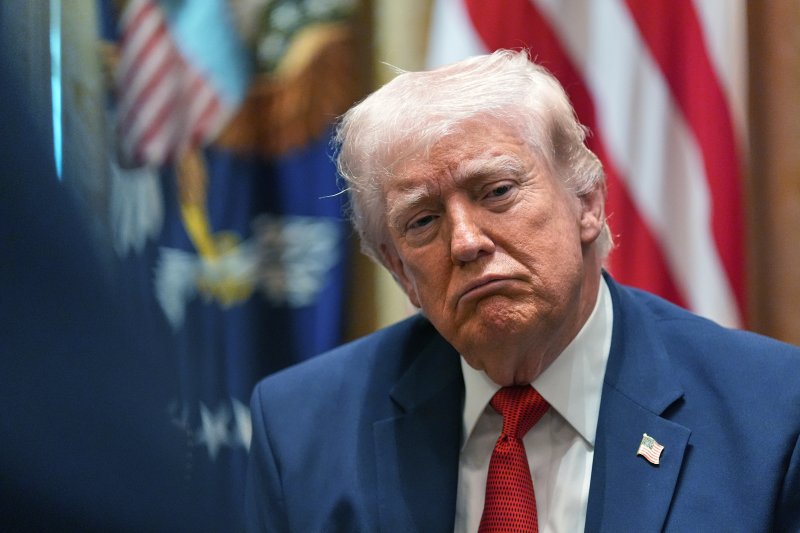
On the 27th (local time), Donald Trump spoke at the Future Investment Initiative (FII) hosted by the Public Investment Fund (PIF), Saudi Arabia's sovereign wealth fund, in Miami, State of Florida. He said, "We have protected our allies for a long time, but now we have to ask whether we still need to," openly questioning the role and responsibilities of the alliance.
He was particularly critical of European NATO members for failing to respond actively to requests to dispatch warships in connection with the situation in the Strait of Hormuz.
The President of the United States argued, "It was a very wrong decision not to provide even minimal military support," and asked rhetorically, "If they are not at our side, why should we protect them?"
His remarks are being interpreted as a signal that the collective security system that has lasted for more than 70 years may be headed for a crack. Since its founding in 1949, NATO has operated on the principle that an attack on one member is treated as an attack on all, and the United States has served as the central pillar of that system.
The comments go beyond a simple expression of frustration and hint at the possibility of real policy change, amplifying their impact. Immediately afterward, Donald Trump joked that his remarks were "worthy of breaking news," yet he repeatedly underscored his distrust of allied nations.
Recently, the United States has been asking the Republic of Korea (South Korea), Japan, and European countries for military support in response to moves by the Islamic Republic of Iran to threaten closure of the Strait of Hormuz. However, as key allies have taken a cautious stance, analysts say the President of the United States has grown increasingly dissatisfied.
This pressure may extend not only to Europe but also to allies in Asia. Donald Trump has previously criticized South Korea and Japan for what he sees as inadequate defense spending and military contributions, and he appears to be approaching the current issue in the same context.
Skepticism toward NATO has been a consistent position for Donald Trump. During his presidential campaign, he criticized member states for low defense spending and warned that "countries that do not contribute enough may not be protected," sparking controversy.
Although NATO members later agreed to increase defense spending as a share of Gross Domestic Product (GDP), the latest dispute has brought tensions back to the surface.
Meanwhile, the President of the United States also hinted at the possibility of additional military action following the Iran crisis. He stated, "We have built a powerful military and will use it when necessary," adding, "The next target could be Cuba."
The United States has been ratcheting up pressure on Cuba since the push for regime change in Venezuela, pursuing a strategy that combines diplomatic negotiations with the option of military measures on the table.
vrdw88@fnnews.com Kang Jung-mo Reporter