Trump Says "We Need to Open Hormuz" and Mentions Talks with Iran, Slips and Calls It the "Trump Strait"
- Input
- 2026-03-28 10:27:53
- Updated
- 2026-03-28 10:27:53
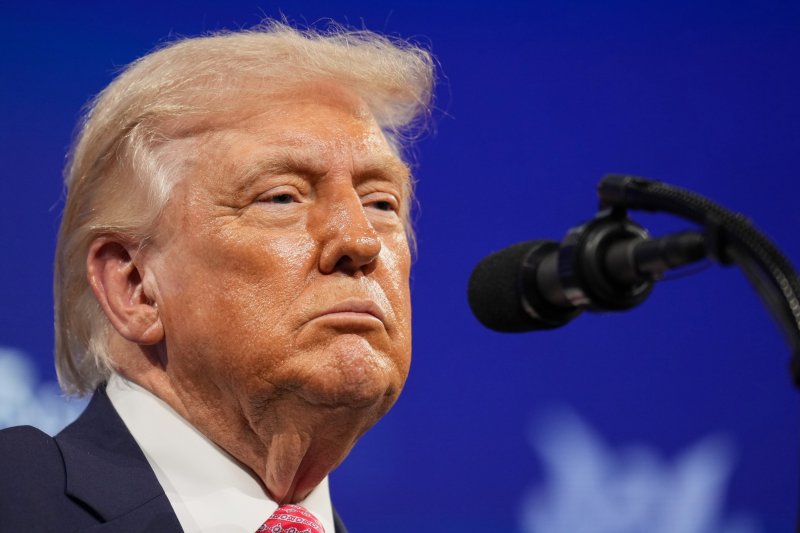
The Financial News reported that President Donald Trump said negotiations with the Islamic Republic of Iran are under way and again called for the opening of the Strait of Hormuz.
During this process, he mistakenly referred to the strait by the wrong name, a slip that has drawn international attention.
According to foreign media, President Donald Trump stated on the 27th (local time) at the Future Investment Initiative Summit (FII Summit) held at the Faena Forum in Miami Beach, State of Florida, that "talks are under way to end the war," referring to roughly a month of armed clashes.
Regarding the progress of the talks, he stressed, "I hope we can achieve results, but the Islamic Republic of Iran must act first."
President Donald Trump also delivered a hardline assessment of Iran’s military situation. He claimed that "Iran is on the run" and argued that its leadership, navy, air force, and nuclear program have all suffered serious damage. Observers see these remarks as an attempt to underscore US leverage in the negotiations.
In particular, while demanding that the Strait of Hormuz be opened, he mistakenly referred to it as the "Trump Strait."
He quickly corrected himself, saying he had meant the "Strait of Hormuz" and calling it "a terrible mistake." He then added that the media would "slam" him for the remark, while noting that "this doesn’t happen often."
The Strait of Hormuz is a key route for global crude oil shipments and a strategic chokepoint where tensions in the Middle East can directly affect the global energy market. Control over the strait and whether it remains open are therefore seen as issues with major geopolitical and economic implications.
Meanwhile, the United States is reported to have used the Islamic Republic of Pakistan as a mediation channel to deliver a set of tough demands to Iran.
These reportedly include 15 items such as a complete halt to uranium enrichment, dismantling key nuclear facilities, limiting missile capabilities, and ending support for proxy forces in the region. Most of these are issues the Islamic Republic of Iran has repeatedly refused to accept in the past.
In response, Iran has put forward a five-point counterproposal centered on recognition of its full control over the Strait of Hormuz. Given the wide gap between the two sides, many expect it will be difficult to reach an agreement in the short term.
At the same time, President Donald Trump’s speaking style and political behavior are again drawing attention. Since returning to office, he has continued to attach his name to major institutions, policies, and facilities, and some observers interpret the latest "Trump Strait" remark in that same context.
Experts note that these negotiations could significantly affect not only the situation in the Middle East but also the global energy market, and say the world should closely watch how events unfold.
vrdw88@fnnews.com Kang Jung-mo Reporter