Government warns gas stations raising prices on existing stock after second fuel price cap
- Input
- 2026-03-28 09:33:25
- Updated
- 2026-03-28 09:33:25
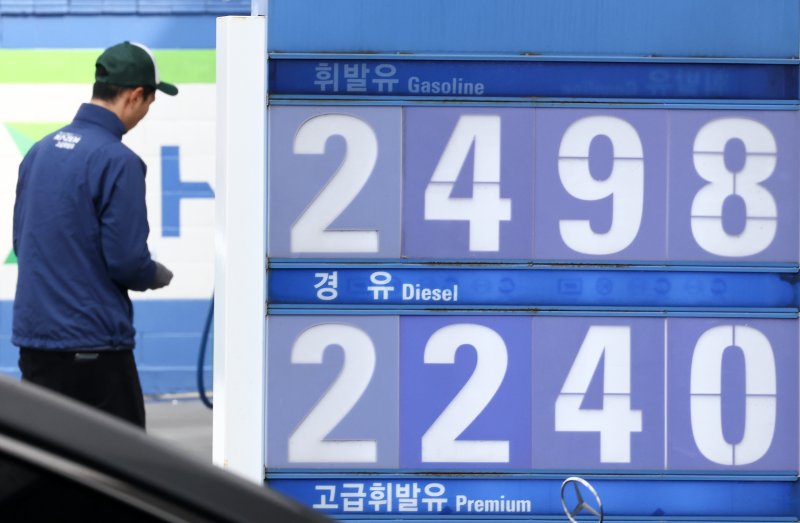
As the new maximum fuel prices were raised at midnight the previous day, some gas stations began exploiting the change by taking unfair profits from existing inventory. In response, the Government of the Republic of Korea issued a strong warning.
According to industry sources on the 28th, the Ministry of Trade, Industry and Resources (MOTIR) stated in a press release the previous day, "The Government of the Republic of Korea is closely monitoring price movements at about 10,000 gas stations nationwide," and added, "If gas stations raise prices immediately after the second price cap takes effect, we will regard this as profiteering that abuses a policy introduced to ease the public's burden, and we will respond strictly under a 'zero tolerance' principle."
The ministry went on to say, "The Government of the Republic of Korea plans to introduce a 'One-Strike-Out system' under which contracts with Korea National Oil Corporation (KNOC) Economy Gas Stations will be terminated immediately if they sell fuel at excessively high prices, even though they should be setting an example in stabilizing prices."
An analysis by the Opinet oil price information system and the Energy and Petroleum Market Monitoring Group showed that as of 4 p.m. on the first day of the second fuel price cap, about 35% of gas stations nationwide (3,674 locations) had raised their retail prices compared with the previous day. Among them, roughly 13% (1,366 locations) sharply increased prices by at least 60 won per liter.
Earlier, starting at midnight the previous day, the Government of the Republic of Korea set the second maximum prices applied to refinery shipments at 1,934 won per liter for gasoline, 1,923 won for diesel, and 1,530 won for kerosene, raising them by 210 won per liter from the first cap.
The problem is that most of the fuel currently being sold at gas stations is cheaper inventory purchased under the first price cap. The Government of the Republic of Korea views raising pump prices before receiving new supplies subject to the second cap as obtaining unfair gains by exploiting the timing gap during the policy transition.
MOTIR noted, "In the past, when oil prices rose, they went up quickly, but when they fell, they came down slowly, and refiners and gas stations blamed each other for this asymmetry." It added, "However, while the fuel price cap is in force, refinery supply prices are fixed, so if retail prices at gas stations rise sharply, the Government of the Republic of Korea will consider gas stations responsible for the asymmetry."
welcome@fnnews.com Jang Yu-ha Reporter