Ahead of Prosecutors' Office Abolition, Staff Exodus Accelerates...58 Resignations This Year Alone
- Input
- 2026-03-28 08:54:19
- Updated
- 2026-03-28 08:54:19
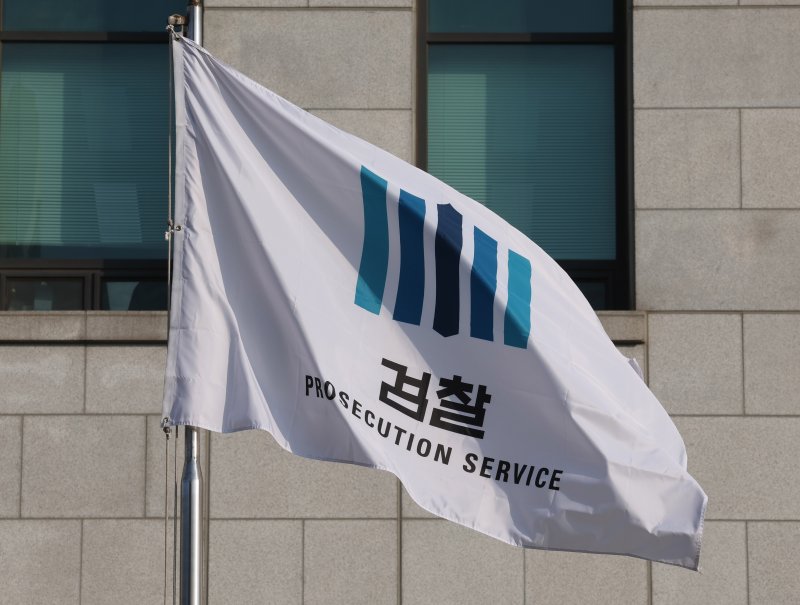
With just six months left before the abolition of the Prosecutors' Office, the outflow of prosecutorial personnel is accelerating. Not only resignations but also leaves of absence and secondments to special investigation teams are shrinking the workforce, prompting voices inside the organization that say normal operations are no longer possible.
According to the Ministry of Justice (MOJ) on the 28th, 58 prosecutors resigned between January and March this year, and 67 prosecutors were dispatched to five special investigation teams. That means more people have left than the current staff of the Incheon District Prosecutors' Office, which, with 106 prosecutors, is the second-largest office in the country.
Prosecutor resignations reached 175 last year, the highest figure in a decade. In just three months, another one-third of that number has left, continuing the exodus. It is known that the resignations of several junior prosecutors who recently expressed their intention to quit have not yet been formally processed. Once they are included, the number of departures is expected to exceed 60.
The unsettled atmosphere appears to be driving up the number of prosecutors on leave as well. According to the office of Joo Jin-woo of the People Power Party (PPP), 132 prosecutors took leave last year. This included 109 on parental leave and 19 on medical leave, the highest number of leaves since 2016. Compared with 99 in 2024, this represents an increase of about 25% in just one year.
With resignations, secondments to special investigation teams, and leaves of absence all overlapping, many prosecutors' offices now have fewer than half of their authorized staff actually on duty. In fact, the 10 regional prosecutors' offices that have a deputy chief prosecutor in place are operating with only about 55% of their approved headcount.
Inside the prosecution, some are even using the phrase "bankrupt branch office." Prosecutor Ahn Mi-hyun of the Cheonan Branch of the Daejeon District Prosecutors' Office posted on Facebook on the 25th under the title "Bankrupt Branch Office," writing, "Among our current staff, there are seven first-year prosecutors for whom the Cheonan Branch is their first posting. They have all disappeared somewhere under various labels such as special investigation teams and joint investigation headquarters."
She went on, "Recently, two of our eight investigative prosecutors announced their resignations," adding, "Yesterday I heard that a prosecutor at a regional prosecutors' office collapsed and was taken to the intensive care unit, and today a junior prosecutor at our office, who seemed to treat working late as routine, was rushed to the emergency room."
She continued, "The number of unresolved cases per investigative prosecutor has long since surpassed 500, and each of us has more than 100 cases that the police decided not to refer for indictment," lamenting, "Even with late nights on weekdays and coming in on weekends, we simply cannot keep up."
Traditionally, departures tended to occur among senior prosecutors around the time of personnel reshuffles, but concern is growing as rank-and-file prosecutors are now leaving in noticeable numbers. Of the 175 prosecutors who resigned last year, 66 were line prosecutors. Analysts say that after the abolition of the Prosecutors' Office was officially announced, and amid continuing controversy over the decision to drop the appeal in the Daejang-dong case and subsequent personnel moves, even front-line prosecutors responsible for day-to-day work are walking away from the organization.
Prosecutor Ryu Mirae of the Busan District Prosecutors' Office, in her fifth year after appointment and a 10th bar exam passer, posted a resignation message on the internal network on the 26th, stating, "In a situation where political logic is shaking the very foundations of the judicial system, I have concluded that I can no longer perform my duties in the way I believe they should be carried out."
She added, "We are now facing a reality where, when a victim in pain comes to us, all we can do is say that we will pass the case on to the police," and asked, "Who will be held accountable for this judicial vacuum?"
[email protected] Jang Yu-ha Reporter