Global oil prices break above $110 as two Chinese merchant ships fail to pass Strait of Hormuz
- Input
- 2026-03-28 01:57:13
- Updated
- 2026-03-28 01:57:13
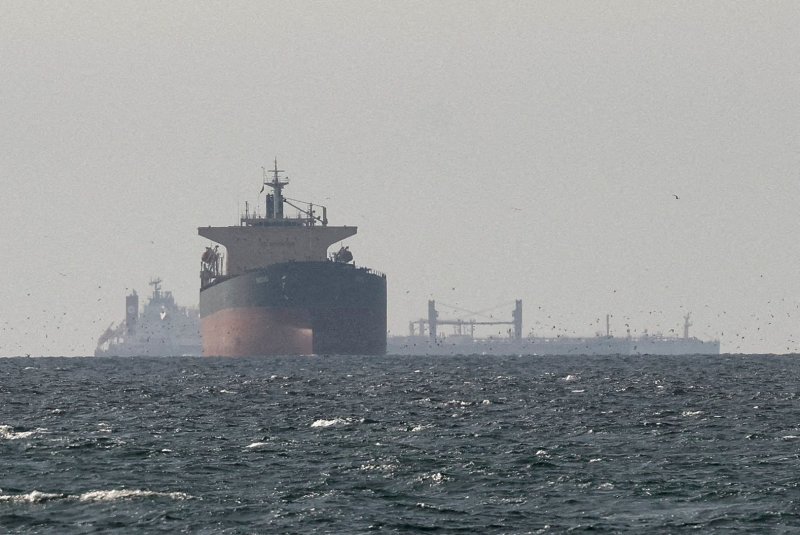
On the 27th (local time), international oil prices surged more than 3% again, breaking through the $110-per-barrel mark.
News that two Chinese merchant vessels attempted to transit the Strait of Hormuz but were blocked and turned back pushed prices higher. It confirmed that, contrary to its public pledges, Iran is still effectively blocking this critical waterway, reigniting fears of supply disruptions.
According to the Consumer News and Business Channel (CNBC), May futures for Brent Crude Oil, the global benchmark, jumped $4.56, or 4.22%, to settle at $112.57 per barrel.
May futures for West Texas Intermediate crude oil (WTI), the U.S. benchmark, also soared $5.79, or 5.66%, to close at $99.64 per barrel.
On a weekly basis, however, international oil prices posted only modest gains.
Brent Crude Oil rose 0.24%, while WTI gained 1.34%.
The sharp rise in prices that day stemmed from renewed concerns about a blockade of the Strait of Hormuz. Citing ship-tracking firm MarineTraffic, CNBC reported that two ultra-large container ships (ULCs) operated by China COSCO Shipping Corporation Limited attempted to pass through the Strait of Hormuz but were forced to turn back. Iran has consistently said that friendly vessels would be allowed to transit the strait. China is an ally of Iran.
According to MarineTraffic, this was the first time since the outbreak of the war involving Iran that merchant ships belonging to a major carrier such as China COSCO Shipping Corporation Limited, the world’s fourth-largest shipping company, had attempted to transit the Strait of Hormuz.
MarineTraffic stated in a social media post, "The overnight developments suggest that the Strait of Hormuz remains highly unstable."
[email protected] Song Kyung-jae Reporter