"Can You Eliminate Toilet Germs with Salt?"...Does It Really Work [Health Issue]
- Input
- 2026-03-28 07:00:00
- Updated
- 2026-03-28 07:00:00
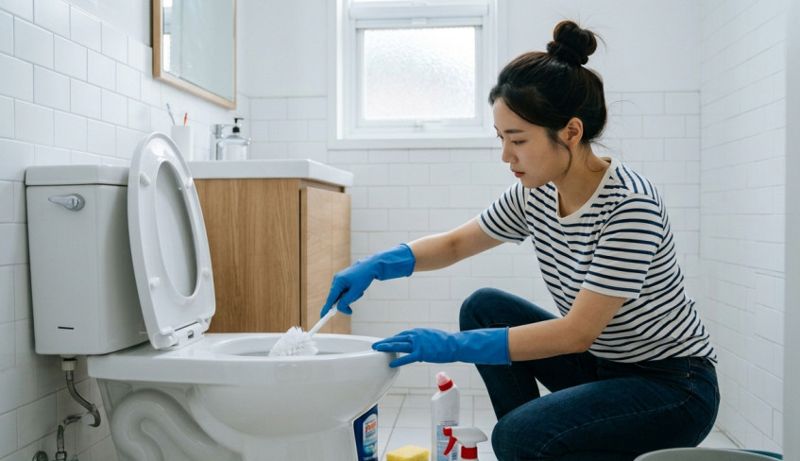
[The Financial News] Tips on cleaning toilets with salt are going viral on online communities and social media. The method claims that if you pour salt into the toilet bowl and then add hot water, you can eliminate bad odors, germs, and limescale all at once. It is drawing attention because it supposedly keeps the toilet clean even without special cleaning agents, but many are questioning how effective this method really is.
However, the Korea Disease Control and Prevention Agency (KDCA) defines cleaning as the process of wiping away visible contaminants and some microorganisms from surfaces using soap, detergent, and water. Disinfection, by contrast, is described as a separate step in which specific products are used to reduce remaining pathogens.
The bathroom is considered one of the areas where maintaining hygiene is most critical. KDCA recommends regularly wiping and disinfecting frequently touched surfaces such as toilet lids, faucets, and door handles. These places are constantly exposed to moisture and humidity, creating an environment where various germs can multiply rapidly.
The claim that salt alone can completely eradicate germs lacks scientific support. That said, it would be an overstatement to say the salt method is entirely useless. When scrubbing the inside of the toilet, salt can help to some extent in removing limescale and dirt.
The problem arises when this limited effect is exaggerated as a way to eliminate odors or achieve perfect disinfection. It is unrealistic to expect that simply pouring salt into the bowl will kill all harmful microorganisms.
There are also safety concerns when applying this method. Pouring very hot water into the bowl can damage the porcelain or internal parts of the toilet. In addition, increasing the amount of salt does not mean the cleaning power will rise in direct proportion. Rather than relying on home remedies of unclear origin, it is far better to carry out proper cleaning on a regular basis.
The Ministry of Environment advises using only approved or registered disinfectant products and following safety guidelines such as proper ventilation. For spray-type products, it is recommended to apply them to a cloth first and then wipe the surface, as direct spraying can lead to inhalation through the respiratory tract. Before starting any thorough cleaning, it is also essential to check the recommended concentration and contact time indicated on the product label.
Proper toilet cleaning should begin from deep inside the bowl. Focus on scrubbing the waterline and the underside of the rim, where moisture directly contacts the surface, to remove buildup. Depending on the situation, it is advisable to use dedicated cleaners or disinfectants together. To finish, flush to wash away any residue, and clean nearby tiles and other high-contact areas at the same time.
When using chemical cleaners, it is more effective to let them sit for a certain period rather than scrubbing immediately after spraying. You can only achieve full elimination of microorganisms if you strictly follow the contact time specified by the manufacturer.
Household tips that circulate online often spread quickly because they are easy to follow and cost-effective. However, not all of these suggestions are backed by solid evidence of effectiveness, so it is important to carefully assess how reliable the information is before putting it into practice.
hsg@fnnews.com Reporter Han Seung-gon Reporter