"Will They Sit Down in Pakistan?" US and Iran Enter Negotiating Phase One Month Into War
- Input
- 2026-03-27 20:33:34
- Updated
- 2026-03-27 20:33:34
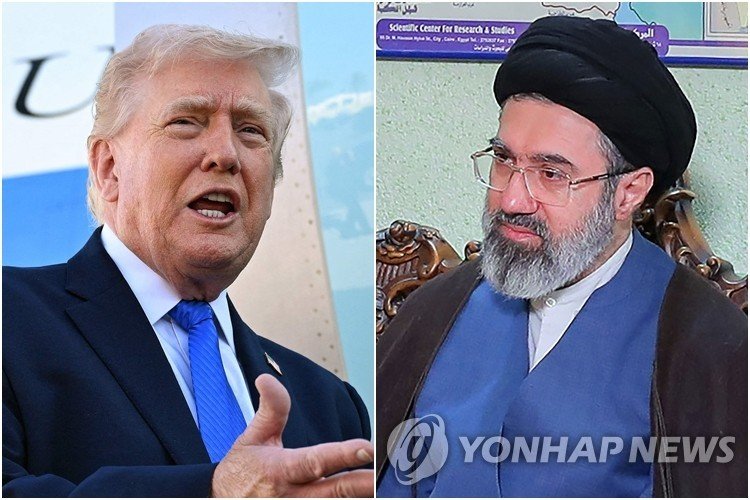
[The Financial News] The United States of America (US) and the Islamic Republic of Iran (Iran) are increasingly likely to enter direct talks aimed at ending the war, just one month after it broke out. However, the two sides are sending conflicting signals over whether negotiations have actually begun, engaging in an intense battle of nerves.
According to Deutsche Presse-Agentur (dpa) on the 27th (local time), Federal Minister for Foreign Affairs of Germany Johann Wadephul stated that the US and Iran, after a series of indirect contacts, are preparing for face-to-face negotiations in the Islamic Republic of Pakistan.
In a German radio interview, he said, "There have been indirect contacts between the two sides, and preparations for direct talks have been completed," adding, "It appears that talks will be held in Pakistan in the near future."
Minister Wadephul described the contacts so far as "the first sign of hope and trust." He also explained that the two sides seem to have exchanged their initial positions in writing through a third party.
Pakistan has in fact formalized its role as mediator. Deputy Prime Minister and Foreign Minister of Pakistan Muhammad Ishaq Dar said, "The US and Iran are engaged in indirect talks through messages conveyed via Pakistan," adding, "The US has presented a 15-point proposal to end the war, and Iran is reviewing it." He noted that the Republic of Türkiye and Egypt, among others, have expressed support for this initiative.
Iran, by contrast, is officially denying that any negotiations are taking place. Ali Akbar Jokar, Iran's ambassador to Kazakhstan, drew a clear line, saying, "No negotiations are currently under way." He did, however, acknowledge that neighboring countries are moving to support the resumption of talks.
In this way, the two sides are sending divergent messages from the outset over whether talks have begun, engaging in a tug-of-war over who will lead the negotiations. The US is publicly highlighting the possibility of talks to increase pressure, while Iran appears to be trying to maximize its bargaining power by officially denying that negotiations are in progress.
US President Donald Trump has claimed that Iran has agreed to key issues such as abandoning nuclear weapons, yet he continues to mention the possibility of a ground war, pursuing a two-track strategy that combines pressure and negotiation. Special Envoy for the Middle East Steven Charles Witkoff has also said that a list of 15 demands was delivered via Pakistan, thereby seizing the initiative in framing the talks.
In response, Iran is reported to have put forward a counterproposal that includes war-damage compensation, guarantees to prevent a recurrence of the conflict, and recognition of its sovereignty over the Strait of Hormuz. Given the still-wide gap between the two sides over the terms of any agreement, observers say it remains unclear whether a deal can be reached in the short term.
km@fnnews.com Kim Kyung-min Reporter