"Ships in Hormuz Paying Transit Fees to Iran in Renminbi"
- Input
- 2026-03-27 18:45:33
- Updated
- 2026-03-27 18:45:33
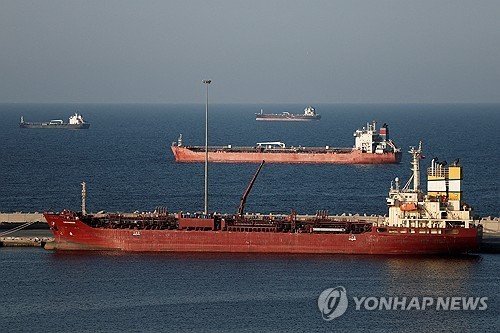
[The Financial News] Islamic Republic of Iran (Iran) has effectively taken control of the Strait of Hormuz, imposing transit fees on some vessels and reportedly accepting Renminbi (RMB) as the means of payment. Observers note that this key maritime logistics chokepoint is undergoing a realignment on both military and financial fronts.
According to shipping data provider Lloyd's List Intelligence on the 27th, only a very small number of ships currently passing through the Strait of Hormuz are using a route directly controlled by the Islamic Revolutionary Guard Corps of Iran (IRGC). On this route, the IRGC offers escort services but requires vessels to undergo a prior approval process.
A total of 26 vessels have used this approved route since the 13th. Since the 15th, records of ships using the traditional general lanes have virtually disappeared. This suggests that the traffic regime in the strait is shifting from the existing international route system to an Iran-centered control structure.
Shipping companies must first make contact through brokers linked to the IRGC, then submit detailed information including their International Maritime Organization (IMO) registration number, vessel ownership structure, cargo details, destination, and crew list. Once they pass screening, they receive an approval code and routing instructions, and only approved ships are allowed to sail along Iran's territorial waters.
The report indicates that at least two vessels have paid transit fees, and the payments were made not in U.S. dollars but in RMB. This is seen as an attempt by Iran to circumvent U.S. sanctions by using RMB, as dollar transactions are heavily restricted.
However, not all ships are paying such fees. Some countries secure passage through diplomatic channels. The Government of India, for example, has stated that its vessels are transiting the strait without additional charges. Iran also maintains that it allows the passage of non-hostile ships based on prior consultations.
In fact, among the 142 vessels that passed through the Strait of Hormuz this month, 67% were found to be directly linked to Iran. In the past few days, that share has surged to around 90%. Among non-Iranian ships, those registered in Greece (15%) and China (10%) accounted for relatively large portions.
The main concern is legal risk. The IRGC is designated by the United States of America (U.S.) as a Foreign Terrorist Organization (FTO), and related transactions could be subject to criminal penalties. As a result, global shipping companies are increasingly avoiding any direct or indirect contact with the IRGC.
km@fnnews.com Kim Kyung-min Reporter