"Manager, how can I ever buy a house just on my salary? I've bet my life on '3x U.S. stocks'" [Manager Kim vs. Employee Lee]
- Input
- 2026-03-27 18:19:48
- Updated
- 2026-03-27 18:19:48
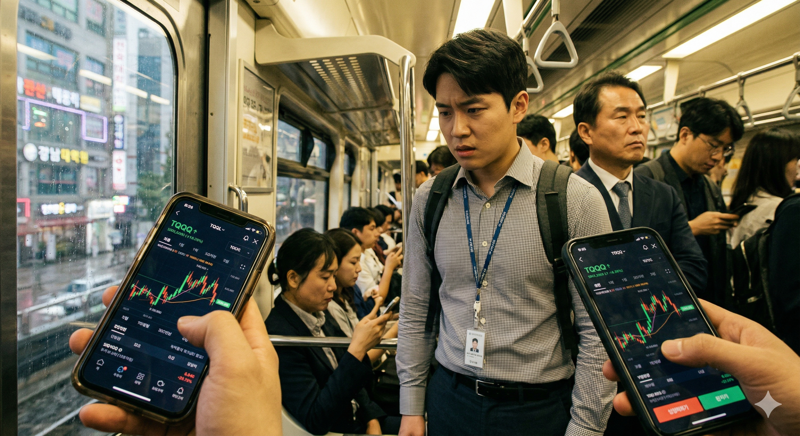
[The Financial News] "Lee, want to grab some fried chicken and beer after work?" At 6 p.m. on Friday, Manager Kim (49) from the sales team floated this suggestion in the department group chat. Employee Lee (28) drew a polite but firm line.
"I'm sorry, Manager. Because of the Iran war, I expect extreme volatility on the Nasdaq Stock Market (Nasdaq) tonight. I need to go home early and get ready for my 'real job.' A big opportunity has come."
For Manager Kim, the "real job" is the company that pays his salary. For Employee Lee, the "real job" is the U.S. stock market, which opens at 10:30 p.m. Korea time. For investors in U.S. stocks, war can mean a major opportunity, because most top-tier blue chips are hitting rock bottom.
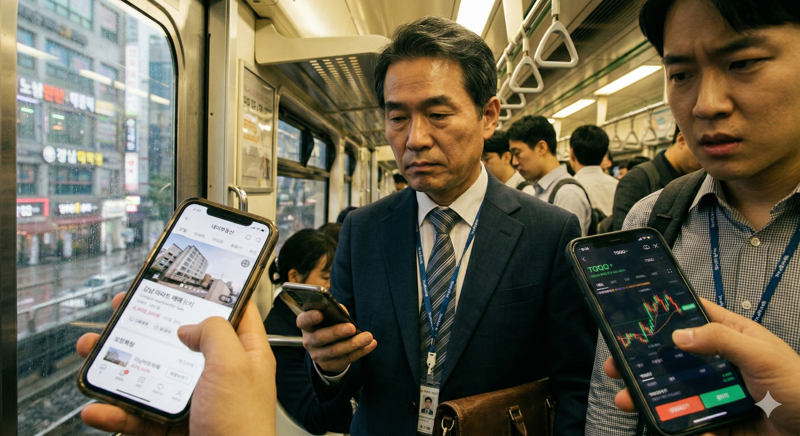
While Manager Kim compares time-deposit rates at commercial banks and slowly accumulates blue-chip shares to build a "safe retirement," Employee Lee pours half of his paycheck into an ultra-high-risk leveraged exchange-traded fund (leveraged ETF) that tracks the ups and downs of the U.S. market at three times the move.
On Friday nights, which mark the start of the weekend, the commute home for Korea's office workers is quietly splitting. The divide runs along a stark generational difference in philosophy toward market indices.
◇ "A fast track to ruin" vs. "the only escape hatch for a ladderless generation"
For Manager Kim’s generation, the first rule of investing is "controlling volatility" and "patience." Having lived through the IMF Crisis and the Lehman Brothers bankruptcy with no protection, he knows in his bones how terrifying a market crash can be. To him, leveraged products that gain 3% when the Nasdaq rises 1%, but lose 3% when it falls 1%, are not investments but a simple coin toss. His philosophy that "protecting your assets comes first" is a badge earned through decades of survival.
But Employee Lee’s calculator works in a completely different way. For Lee, volatility is not a risk to avoid but the only "accelerator pedal" that can enable a quantum leap in assets.
In a post–high-growth era, the 20s–30s generation has reached a chilling conclusion: an ordinary salaried worker who sticks to 1x savings products or safe assets will never be able to own even a single home under the Seoul sky. Even if they get hit three times as hard in a crash, they feel they must ride the threefold gains in the long-term upward trend of the U.S. market’s major bull runs to grab onto what remains of the ladder of social mobility. This desperation on the edge of a cliff is what is driving them into leverage.
That does not mean they see themselves as gamblers. They target mega-cap blue chips or leading sectors such as semiconductors that are likely to rebound first once the war ends. They bring in the Cboe Volatility Index (VIX), Relative Strength Index (RSI), Moving Average Convergence Divergence (MACD), and chart analysis to make what they view as rational decisions in today’s plunging market. They also scrutinize financial statements in detail.
Their conviction rests on the belief that U.S. stocks are effectively immortal and will be the first to bounce back. In their minds, this is clearly different from a pure gamble where you stake everything with nothing to fall back on.
◇ Koreans hold 24% of global SOXL assets... statistics prove their 'beast’s heart'
This tilt by younger investors toward leverage is not just anecdotal. It is backed by chilling numbers.
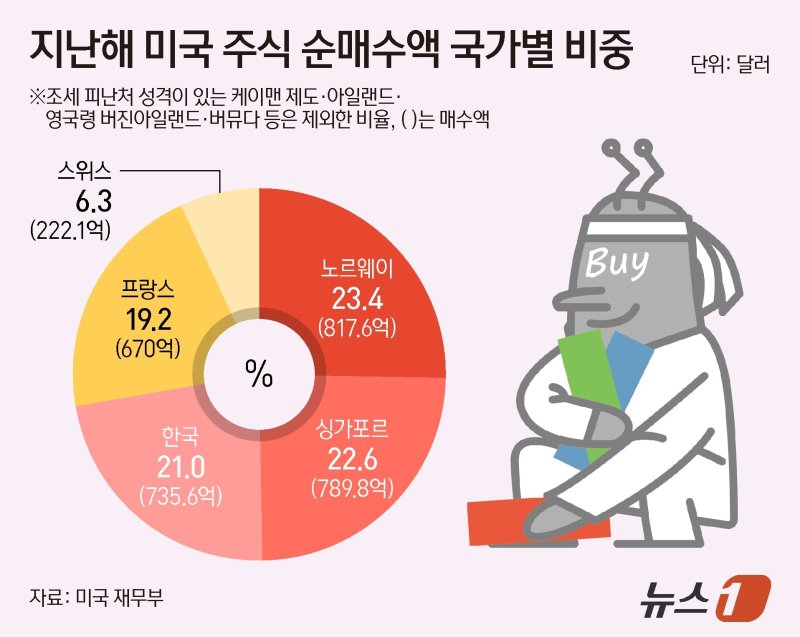
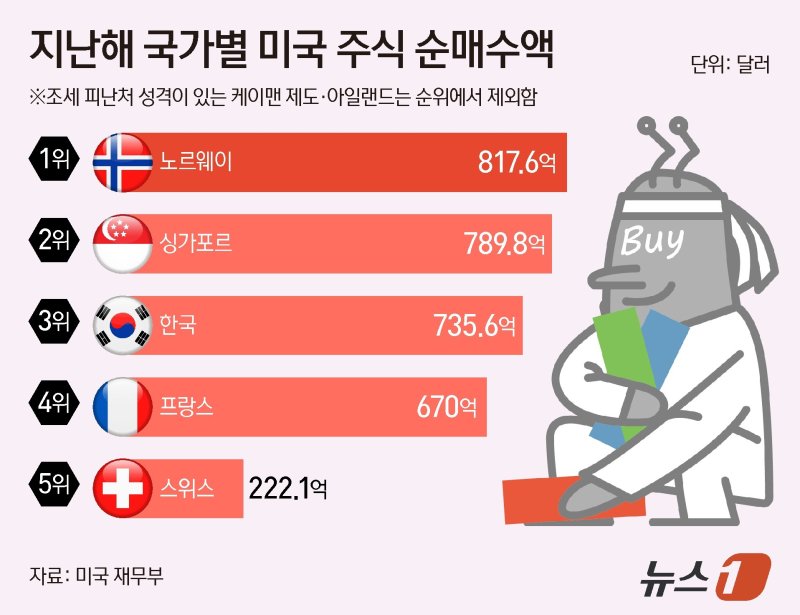
According to second-half 2024 data compiled by Korea Securities Depository (KSD) and U.S.-based asset managers, Korean individual investors investing in overseas stocks hold a staggering 24% of the total global assets of Direxion Daily Semiconductor Bull 3X Shares (SOXL), a leveraged ETF that tracks a U.S. semiconductor index at three times the move.
Koreans also account for as much as 33% of holdings in Direxion Daily TSLA Bull 1.5X Shares (TSLL), which delivers twice the share-price moves of Tesla, Inc.
In other words, Korean investors are holding more than a quarter of some of the world’s most high-risk derivative products that global investors trade. Rather than steadily accumulating "genuine" blue-chip stocks, many are throwing lump sums into products that magnify volatility two to three times over, hoping for a dramatic reversal of their fortunes. Their razor’s-edge trading style is laid bare in the data.
◇ Trap of 'negative compounding' or engine of wealth? Who will have the last laugh?
Experts in the capital market view this distorted concentration with concern. A research fellow at a major securities firm’s research center, who requested anonymity, warned, "A leveraged exchange-traded fund (leveraged ETF) has a 'negative compounding' structure where your account melts away even if the index merely moves sideways, so it is fundamentally ill-suited for long-term investing."
He continued, "However, we cannot simply dismiss the younger generation’s enthusiasm for leverage as mere 'addiction to speculation.'
It is a chilling social symptom, where the despair that labor income can never keep up with the pace of asset-price inflation is manifesting as blind faith in risky assets," he pointed out.
At 10:30 p.m., the bell finally rings to signal the opening of the U.S. market. Manager Kim cracks open a can of beer and turns on a variety show, his mind at ease. Employee Lee, eyes bloodshot, stares at real-time tick charts and spends the night with a beast’s heart. In a crash like the current one triggered by the Iran war, the volatility is even more extreme.
The safety of 1x exposure versus the precariousness of 3x leverage—no one can easily declare which choice is right. When the market’s waves finally calm, only the cold numbers in their bank and brokerage accounts will deliver the verdict.
jsi@fnnews.com Jeon Sang-il Reporter