Securities lending balance climbs back above 150 trillion won as volatility deepens and bearish bets stir
- Input
- 2026-03-28 06:00:00
- Updated
- 2026-03-28 06:00:00
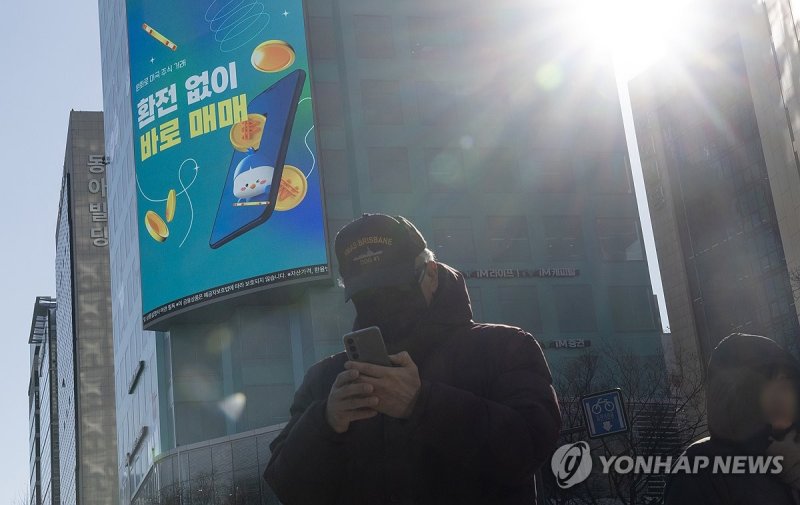
As volatility in the domestic stock market has increased in recent days, more investors are positioning for a decline. With the securities lending balance climbing back above 150 trillion won and money flowing into so-called "geobus" products that deliver twice the inverse return of the index, expectations for a market correction are growing.
According to The Financial News and data from the Korea Financial Investment Association on the 28th, the outstanding balance of securities lending transactions stood at 150.2372 trillion won as of the 25th. The balance had hit an all-time high of 157.9299 trillion won on the 26th of last month before falling into the 140 trillion won range, but it has recently started to rise again.
The securities lending balance refers to transactions in which foreign or institutional investors lend shares to other investors for a fee, and it is widely viewed as a leading indicator of short selling. Because short sales are executed by borrowing shares accumulated in this lending balance and selling them in the market, a larger balance creates a more favorable environment for short-selling activity.
Short-selling activity itself is also on the rise. On the Korea Composite Stock Price Index (KOSPI), short-selling turnover fell from 3.0445 trillion won on the 4th—right after the Middle East crisis erupted—to 1.2916 trillion won on the 17th, but then jumped to 2.7229 trillion won on the 23rd. Short selling is an investment strategy in which an investor borrows shares and sells them, then buys them back at a lower price if the stock falls; it is effective when one expects future prices to decline from current levels.
As sharp swings have played out in the domestic market following the Middle East conflict, more investors appear to be betting on a short-term correction phase. In particular, institutions and foreign investors were net buyers of 381.6 billion won and 23.3 billion won, respectively, in KODEX 200 Futures Inverse 2X over the past month. This Exchange-Traded Fund (ETF) tracks declines in the KOSPI and aims to deliver twice the inverse return of the index.
Kang Dae-seung, a researcher at SK Securities, noted, "Since the outbreak of the war with Iran, volatility has expanded rapidly." He added, "For the KOSPI, volatility control mechanisms such as sidecars and the circuit breaker mechanism have been triggered multiple times this month, and the KOSPI 200 Volatility Index (V-KOSPI), a key gauge of volatility, also remains at an elevated level."
Brokerages are increasingly concerned that rising oil prices could fuel inflation. This month, Brent Crude Oil, the benchmark for international oil prices, has been trading in the 90 to 100 dollar range. Given that high prices have already persisted for about a month, many expect upward pressure on inflation to be unavoidable.
Yoo Myung-gan, a researcher at Mirae Asset Securities, explained, "Concerns about inflation have intensified as disruptions to traffic through the Strait of Hormuz have continued due to the war." He went on, "Following the sharp rise in oil prices at the start of the year, caution over inflation in the second quarter of this year has persisted. Until price indicators are confirmed, there will be ongoing worries about potential interest rate hikes."
However, some analysts argue that because the fundamentals of the companies that have driven the domestic market’s gains since last year remain intact, the market could enter another upward phase once the Middle East crisis is resolved.
Kang emphasized, "We are in a phase where volatility has expanded due to the war, but we have not seen structural factors for a sustained downturn, such as damage to corporate earnings or a contraction in liquidity, and earnings forecasts for KOSPI-listed companies have actually been revised upward." He suggested, "A staggered buying strategy that takes advantage of heightened volatility still looks valid, although key risk factors such as a further rise in oil prices need to be monitored continuously."
Lee Sung-hoon, a researcher at KIWOOM Securities, observed, "Looking at the average KOSPI price pattern after eight past episodes of geopolitical uncertainty, the index tended to recover about 20 trading days after the event." He projected, "Given that institutions and foreigners have been heavy net sellers on the KOSPI so far this month, there is ample room for additional inflows going forward."
[email protected] Lee Sung-hoon Reporter