Israel mounts final offensive, concentrating strikes on Iran’s weapons production sites
- Input
- 2026-03-27 11:00:43
- Updated
- 2026-03-27 11:00:43
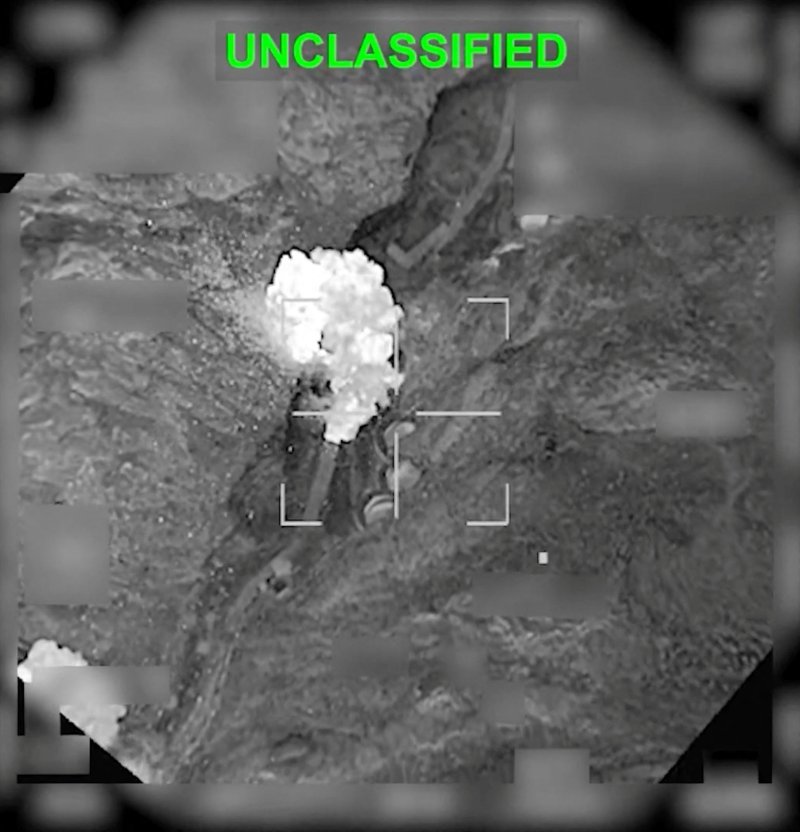
[The Financial News] Israel is shifting the focus of its air campaign against Iran from destabilizing the regime to destroying its military and industrial infrastructure.
On the 26th (local time), The Wall Street Journal (WSJ) reported that over the past four weeks Israel, working with the United States, has carried out more than 18,000 airstrikes and eliminated most of its initial priority targets. With U.S. President Donald Trump widely expected to seek an early end to the war, Israel is now concentrating on additional strikes, including on previously designated targets, to render Iran’s capabilities irrecoverable.
At the outset of the war, Israel and Prime Minister Benjamin Netanyahu drew up an ambitious plan to trigger a popular uprising in Iran through airstrikes and ultimately topple the regime. In line with that strategy, Israel conducted precision strikes on Iran’s internal security forces, checkpoints and even police vehicles as part of a psychological warfare campaign.
However, they have concluded that a popular revolt is unlikely as the Iranian government’s grip on power remains firm. As a result, the Israeli military halted attacks on Iran’s internal security forces earlier this week, and Netanyahu has stopped issuing messages urging the Iranian public to overthrow the regime.
Israel’s firepower is now focused on dismantling Iran’s weapons manufacturing capacity. This week, Israel carried out concentrated strikes on a cruise missile production facility in Tehran, a submarine manufacturing center in Isfahan, and several explosives production sites.
Farzin Nadimi, a senior fellow at The Washington Institute for Near East Policy, said, "The operation has shifted from a phase aimed at throwing the regime into disarray to one focused on degrading Iran’s military capabilities as much as possible before the war ends," adding, "Almost every defense plant has been hit with precision strikes at least twice."
In fact, USCENTCOM officially confirmed on the 25th that a large share of Iran’s missile, drone and warship production facilities had been destroyed or severely damaged.
Israeli security officials say Iran’s ability to pose a threat has been significantly reduced, and they assess the operation as a success even if the war were to stop now.
On the same day, Alireza Tangsiri, the navy commander of the Islamic Revolutionary Guard Corps (IRGC), was killed in an Israeli nighttime airstrike, dealing a major blow to Iran’s senior military leadership.
Skepticism, however, remains strong. Iran has not abandoned uranium enrichment, and its ballistic missile arsenal and funding for proxy forces across the Middle East remain intact. Arab states in the Gulf also worry that if the war ends in its current form, Iran will still retain effective control over the Strait of Hormuz.
Amir Avivi, a former senior official at Israel’s Defense Ministry, noted, "We do not know how much time is left before a negotiated settlement is reached," and stressed, "In the time that remains, the top priority is to destroy the defense industry, eliminate the leadership and neutralize the missile launchers."
jjyoon@fnnews.com Yoon Jae-joon Reporter