Trump Extends Iran Talks Again — Will He Stick to His ‘4–6 Week’ War Timeline?
- Input
- 2026-03-27 07:48:51
- Updated
- 2026-03-27 07:48:51
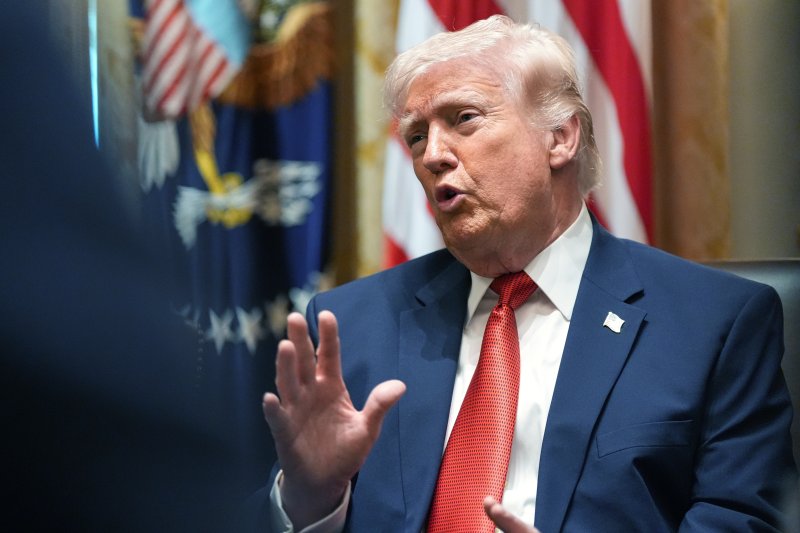
According to Financial News, Donald Trump, who had already postponed a strike on Iran’s power grid by five days, has extended the grace period by another ten days and signaled that peace talks will continue into April. Iran, which had previously reacted negatively to U.S. negotiating terms, has now stated that it wants the war to end.
On the 26th (local time), Trump wrote on the social media platform Truth Social, "At the request of the government of Iran, I am announcing that we are pausing the deadline for destroying power plants for ten days, until 8 p.m. Eastern Time on April 6." He added, "Fake news outlets and others are making false claims, but talks are under way and they are going very well."
Trump, who began attacking Iran together with Israel on the 28th of last month, is now considering deploying ground troops after Iran moved to control the Strait of Hormuz, a key global oil shipping lane. On the 21st, he warned on social media that if Iran did not fully reopen the strait within 48 hours, he would strike Iran’s power grid. Then on the 23rd, he abruptly claimed that negotiations with Iran were under way and announced a five-day postponement of the grid attack.
At the Cabinet meeting that day, Trump said, "Iran must make a deal, or it will face a continued, relentless offensive by the United States." At the same time, he asserted that Iran "is desperate for a deal," but added, "I saw an article saying I am desperate for a deal, but that is not true. I am not desperate at all. Quite the opposite. I don’t care either way."
In January, Trump attacked Venezuela, captured its president and first lady, and seized control of its oil industry. Asked whether he could also take control of Iran’s oil sector, he referred to Venezuela and said it was "one of the options." He claimed, "Working with Venezuela, we are doing extremely well. We have made enormous profits, and Venezuela is doing better now than at any time in its history."
If Trump keeps negotiations going until April 6 and then ends the fighting later that month, the war with Iran would conclude roughly four to six weeks after it began. The White House said in a statement on the 6th that the Iran operation would be wrapped up "within four to six weeks." According to a report by The Wall Street Journal (WSJ) on the 25th, Trump told aides in private that he needed to stick to the publicly stated duration of the Iran war. He told his staff that the war with Iran was in its final phase. Trump, who had been scheduled to visit China on the 31st of this month, has postponed the trip to May 14–15, a scenario that is only feasible if the Iran war ends within four to six weeks.
Foreign media reported that immediately after Trump postponed the power grid strike on the 23rd, he began talks with Iran and presented 15 demands, including full denuclearization. In response, an unnamed Iranian official, speaking to state-run Press TV on the 25th, reacted negatively to the U.S. terms and countered with five conditions, including measures to prevent a recurrence of war. He stressed that the United States could not unilaterally decide when the war would end.
Iranian President Masoud Pezeshkian mentioned ending the war during a phone call with Malaysian Prime Minister Anwar Ibrahim on the 26th. He emphasized, "What we want is a complete end to the war, and peace and security in the Middle East." The same day, U.S. Secretary of State Marco Antonio Rubio said of the talks with Iran, "There are mediator countries relaying messages, and there has been some concrete progress."
Meanwhile, Axios reported on the 26th, citing four sources, that the United States Department of Defense (DoD) has prepared four operational options for Trump to choose from in case he orders an expanded attack on Iran. The set of plans, dubbed the "final blow," includes scenarios such as seizing key positions near the Strait of Hormuz or capturing Iran’s main oil export hubs.
pjw@fnnews.com Park Jong-won Reporter