Maduro appears in U.S. court for second time, argues case should be dismissed over legal fees
- Input
- 2026-03-27 06:24:18
- Updated
- 2026-03-27 06:24:18
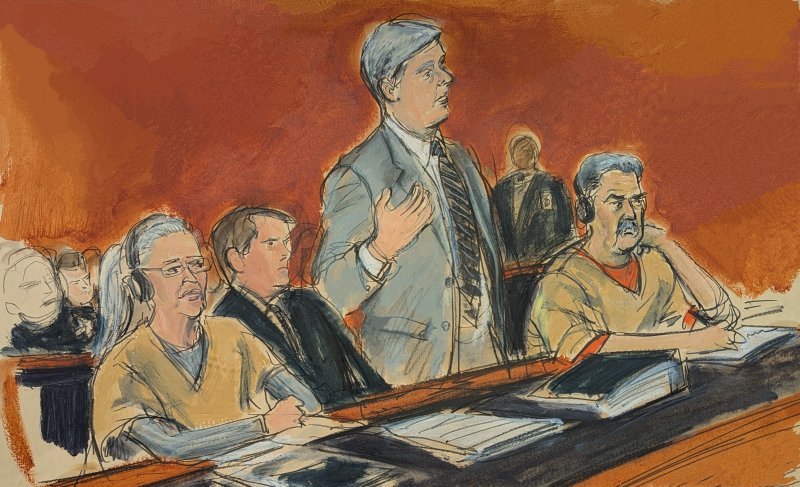
Financial News reported that Nicolás Maduro Moros, the president of Venezuela who was arrested in the United States of America in January, has appeared in court for the second time. As in the previous month, Maduro’s defense again asked the court to dismiss the case on the grounds of legal fees, but the request was denied.
According to Associated Press (AP) and other local media, Maduro and Venezuelan First Lady Cilia Flores appeared at the United States District Court for the Southern District of New York on the 26th (local time). The couple, who were arrested on January 3, first appeared in court on January 5 and are currently being held at the Metropolitan Detention Center, Brooklyn (MDC Brooklyn) in Brooklyn, New York. Earlier, the United States Attorney's Office for the Southern District of New York indicted Maduro on four counts, including conspiring to commit narcoterrorism.
Barry Pollack, who represents Maduro, stressed his client’s right to choose his own counsel during a pre-hearing conference. He argued that Maduro and his wife have the right to be represented by an attorney of their choice, but that they are currently unable to pay legal fees out of pocket and that the government of Venezuela should cover those costs.
Since 2019, the Office of Foreign Assets Control of the U.S. Department of the Treasury (OFAC) has designated the Maduro couple and the Venezuelan government as sanctions targets, blocking all transfers and transactions involving the United States of America. As a result, the Venezuelan government cannot pay for the couple’s legal representation within the United States. Pollack contended that the defendants’ inability, due to U.S. sanctions, to retain the lawyers they want constitutes grounds to dismiss the indictment. He advanced the same argument in a motion to dismiss filed with the court on the 26th of last month.
Prosecutors in New York City countered Pollack’s argument by stating, "The defendants looted Venezuela’s wealth," and asserted that allowing the Venezuelan government to pay their legal fees would effectively undermine the sanctions regime. Citing national security concerns and foreign policy considerations, they further argued that the usual right to choose counsel could not be applied to Maduro and his wife in the same way.
Judge Alvin K. Hellerstein, who is presiding over the case, acknowledged Pollack’s point about the right to counsel, saying it is indeed a constitutional right. However, he repeatedly emphasized that "this case is an exceptional one" and "not an ordinary case." He asked prosecutors whether there was any way to release Maduro’s funds currently frozen by OFAC so they could be used for legal fees. Prosecutors replied that this would only be possible if Maduro’s side brought a separate civil action.
Judge Hellerstein stated that "the right to mount a defense is paramount," partially accepting Maduro’s position. Given the complexity of the case and the heavy burden of preparing a defense, he noted that private counsel, rather than a court-appointed public defender, was necessary. At the same time, he made clear that he would not dismiss the case over the issue of legal fees. Hellerstein did not further address whether Venezuelan government funds could be used to pay the attorneys and ended the session without setting a date for the next hearing. Outside the courthouse, about 70 protesters gathered, holding demonstrations both for and against the trial of Maduro.
pjw@fnnews.com Reporter Park Jong-won Reporter