"If National Pension and Security Guard Pay Are Combined, It Comes to 3.4 Million Won... The Subway Is Free Too, So I Go to Work, and My Wife Likes It" [Retiree X's Design]
- Input
- 2026-04-18 08:30:00
- Updated
- 2026-04-18 08:30:00
It is the age when all welfare benefits guaranteed by the state begin for a 'formal' senior citizen.
Although there has been debate, free public transportation for older adults is seen as having expanded their range of activity and helped address senior-related issues.
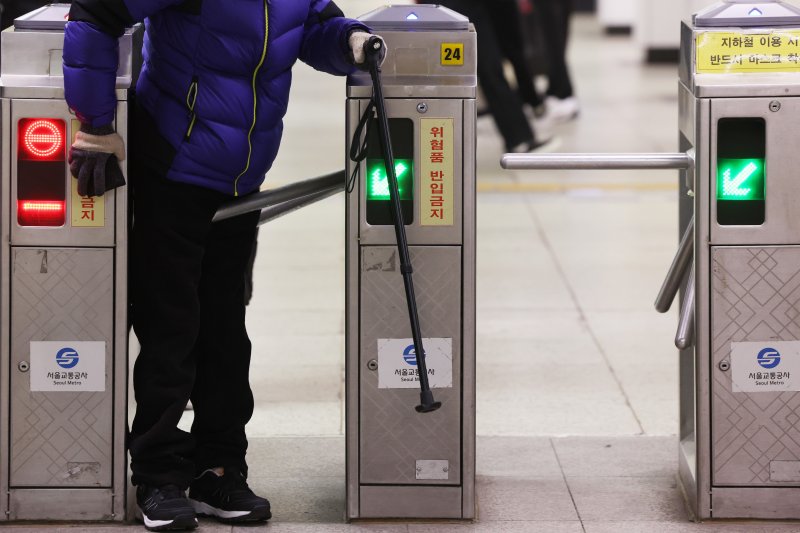
The photo shows an older adult passing through the ticket gate at Jongno 3(sam)-ga Station on the subway./Yonhap News Agency [The Financial News] 60 is no longer a full stop.As life expectancy races toward 90, age 60 is only two-thirds of the way through life.In an era when people routinely print new business cards after retirement and look for a 'second career,' 60 has become a time of transition, not retirement.
In its place, another number has emerged as the clearest boundary in our lives.
It is the age when all welfare benefits guaranteed by the state begin for a 'formal' senior citizen.
It is 65.
It is the age when all welfare benefits guaranteed by the state begin for a 'formal' senior citizen.This is the point where the results of how one prepared for old age are laid bare.
For some, it is the day when the 'official reward' for a lifetime of hard work begins.
For others, it is the day when a harsh report card on an unprepared old age arrives.
The photo shows an older adult passing through the ticket gate at Jongno 3(sam)-ga Station on the subway.The excitement of the 25th of every month: the start of a 'state-issued paycheck' The first change people feel on the morning they turn 65 is the expansion of their financial safety net.Kim Jong-ho, 65, a pseudonym, who lives in Seoul and was born in 1961, says he feels oddly happy whenever the 25th comes around.
He worked in sales for nearly 30 years at a mid-sized manufacturing company, and retirement left him feeling lost for a while."For the first few months after my salary stopped, I could literally see my bank balance shrinking.That was much scarier than I expected.
" he said.
It is the age when all welfare benefits guaranteed by the state begin for a 'formal' senior citizen.
Born in 1961, he began receiving the National Pension Service (NPS) at 63, and this year, when he turned 65, the Basic Pension was added.
Together, the two pensions now bring in just over 1 million won a month.It is not a large sum.
Still, Kim says it feels like a moment when he can finally breathe.
The photo shows an older adult passing through the ticket gate at Jongno 3(sam)-ga Station on the subway.The confidence that lets him buy a drink for friends now and then, or hand a crisp bill to a grandchild during the holidays, comes from that sense of security on the 25th.Guaranteed 'social mobility,' and a wider range of life He once woke up at 6 a.
m., took the subway to Onyang Oncheon station, enjoyed a hot spring bath, ate a cheap bowl of market-style pork soup, and then took the subway home at sunset.That was the routine of the once-popular 'subway silver tour.
' At 65, state mechanisms also kick in to prevent 'social isolation.' The most symbolic example is free subway rides in the Seoul metropolitan area.Beyond the economic benefit of saving on transportation costs, it is a guarantee of mobility that helps retirees avoid isolation from society.
Kim Dae-seong, 67, a pseudonym, who lives in Songpa District, said, "When transportation costs disappear, it feels easier to step outside.
The photo shows an older adult passing through the ticket gate at Jongno 3(sam)-ga Station on the subway." After retirement, he stayed in his room because he had nowhere to go and felt self-conscious about spending money.But after free subway rides began, he said he started visiting free exhibitions and no longer hesitated to meet friends who lived far away.
Park Nam-ho, 65, a pseudonym, who lives in Dongjak District, is still working.He started a factory security job as soon as he retired.Park said, "On the 25th, I get two paychecks.
The photo shows an older adult passing through the ticket gate at Jongno 3(sam)-ga Station on the subway.4 million won," and added, "I use the subway to commute, so it doesn't cost me anything.As long as I'm healthy, I plan to keep working.
" He then smiled awkwardly and said his wife really likes the fact that he still works, unlike men his age.
It is the age when all welfare benefits guaranteed by the state begin for a 'formal' senior citizen.
On top of that, there are dense cultural benefits.
It is the age when all welfare benefits guaranteed by the state begin for a 'formal' senior citizen.The four major palaces, including Gyeongbokgung Palace and Changdeokgung Palace, along with Jongmyo and the permanent exhibitions at the National Museum of Modern and Contemporary Art, Korea, are free after the birthday in the year a person turns 65.
With an ID card, the benefit is applied immediately on site without a separate application.
The photo shows an older adult passing through the ticket gate at Jongno 3(sam)-ga Station on the subway.The same standard applies to movie discounts.Major multiplex theaters offer senior discounts to viewers aged 65 and older, allowing them to watch movies at a lower price than the regular fare.
However, the discount and the amount vary by theater, so it is necessary to check on site.
KTX and SRT offer discounts of up to 30% on weekdays for those aged 65 and older.
Weekends and public holidays are often excluded.
It is the age when all welfare benefits guaranteed by the state begin for a 'formal' senior citizen.
Mugunghwa-ho offers a senior discount of about 30% regardless of the day.
It is the age when all welfare benefits guaranteed by the state begin for a 'formal' senior citizen.The financial benefit is significant, but its greater value lies in preventing psychological withdrawal after retirement and encouraging an active later life.
It is the age when all welfare benefits guaranteed by the state begin for a 'formal' senior citizen.
The National Health Screening Program expands to focus on age-related diseases, and support for managing chronic conditions such as high blood pressure and diabetes is strengthened.The biggest change is the full-scale operation of Long-Term Care Insurance.In the past, a parent's frailty and caregiving needs were handled by the family under the name of filial duty.
But from this age onward, the state steps in.
It is the age when all welfare benefits guaranteed by the state begin for a 'formal' senior citizen.
The photo shows an older adult passing through the ticket gate at Jongno 3(sam)-ga Station on the subway.Early screening services at the Dementia Relief Center and support for dementia treatment and management costs send a strong signal that the state will help manage the cognitive health of people aged 65 and older.The photo shows an older adult passing through the ticket gate at Jongno 3(sam)-ga Station on the subway.
In particular, the government has said in its recently announced 'the Fifth Comprehensive Plan for Dementia Management (2026-2030)' that it will expand prevention and early screening, strengthen community-based care, and broaden public guardianship and asset management support.The reality check: the gap between 'adequate living expenses' and pensions So far, this has been the bright side of turning 65.Pensions and benefits bring considerable relief.
But if people have not properly prepared for retirement, they cannot enjoy financial benefits beyond this.
It is the age when all welfare benefits guaranteed by the state begin for a 'formal' senior citizen.
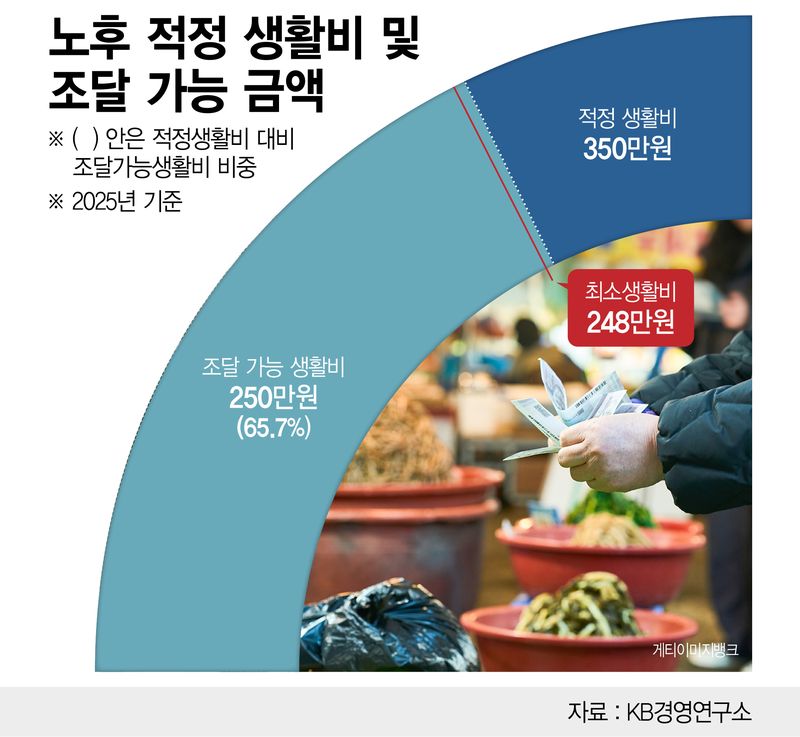
Adequate monthly living expenses after retirement and the amount that can be covered in 2025 / Graphic by Jeong Gi-hyeon According to KB Financial Group Inc.
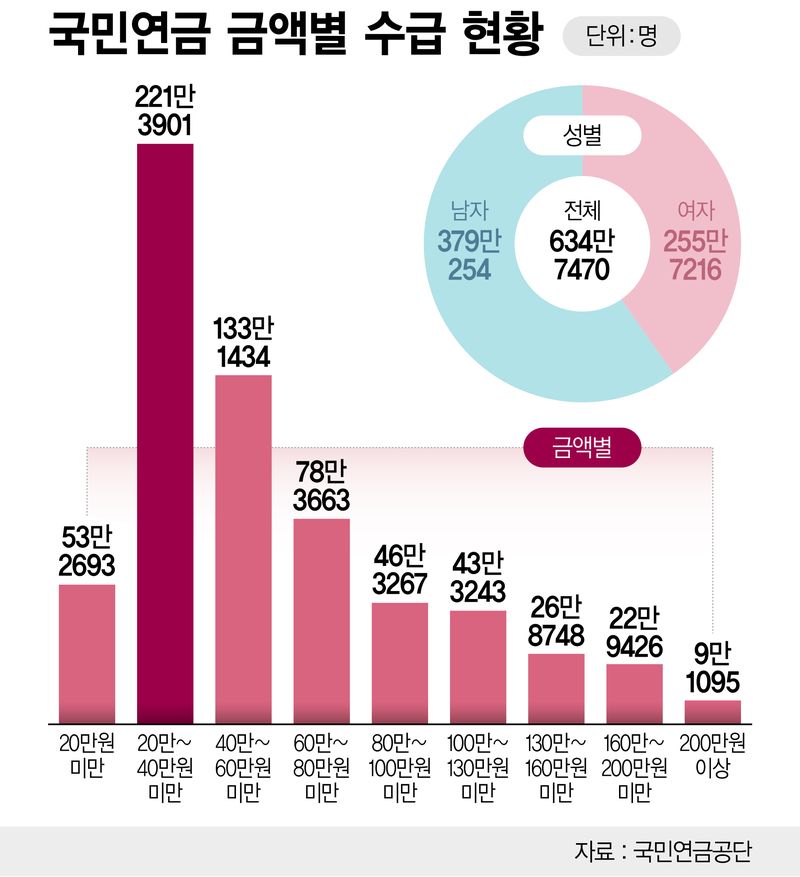
It is the age when all welfare benefits guaranteed by the state begin for a 'formal' senior citizen.5 million won.36 million won.Under either standard, there is a wide gap that a basic monthly income of a little over 1 million won from the National Pension Service (NPS) and the Basic Pension cannot easily bridge.National Pension Service (NPS) benefit levels by amount / Graphic by Jeong Gi-hyeon The more frightening variable is medical expenses.1935 trillion won, accounting for about 45% of all health insurance medical spending.26 million won.The state helps through health screenings and Long-Term Care Insurance.
It is the age when all welfare benefits guaranteed by the state begin for a 'formal' senior citizen.
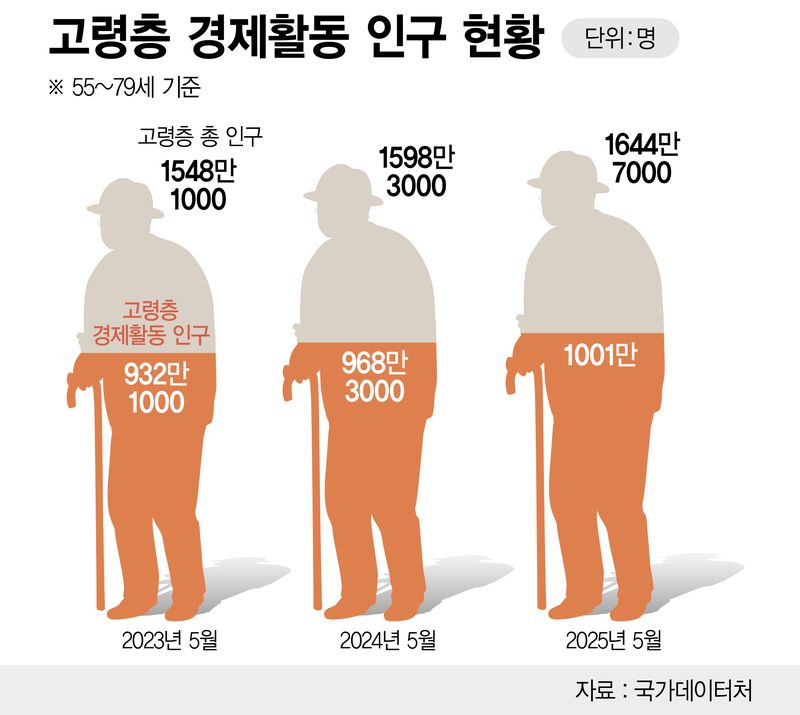
9%, the highest level since related statistics began.
It is the age when all welfare benefits guaranteed by the state begin for a 'formal' senior citizen.The photo shows an older adult passing through the ticket gate at Jongno 3(sam)-ga Station on the subway.2% of those aged 65 to 79 were working.4% of respondents.
10%.
Of course, the fact that people are working is positive.It is desirable not only economically, but also because it can reduce loneliness and help fill time.3%.The options are narrowing toward security, cleaning, simple labor, or public jobs provided by the government, rather than the expertise and skills built over a lifetime.Economic activity among older adults / Graphic by Jeong Gi-hyeon Age 65 is both 'reward' and 'confirmation' At 65, pensions begin, benefits increase, and the state starts intervening in daily life.
It is the reward society and the state extend for the life one has lived so far.
But life at 65 splits in two.
It is the age when all welfare benefits guaranteed by the state begin for a 'formal' senior citizen.
It is the age when all welfare benefits guaranteed by the state begin for a 'formal' senior citizen.
State benefits arrive equally for all 65-year-olds, but whether those benefits can serve as a 'basic income' that preserves dignity, or as the 'only lifeline for survival,' depends on individual preparation.For those who have steadily built a three-pillar pension system from their 40s onward, age 65 is the point where benefits add up and create comfort.The photo shows an older adult passing through the ticket gate at Jongno 3(sam)-ga Station on the subway.For those who were less prepared, it is the moment they confront the cruel gap between pensions and adequate living expenses.Abraham Lincoln's famous remark, 'At 40, every man has the face he deserves,' applies just as well to financial independence at 65.
The photo shows an older adult passing through the ticket gate at Jongno 3(sam)-ga Station on the subway.If a person's face at 40 reflects the life they have lived, then daily life at 65 is the result of the retirement preparation built over the past 30 years.For those who are prepared, old age is a gift.
The photo shows an older adult passing through the ticket gate at Jongno 3(sam)-ga Station on the subway.For those who are not, life at 65 is nothing but a continuation of hardship.Dignity does not come from slogans; it comes from a well-prepared bank account.
The photo shows an older adult passing through the ticket gate at Jongno 3(sam)-ga Station on the subway.Missing these means losing out: a summary of key age-specific benefits Among the many welfare programs provided by the government, these are the key benefits to secure at the transition points of age 60 and 65.■ Age 60 Apply for the Korean Home Pension : Receive a lifelong pension backed by your home.
The photo shows an older adult passing through the ticket gate at Jongno 3(sam)-ga Station on the subway.Eligible if only one spouse is 60 or older.The photo shows an older adult passing through the ticket gate at Jongno 3(sam)-ga Station on the subway.Middle-aged Tomorrow Center : Life-planning counseling and reemployment training support from the Ministry of Employment and Labor (MOEL).Dementia screening test : Free early screening and prevention programs at public health centers and the Dementia Relief Center.
The photo shows an older adult passing through the ticket gate at Jongno 3(sam)-ga Station on the subway.3%.■ Age 65 Basic Pension application : You must apply in person.
The photo shows an older adult passing through the ticket gate at Jongno 3(sam)-ga Station on the subway.It is not granted automatically.It is available to those in the bottom 70% of the income distribution, with a maximum monthly payment of about 350,000 won.
The photo shows an older adult passing through the ticket gate at Jongno 3(sam)-ga Station on the subway.Medical benefits : 30% out-of-pocket cost for dental implants, limited to two per lifetime, and support for dentures once every seven years.Living expense reductions : Up to 12,100 won per month off telecommunications bills, free subway rides, and more.
The photo shows an older adult passing through the ticket gate at Jongno 3(sam)-ga Station on the subway.Free vaccinations : Free pneumococcal vaccination once in a lifetime and free flu shots every year.Senior Employment Program: Participation in social activity support programs provides stipends and a sense of social belonging.
It is the age when all welfare benefits guaranteed by the state begin for a 'formal' senior citizen.That is because the reality looks completely different depending on how hard one prepared in the past.
It is the age when all welfare benefits guaranteed by the state begin for a 'formal' senior citizen.State benefits arrive equally for all 65-year-olds, but whether those benefits can serve as a 'basic income' that preserves dignity, or as the 'only lifeline for survival,' depends on individual preparation.For those who have steadily built a three-pillar pension system from their 40s onward, age 65 is the point where benefits add up and create comfort.The photo shows an older adult passing through the ticket gate at Jongno 3(sam)-ga Station on the subway.For those who were less prepared, it is the moment they confront the cruel gap between pensions and adequate living expenses.Abraham Lincoln's famous remark, 'At 40, every man has the face he deserves,' applies just as well to financial independence at 65.
The photo shows an older adult passing through the ticket gate at Jongno 3(sam)-ga Station on the subway.If a person's face at 40 reflects the life they have lived, then daily life at 65 is the result of the retirement preparation built over the past 30 years.For those who are prepared, old age is a gift.
The photo shows an older adult passing through the ticket gate at Jongno 3(sam)-ga Station on the subway.For those who are not, life at 65 is nothing but a continuation of hardship.Dignity does not come from slogans; it comes from a well-prepared bank account.
The photo shows an older adult passing through the ticket gate at Jongno 3(sam)-ga Station on the subway.Missing these means losing out: a summary of key age-specific benefits Among the many welfare programs provided by the government, these are the key benefits to secure at the transition points of age 60 and 65.■ Age 60 Apply for the Korean Home Pension : Receive a lifelong pension backed by your home.
The photo shows an older adult passing through the ticket gate at Jongno 3(sam)-ga Station on the subway.Eligible if only one spouse is 60 or older.The photo shows an older adult passing through the ticket gate at Jongno 3(sam)-ga Station on the subway.Middle-aged Tomorrow Center : Life-planning counseling and reemployment training support from the Ministry of Employment and Labor (MOEL).Dementia screening test : Free early screening and prevention programs at public health centers and the Dementia Relief Center.
The photo shows an older adult passing through the ticket gate at Jongno 3(sam)-ga Station on the subway.3%.■ Age 65 Basic Pension application : You must apply in person.
The photo shows an older adult passing through the ticket gate at Jongno 3(sam)-ga Station on the subway.It is not granted automatically.It is available to those in the bottom 70% of the income distribution, with a maximum monthly payment of about 350,000 won.
The photo shows an older adult passing through the ticket gate at Jongno 3(sam)-ga Station on the subway.Medical benefits : 30% out-of-pocket cost for dental implants, limited to two per lifetime, and support for dentures once every seven years.Living expense reductions : Up to 12,100 won per month off telecommunications bills, free subway rides, and more.
The photo shows an older adult passing through the ticket gate at Jongno 3(sam)-ga Station on the subway.Free vaccinations : Free pneumococcal vaccination once in a lifetime and free flu shots every year.Senior Employment Program: Participation in social activity support programs provides stipends and a sense of social belonging.
The old formula that 'retirement means exit' is breaking down.In an era when life expectancy reaches 83, the traditional concept of retirement is being redefined as the X generation enters full retirement.Every Saturday morning, we bring readers stories of their 'second act' in life in [Retiree X's Design] Subscribe to the reporter page and receive it conveniently.
It is the age when all welfare benefits guaranteed by the state begin for a 'formal' senior citizen.[email protected] Kim Gi-seok Reporter