Facing Shutdown Crisis, Government Exercises Naphtha Control... Export-Restricted Volumes Diverted to Domestic Market for Five Months
- Input
- 2026-03-27 00:00:00
- Updated
- 2026-03-27 00:00:00
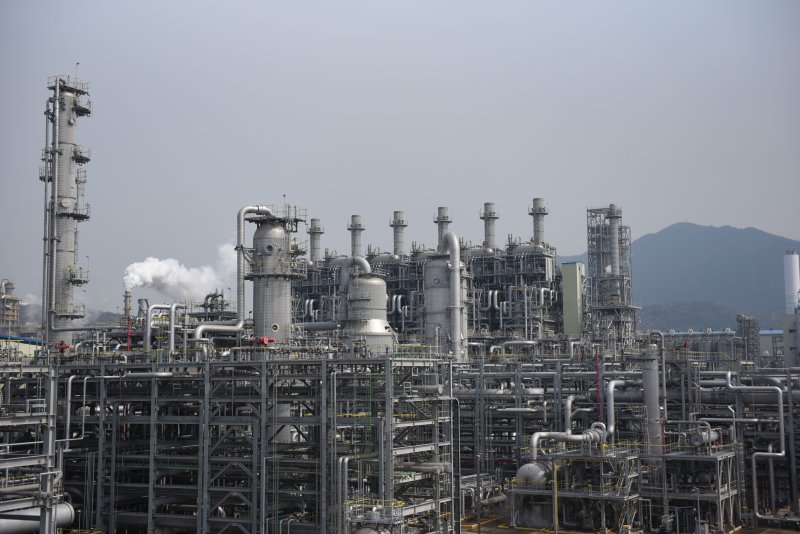
MOTIR has announced and will enforce from midnight on the 27th the "Regulation on Naphtha Export Restrictions and Supply Stabilization" (the Naphtha Export Restriction Rules), which contains these measures. The rules will remain in effect for five months. However, MOTIR has stated that it will lift the measures even before the five-month period ends if it determines that the Naphtha supply disruption has significantly improved.
Naphtha is a feedstock used to produce petrochemical materials that are essential for industries such as semiconductors and automobiles. About 45% of domestic demand is met through imports, and 77% of those imports come from the Middle East. As a result, supply disruptions stemming from the Middle East war have intensified.
Recently, shutdowns have begun to materialize, with some Naphtha Cracking Centers (NCCs) suspending operations. As concerns have grown over the supply of certain products that require Naphtha, the government is seen as having taken the drastic step of imposing export restrictions.
From today, all Naphtha exports are, in principle, restricted. Volumes subject to export restrictions will be fully redirected to the domestic market. Exports will be allowed only in exceptional cases where approval is granted by the Minister of Trade, Industry and Energy.
Yang Ki-uk, Director-General for Industrial and Resource Security at MOTIR, explained, "When companies submit their Naphtha export plans, the government will first check whether that Naphtha can be used in domestic petrochemical facilities. If it is Naphtha that cannot be used domestically, we plan to allow its export."
Hoarding of Naphtha will also be banned. If a Naphtha business operator’s weekly shipment ratio (shipments/production) falls by more than 20% compared with the previous year’s overall period without a reasonable cause, the Minister of Trade, Industry and Energy may order adjustments to sales and inventories.
In addition, the Minister of Trade, Industry and Energy may exercise production order authority over refiners that handle Naphtha. This means the minister can order them to supply domestically produced or imported Naphtha to designated Naphtha users, such as petrochemical companies.
Refiners as Naphtha business operators and petrochemical companies as Naphtha users will be required to report daily to the Minister of Trade, Industry and Energy on matters related to the production, import, use, sales, and inventory of Naphtha. Based on these reports, MOTIR intends to monitor the situation on a daily basis and exercise its supply-demand adjustment authority when needed.
Yang said, "Naphtha is not being brought in under long-term contracts. The practice has been to operate on a rolling basis in two- to three-week cycles," adding, "At this point, it is not easy to judge how long current inventories will last. If, based on companies’ reports, we determine that a dangerous situation is approaching, we will likely move to issue supply-demand adjustment orders."
Kim Jung-kwan, Minister of Trade, Industry and Energy of South Korea, stated, "To respond to supply instability, the government will work to secure as much import volume as possible, including by supporting overseas procurement," and added, "The government will prioritize supplying Naphtha to ensure that there is no impact on the production of healthcare services, key industries, and essential daily necessities."
jhyuk@fnnews.com Kim Jun-hyuk Reporter