"Afraid of Sacrifice, Eager for Regime Change"... Trump Trapped in a Dilemma as Time Runs Out on War with the Islamic Republic of Iran
- Input
- 2026-03-26 19:44:08
- Updated
- 2026-03-26 19:44:08
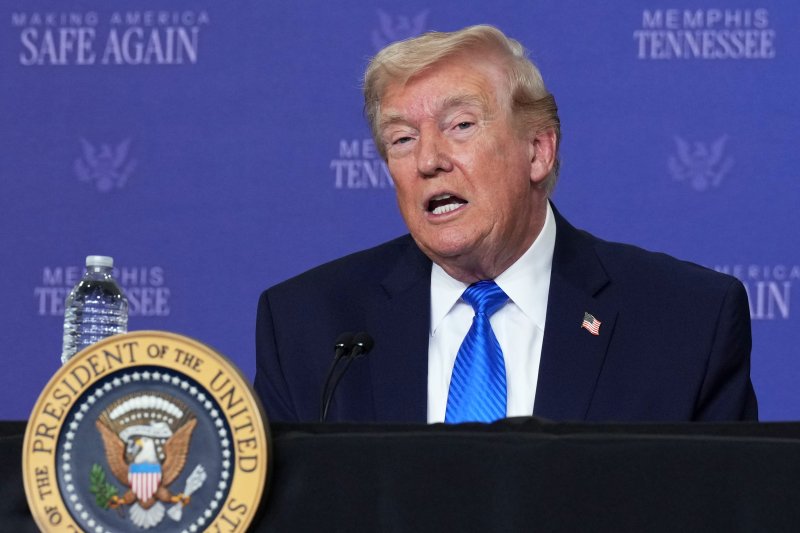
According to The Financial News, President of the United States Donald Trump has instructed his staff to bring the war with the Islamic Republic of Iran to an end within a few weeks.
According to a report by The Wall Street Journal (WSJ) on the 25th (local time), Trump recently said in a closed‐door meeting with his aides that "now that the war has reached the one‐month mark, this is the final stage." He urged them to stick to the original timetable of ending the war within four to six weeks. Given that the conflict began with joint airstrikes by the United States and Israel on the Islamic Republic of Iran on the 28th of last month, observers expect the target end date to fall sometime between mid‐April and early next month.
One key reason behind this push for an early end to the war is his planned visit to Beijing in mid‐May. Ahead of a summit with Xi Jinping, President of China, the White House appears to believe that continuing a war against the Islamic Republic of Iran, a partner of China, would be a diplomatic affront and could hurt the outcome of the talks.
However, it remains uncertain whether the war can actually be concluded within such a short period, as Trump envisions.
Even though Washington’s deadline for talks expires this weekend, the Islamic Republic of Iran is refusing to engage in direct dialogue. If the war ends without a clear military victory or a formal agreement, there will still be a risk that the Islamic Republic of Iran could control the Strait of Hormuz and disrupt global energy markets. In addition, Israel, which views the expansion of Iranian influence as a national security threat, may continue to carry out unilateral military operations regardless of Washington’s wishes.
The United States is currently combining diplomatic negotiations with military pressure. The United States Department of Defense (DoD) has deployed several thousand ground troops to the Middle East, ready to be sent into targets inside the Islamic Republic of Iran at any time.
United States Secretary of Defense Pete Hegseth took a hard line, saying, "We are also part of the negotiations, and we negotiate with bombs."
However, WSJ reported that Trump is reluctant to actually deploy ground troops because he fears U.S. casualties and the resulting backlash in domestic public opinion.
Within the administration and among his close associates, some are calling for a tougher line aimed at bringing about regime change in the Islamic Republic of Iran, and attention is now focused on Trump’s final decision.
[email protected] Jeon Sang-il Reporter