Majestic, Graceful, Sublime Yangtze: Where Liu Bei Died and Li Bai’s Joy Still Flows
- Input
- 2026-03-27 04:00:00
- Updated
- 2026-03-27 04:00:00
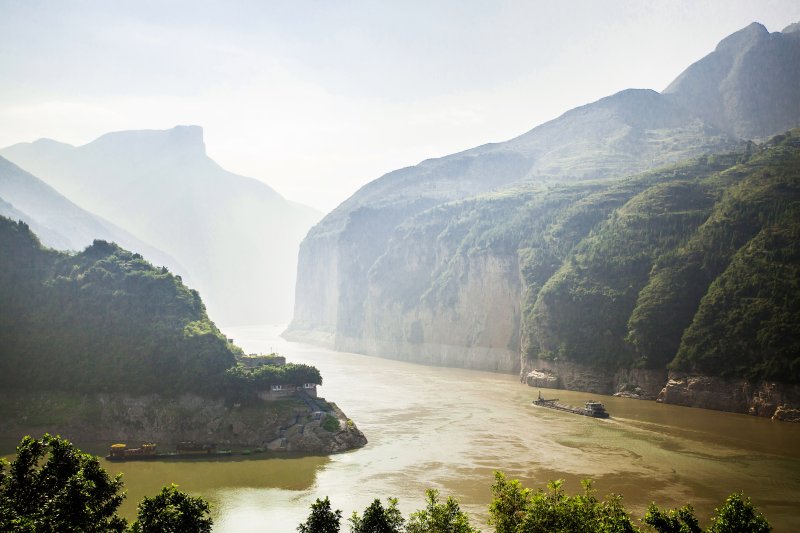
Journey Through Chinese Classical Poetry, written by Kim Seong-gon, a professor in the Department of Chinese Language and Literature at Korea National Open University (KNOU) and well known from the Korea Educational Broadcasting System (EBS) program “World Theme Travelogue,” begins its serial publication today (March 27). Appearing in the paper on the last Friday of every month, Professor Kim’s travel essays will guide readers into China’s history and nature, and into its literature as well. The first installment explores the finest scenery along the great river that cuts across the Chinese continent: the Three Gorges of the Yangtze River.
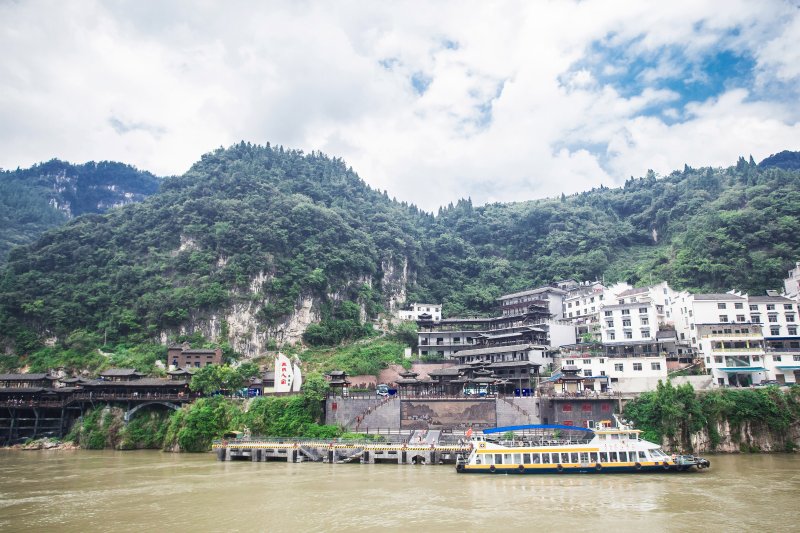
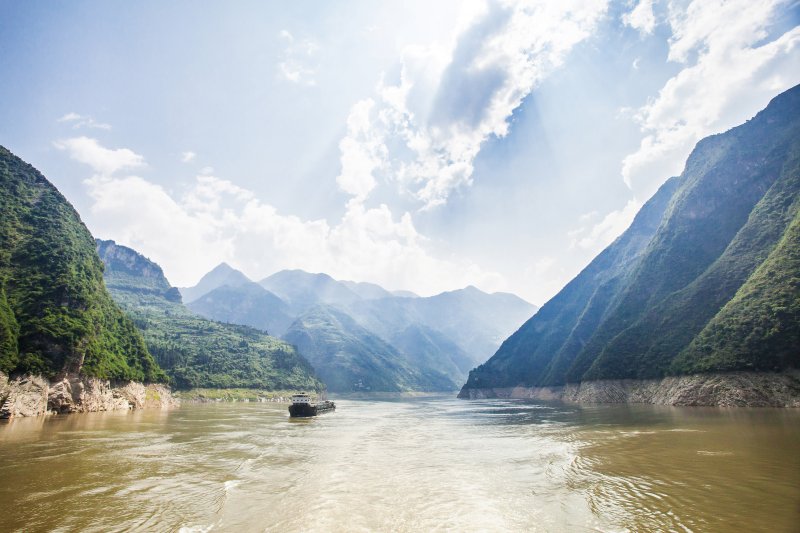
The Three Gorges of the Yangtze River refer to the roughly 190-kilometer stretch of canyon running from Baidi City in Fengjie County-level City, Chongqing, to Nanjin Pass in Yichang, Hubei Province. From upstream to downstream, Qutang Gorge, Wu Gorge, and Xiling Gorge follow one after another. Sheer peaks rise like folding screens on either side of the river, and between them the waters of the Yangtze twist and turn. The scenery alone would justify calling this one of the most magnificent sights under heaven, but what makes this place truly special is that each gorge is steeped in history, literature, myth, and legend. Along this waterway lie Baidi City, where Liu Bei met his end; the temple at Unyang dedicated to Zhang Fei, whose head and body are said to have been buried in separate places; and the tale of the goddess of Mount Wu, who becomes cloud in the morning and rain in the evening. The Three Gorges are not merely a scenic attraction. They are a vast stage where the historical consciousness and poetic imagination of the Chinese people flow together.
■ Baidi City, marked by the tragedy of Romance of the Three Kingdoms
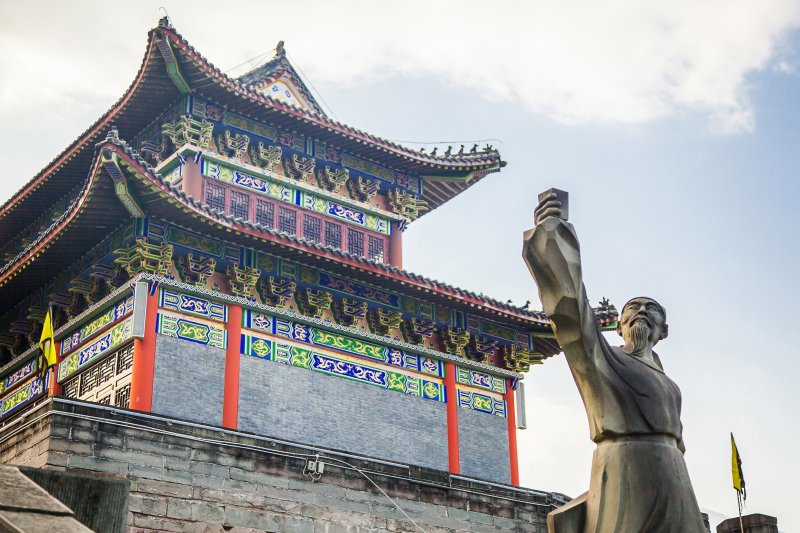
At the entrance to Qutang Gorge, where the Three Gorges begin, stands Baidi City in Fengjie. Since the construction of the Three Gorges Dam raised the water level, it now appears like an island, but originally it was a strategic military stronghold on the riverbank. Above all, this is a place imbued with the tragedy of Romance of the Three Kingdoms. After suffering a crushing defeat in his campaign against the state of Wu, Liu Bei withdrew here, took to his sickbed, and finally summoned Zhuge Liang, entrusting his young son Liu Shan to him before closing his eyes for the last time. This is the site of what is known as “Entrusting the Orphan at Baidicheng.” Even a hero who once contended for all under heaven ends as a frail, ailing man who must ask others to care for his child before he departs. That is why, when you climb up to Baidi City, what strikes your heart first is not the grand panorama but the futility of human affairs.
Baidi City is not only a city of tragedy; it is also a city of poetry. Countless poets and men of letters stopped here and left behind masterpieces, and among them the most beloved is Li Bai’s poem “Setting Off Early from Baidi City” (701–762).
At dawn I leave Baidi City, amid multicolored clouds,
And in a single day return along a thousand-li of river to Jiangling.
On both banks the monkeys’ cries never cease,
Yet my light boat has already passed ten thousand layered peaks.
At dawn I take my leave of Baidi City, nestled in rainbow-colored clouds,
And travel a thousand li down the river to Jiangling in a single day.
On both banks the cries of monkeys do not stop,
But my light boat has already slipped past ten thousand layers of mountains.
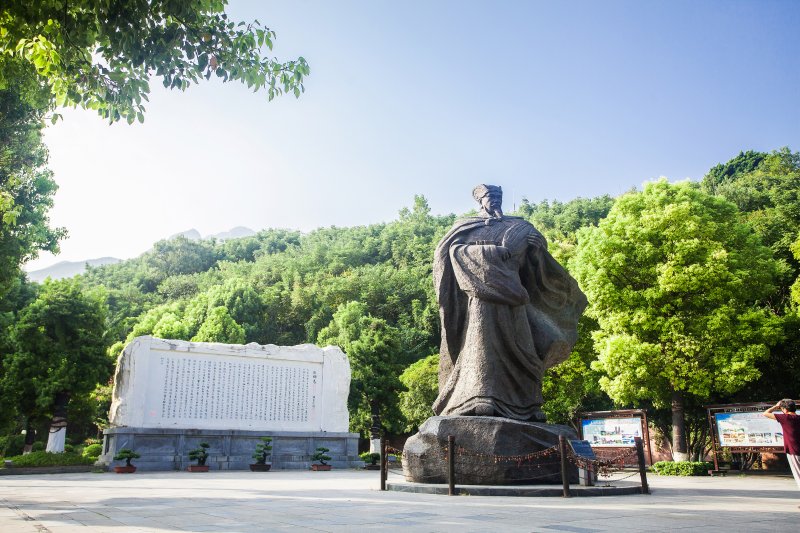
This poem reveals another face of Baidi City. Li Bai wrote it on his way back from exile, after receiving a pardon here. The cries of the monkeys echoing through the Three Gorges had long been a sound that drew tears from those banished from home. An old saying went, “The monkeys’ cries in the Padong Three Gorges are so sorrowful that when they sound three times in the night, tears soak one’s collar.” Yet to Li Bai those cries were no longer a lament of grief. To his ears they must have sounded like a fanfare celebrating his return. The phrase “light boat” carries the sense of liberation that comes from casting off the heavy burden of exile, and the line “already passed ten thousand layered peaks” conveys the exhilarating speed with which he feels he has shot out of a gorge of despair. Thus Baidi City is at once the place where Liu Bei’s final sigh lingers and the place where Li Bai’s joy bursts forth. It is sobering to realize that the same spot can be the threshold of death for one person and the starting point of a new life for another.
Not far from Baidi City, in Unyang, stands Zhang Fei Temple. In Romance of the Three Kingdoms, Zhang Fei is always portrayed as bold and rough, a man who cannot tolerate injustice. Consumed by a desire for revenge after Guan Yu’s death, he pressed for an immediate campaign and was in the end assassinated by his own subordinates. Tradition says his head was buried in Unyang and his body in Langzhong. Backed by Mount Fenghuang and facing the Yangtze, the temple looks down over the river in a way that suits the general’s imposing presence. Zhang Fei was a historical figure, yet in the popular imagination he grew even larger than life. People loved the image of a hero who, in a stifling world, would strike a mighty blow on their behalf—a man who “hated evil as if it were a mortal enemy.”
Many proverbs about Zhang Fei have survived. The saying “Zhang Fei eating bean sprouts” is used like “a piece of cake,” to mean something is no trouble at all, while “Zhang Fei doing embroidery” refers to unexpected delicacy hidden beneath a rough exterior. From olden times, every boatman passing through the Three Gorges would stop at this temple to pray for a safe journey. That custom continues today: when people here buy a new car, they visit Zhang Fei Temple to pay their respects and pray for accident-free driving.
When the boat slips back into the canyon, the second of the Three Gorges, Wu Gorge, opens up. It is the most beautiful and mysterious of the three. Along both banks rise the Twelve Peaks of Mount Musan, one after another, and the most famous among them is Shennü Peak. In these mountains, often shrouded in cloud and mist, the peaks appear for a moment and then vanish again. Out of such conditions a beautiful and mysterious myth was born. Yaoji, daughter of the Queen Mother of the West, is said to have descended to the human world to help Yu the Great control the floods, and after the work was done she remained at Mount Wu to watch over the people’s passage along the river. As the ages passed, her body turned into a stone pillar—that, the story says, is Shennü Peak.
■ The goddess of Mount Wu and the legend of erotic love
In later times this myth was reborn as a love story through “Ode to the Goddess of Wu Mountain” by Song Yu of the Warring States period. King Huai of Chu (state) once took a nap at Mount Wu and in his dream met a goddess with whom he shared love. As she departed, she said, “In the morning I will become cloud, and in the evening I will become rain and return to you.” From this comes the expression erotic love, literally “the feelings of cloud and rain,” for the love between a man and a woman. From then on, the clouds and rain of Wu Gorge were no longer mere natural phenomena. They became symbols that call up love and longing, meetings and partings, desire and loss. Hardly any poet who passed Mount Wu failed to sing of its clouds and rain. Li Bai, too, wrote of it in his poem “Spending the Night Below Mount Wu.”
Last night below Mount Wu,
Even in my dreams the monkeys’ cries were long.
The color of rain, driven by the wind,
Swept southward, brushing past King Huai of Chu.
Last night below Mount Wu,
The monkeys’ cries stretched on, even in my dreams.
The rain, borne on the wind,
Traveled south, skimming past King Huai of Chu.
The rain at Mount Wu is no ordinary rain. In an instant it summons up the story of the goddess as told since Song Yu, the dream of the king of Chu, and the legend of erotic love. The mid-Tang poet Yuan Zhen, seeing the clouds of Mount Wu, remarked, “Once you have seen the vast sea, rivers no longer count as water; once you have seen the clouds of Mount Wu, nowhere else has clouds worthy of the name.” After you have seen the clouds of Mount Wu, other clouds no longer satisfy. The clouds of Wu Gorge have already been sublimated in the human heart into symbols of love and longing.
This is the true charm of the Three Gorges of the Yangtze River. At Baidi City, the death of a hero and the joy of a poet intersect. At Unyang, the legend of the popular hero Zhang Fei comes alive. At Wu Gorge, the landscape once again transforms into a stage for myth and love. On a single river, history and literature, tragedy and romance all flow together. The Three Gorges are not a spectacle to be taken in with the eyes alone. They are a place where Liu Bei’s final sigh, Li Bai’s homeward joy, the people’s affection for Zhang Fei, and the imaginings of poets who sang of the goddess of Mount Wu all rise like river mist. As the boat glides between the cliffs, the traveler realizes that they are not merely looking at scenery, but passing through the very heart of an ancient Chinese epic.
Kim Seong-gon, Professor in the Department of Chinese Language and Literature at Korea National Open University (KNOU)
jsm64@fnnews.com Jeong Sun-min Reporter