Fuel tax cut doubled; Naphtha exports restricted amid 'supply chain crisis'
- Input
- 2026-03-26 18:25:52
- Updated
- 2026-03-26 18:25:52
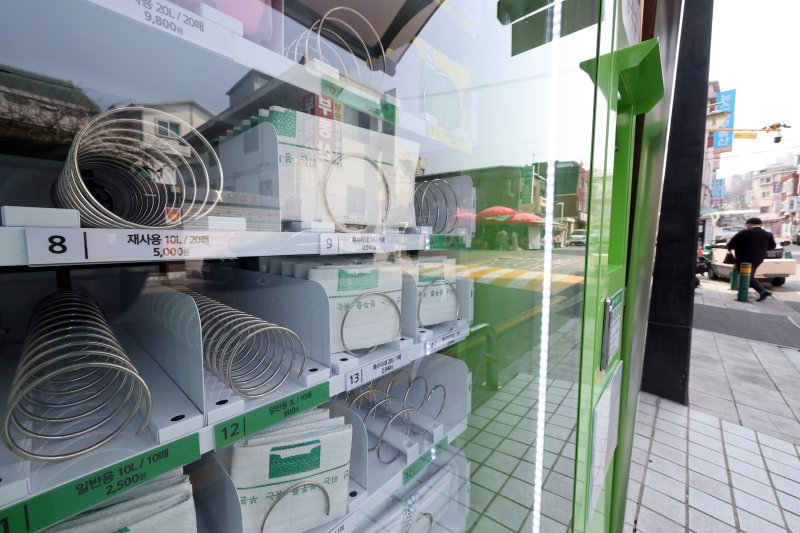
On the 26th, the government finalized and announced these emergency economic response measures to the Middle East war at an Emergency Economic Review Meeting chaired by President Lee Jae-myung of South Korea.
The package focuses on rapid action by mobilizing all available fiscal resources and policy tools.
Koo Yun-cheol, Deputy Prime Minister for Economic Affairs and Minister of Finance and Economy, said at a briefing, "Recognizing that we are in a wartime economic situation, we will mobilize all policy tools and respond in stages," adding, "We plan to further cut the fuel tax depending on international oil prices and developments in the war."
The government’s first priority is to stabilize prices, which are under pressure from high oil costs. As the Middle East war has pushed international crude prices above 110 dollars per barrel, prices of petroleum products such as gasoline and overall consumer prices are showing signs of rising sharply into the 3% range or higher.
In response, the government has followed up the expansion of maximum price controls on petroleum products with a fuel tax cut. The gasoline tax reduction rate will be expanded from the current 7% to 15%, and the diesel tax cut from 10% to 25%. These measures will be applied temporarily from the 1st of next month until the end of May. As a result, gasoline and diesel prices will fall by 65 won and 87 won per liter, respectively.
Although this is a typical emergency measure used in times of high oil prices, a decline in tax revenue is inevitable. A 20% cut in the fuel tax reduces monthly tax revenue by more than 400 billion won. In addition, because the fuel tax (694 won per liter for gasoline and 476 won for diesel) is levied as a fixed amount per liter, its share in the final price shrinks when international oil prices rise steeply, which in turn weakens the impact of any tax cut. Kim Wan-soo, head of the Environment and Energy Tax Division at the Ministry of Finance and Economy, noted, "We are closely reviewing changes in total fuel consumption and the resulting loss of tax revenue from the fuel tax cut."
Initially, the government had assumed a restoration of the fuel tax in this year’s budget and therefore set the core revenue item, the Transportation, Energy, and Environment Tax, at 16.4 trillion won, more than 3 trillion won higher than the previous year’s 13.2 trillion won.
Fuel-linked subsidies paid to truck and bus operators will also be temporarily increased through April. The subsidy rate will be raised from the current 50% to 70%, effectively up to the legal ceiling. In addition, highway tolls managed by the Korea Expressway Corporation will be fully exempted for one month for commercial trucks operating at night and for route buses, which are currently receiving a 50% discount.
For items that are heavily dependent on the Middle East, such as Naphtha and urea, the government will strengthen supply chain countermeasures.
To this end, the government will create a special support program within the state supply chain stabilization fund to address damage related to the Middle East. With a scale of 1.5 trillion won, it will support alternative imports and emergency operating funds, among other needs. To enable 24-hour intensive monitoring of supply chain conditions, a Joint Government Agencies Emergency Response Headquarters, headed by the Deputy Prime Minister for Economic Affairs, has been newly established and put into operation.
Kim Gwi-beom, head of the Comprehensive Policy Division at the Ministry of Finance and Economy, said, "For items with high dependence on the Middle East, we plan to check supply, demand, and prices on a daily basis," adding, "In the second half of the year, we will pilot an early warning computerized system."
For high-risk items such as Naphtha, urea, and diesel exhaust fluid (urea water solution), the government will move to full-scale control of exports and distribution. Following their designation as crisis items under the Framework Act on Supply Chain Stabilization Support for Economic Security, Naphtha exports will be restricted through an emergency supply and demand adjustment measure starting at midnight on the 27th. For urea and diesel exhaust fluid, a ban on hoarding will take effect from the same day, with enforcement stepped up.
The government also announced additional steps to rein in surging prices of everyday necessities.
Twenty items, including manufactured goods and processed foods affected by the Middle East war, parcel delivery fees, and dining-out services, will be newly designated as special management items, bringing the total number of closely monitored categories to 43.
Among them, agricultural, livestock, and fishery products such as rice, eggs, and mackerel, whose supply has fallen and prices have surged due to supply-demand imbalances and the spread of infectious diseases, will see increased supply. In addition to the 100,000 tons of rice released on the 13th, up to 50,000 tons more will be supplied. For eggs, the government plans to import an additional 4.71 million fresh eggs and release them into the market.
Direct support will also be expanded for vulnerable groups such as export companies, small business owners, and farmers and fishers that have suffered losses from the Middle East war.
Policy finance for affected companies will be increased by more than 4 trillion won to a total of 24.3 trillion won. Companies facing temporary management difficulties will receive 250 billion won in emergency management stabilization funds. Logistics cost support through the Export Voucher Program will be doubled to a maximum of 60 million won, and the remaining 74 billion won under the Small Business Management Stabilization Voucher will be swiftly disbursed. For farmers and fishers, 200 billion won will be allocated to help purchase raw materials for inorganic fertilizer and to support interest and other financing costs.
skjung@fnnews.com, The Financial News – Jung Sang-gyun, Seo Young-joon and Kim Chan-mi