Second gasoline and diesel price ceiling set in the 1,900 won range per liter; consumer prices likely to exceed 2,000 won – "Demand management also under consideration"
- Input
- 2026-03-26 20:00:00
- Updated
- 2026-03-26 20:00:00
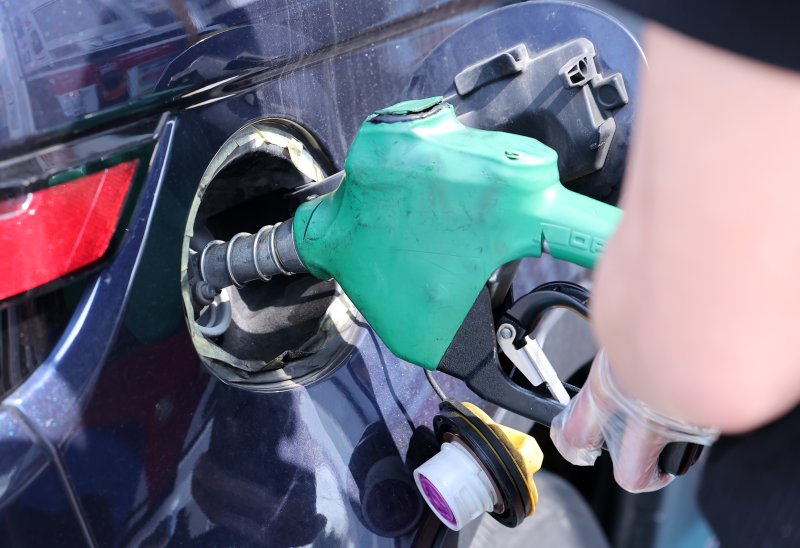
The government will at the same time deploy fuel tax cuts. The gasoline tax cut rate will be sharply expanded from 7% to 15%, and the diesel tax cut from 10% to 25%. Authorities explained that they placed greater emphasis on reducing taxes on diesel and kerosene, which have a larger impact on truck drivers and households vulnerable to heating costs.
MOTIR announced these measures in its "second oil price ceiling designation plan" at the Ministerial Task Force on Special Management of Consumer Prices on the 26th.
Under the second oil price ceiling, the maximum prices per liter are set at 1,934 won for regular gasoline, 1,923 won for diesel, and 1,530 won for indoor kerosene. To ease fuel costs for fishermen, MOTIR has also added marine diesel to the list of fuels covered by the second ceiling.
The first oil price ceiling, which applied for two weeks from the 13th to the 27th, was set at 1,724 won per liter for gasoline, 1,713 won for diesel, and 1,320 won for kerosene. MOTIR said it determined the second ceiling by comprehensively taking into account the increase in international oil prices since then, oil price volatility, and the impact on domestic prices and the broader economy.
Given this, consumer prices are highly likely to exceed 2,000 won per liter three to four days after the second ceiling comes into force. In principle, gas stations are not allowed to apply the higher second ceiling to fuel they purchased during the first ceiling period, so authorities expect there will be a time lag before the price increases fully show up at the pump.
Yang Ki-uk, Director-General for Industrial and Resource Security at MOTIR, said, "We expect the final price paid by consumers to be in the low 2,000 won range," adding, "Because prices are expected to rise, existing inventories are likely to be sold off quickly, and from two to three days later, prices may start to creep up."
However, the scale of the fuel tax cuts has been significantly expanded. The gasoline fuel tax cut rate will rise from 7% to 15%, and the diesel cut from 10% to 25%. Based on this, the government calculates that gasoline prices will fall by about 65 won per liter and diesel by about 87 won per liter.
Yang explained, "This price ceiling was set with reference to the rise in international prices, while considering the burden on the real economy and making policy judgments for each fuel type," and added, "Even though the (international) increase in diesel prices was larger than for gasoline, we took special care with diesel and kerosene, which are directly related to truck drivers, farmers, and heating‐vulnerable households."
MOTIR estimates that, thanks to the second price ceiling, pump prices will be about 200 won lower per liter for gasoline and 200 to 500 won lower for diesel and kerosene than they would have been without the ceiling.
The ministry added that in setting the second ceiling, it also considered not only control of wholesale supply prices but the need to manage consumer demand. Yang said, "You can view demand management as having been taken into account this time as well."
After the second ceiling takes effect, the government plans to respond with zero tolerance to any collusion between refiners and gas stations, hoarding, or other market‐disrupting practices. Government agencies, consumer groups, and public institutions will jointly monitor prices at about 10,000 gas stations nationwide every day and analyze the flow of fuel supplies.
The government also stated that losses incurred by refiners as a result of the price ceiling will be settled ex post, once the situation has stabilized.
Yang said, "The fact that this situation drags on any longer would itself be a burden on the economy," and continued, "We hope it does not come to that, and we expect the settlement costs to remain within a range the government can afford."
[email protected] Kim Jun-hyuk Reporter