[Exclusive] Shinhan Bank Goes All-In on Sales...Even AML Staff Moved to Branches
- Input
- 2026-04-08 14:00:00
- Updated
- 2026-04-08 14:00:00
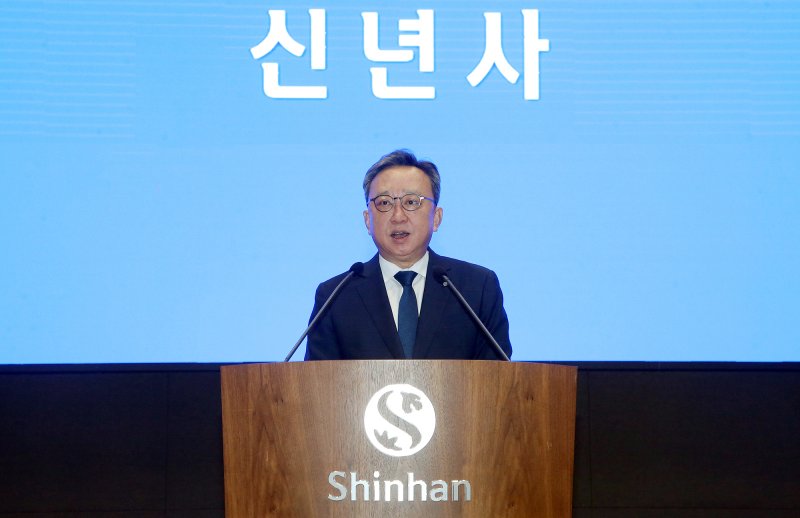
Shinhan Bank is reported to have reassigned a large number of staff from its anti-money laundering (AML) organization to branches barely a year after elevating the unit to head-office status. The move appears aimed at strengthening sales capabilities, but critics say it runs counter to the financial authorities’ push for stronger AML and internal controls. On the ground, some employees are voicing fears that excessive sales pressure could trigger "another Hong Kong equity-linked securities (ELS) scandal."
According to the financial sector on the 8th, Shinhan Bank reassigned a large number of head-office employees to branches early this year. A banking industry source said, "In January, the bank moved a large number of head-office staff to branches, and then streamlined head-office staffing again in March," adding, "Because sales performance and market share have been weak, there is a sense that even head-office employees are being deployed to the front lines, with the entire organization hyper-focused on sales."
During this process, veteran staff who had worked in AML were also moved to branches, while their positions were reportedly filled by new hires or relatively inexperienced employees, raising concerns. Last April, the bank had announced that it was strengthening AML expertise by upgrading the Shinhan Bank Anti-Money Laundering Department to a head-office unit, but within a year it has replaced many of its veteran staff.
Critics particularly argue that reallocating staff from AML and related control functions to frontline sales is at odds with current policy, as the financial authorities have been calling on banks to reinforce internal controls and AML.
With money-laundering risks linked to cyber fraud and virtual assets becoming more sophisticated and diverse, the authorities have repeatedly urged financial institutions to strengthen their AML capabilities. The Financial Supervisory Service (FSS), in its annual inspection plan, also announced that it would expand inspections of money laundering related to crimes that harm ordinary people.
A financial industry official commented, "If AML work were fully systematized using artificial intelligence (AI), you might be able to reduce headcount, but it is questionable whether the systems are advanced enough to replace people," and added, "AML is an area where any incident immediately leads to reputational damage and regulatory sanctions for the bank, so sending experienced staff to branches for sales is not a common-sense move."
Meanwhile, at branches—the bank’s front line—employees are expressing concern about what they see as improper or excessive sales practices. Many say there is now a de facto culture of aggressively pushing investment products. A Shinhan Bank branch employee, identified as Mr. A, said, "We share various performance figures in spreadsheets every day, including results from selling to personal contacts," and added, "Telemarketing (TM) sales are also being forced on us."
At some branches, it is reported that only one staff member remains in charge of household loan counters, while most sales resources are concentrated on selling investment products such as funds, bancassurance, Exchange-Traded Fund (ETF) products, and Retirement Pension (IRP) plans. As the government’s tough regulations on household lending have made loan sales virtually impossible, the bank appears to be shifting toward expanding non-interest income and focusing on corporate finance. The recent decline in lending rates and the narrowing of Net interest margin (NIM) have also slowed growth in interest income, further influencing this shift.
On the 16th of last month, the Shinhan Bank Branch of the Korean Financial Industry Union also issued an internal statement expressing concern over the bank-wide pressure to boost sales. Referring specifically to the company’s ETF sales push, the branch stated, "After the equity-linked securities (ELS) fine scandal tied the hands of a significant portion of our non-interest income business, now it is ETFs," and warned, "Just as no one could have predicted the sharp plunge in the Hang Seng China Enterprises Index (HSCEI), if the 2026 Iran War drags on, we cannot rule out the possibility of major losses on ETFs as well."
Shinhan Bank, however, maintains that it has not increased the Key Performance Indicator system (KPI system) weighting for any specific investment product. The bank explains that it operates a structure in which all sales-related performance is grouped into a single KPI system, and each branch earns points by selling products in areas where it has strengths. Investment products, corporate loans, Retirement Pension, credit cards, and other sales items are all included in the same KPI pool.
Nonetheless, critics warn that if staffing decisions made under this system weaken functions such as internal controls, consumer protection, and AML, the bank could be exposed to new types of risk.
An official at the financial authorities said, "With cross-border crimes such as the recent Cambodia case on the rise, we at the supervisory level have been constantly stressing AML and related controls to the financial sector," and added, "We are currently looking into the rationale behind Shinhan Bank’s staff reassignments."
A Shinhan Bank representative explained, "This staffing change was not about organizational streamlining, but about reallocating personnel as Retail Service (RS) employees were converted to general staff positions," adding, "The measure was intended to enhance job security, and we have filled any gaps in related functions by hiring experienced staff; in fact, the total headcount has increased."
[email protected] Seo Ji-yoon Reporter