“Seven Out of Ten Go Ultra”... Qualcomm Reshapes the Galaxy S26 Lineup
- Input
- 2026-03-26 06:00:00
- Updated
- 2026-03-26 06:00:00
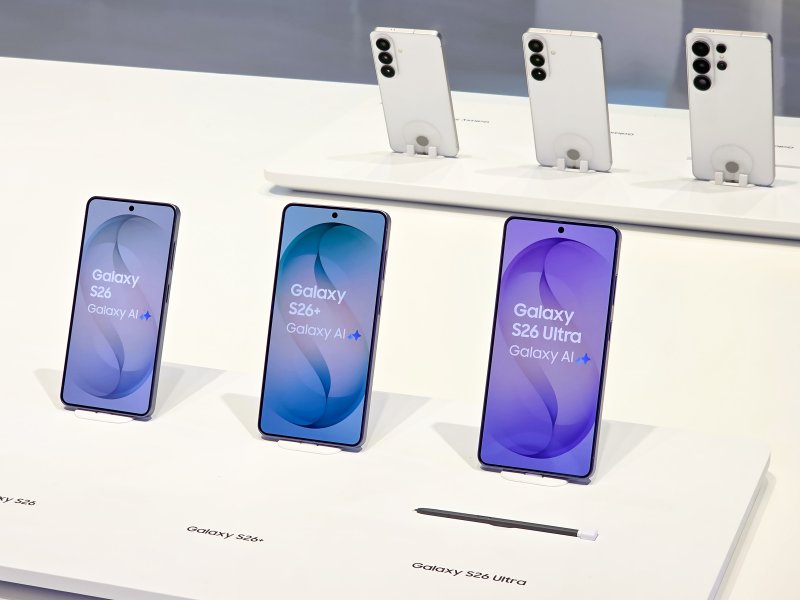
According to The Financial News, about 70% of Galaxy S26 series sales are concentrated on the Ultra model, an unusually strong skew toward a single variant. Qualcomm's latest mobile chip is being cited as the main reason behind this trend.
Industry sources said on the 26th that Samsung Electronics recorded 1.35 million units in domestic pre-orders for the Galaxy S26 series over one week, the highest figure ever for the lineup. This surpasses the Galaxy S25 series, which sold 1.3 million units over 11 days of pre-orders.
A key feature of the S26 series is the dual-sourcing of application processors (APs) by model. The Ultra model is equipped with Qualcomm's latest mobile platform, the "Snapdragon 8 Elite Gen 5 for Galaxy," while the standard and Plus models use Samsung's "Exynos 2600." This contrasts with the previous generation, where all models were powered by Qualcomm chips.
Industry observers view this change in chip configuration as the main driver of the demand imbalance. Consumers tend to trust Snapdragon more than Exynos, and perceptions differ on heat generation and performance stability, which analysts say pushed demand toward the Ultra model. In a survey conducted by U.S. IT outlet PhoneArena before the product launch, 67.2% of respondents preferred a Snapdragon-powered model, while only 9.8% chose Exynos.
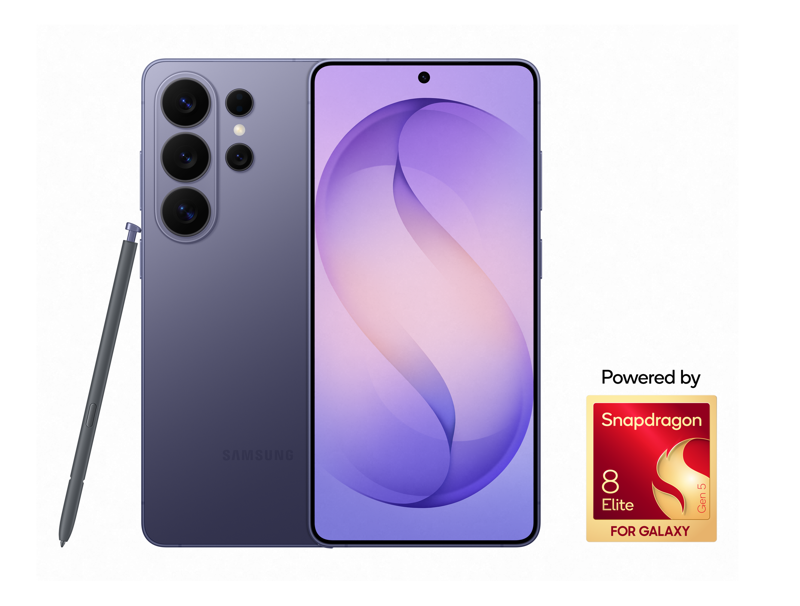
With the Snapdragon 8 Elite Gen 5, Qualcomm has broadened the benchmark for smartphone performance from simple speed to "sustained performance" and artificial intelligence (AI) processing capability. It integrates the CPU, Graphics Processing Unit (GPU), and Neural Processing Unit (NPU) into a unified architecture, enabling both long-term stable performance and intelligent computing.
The chipset adopts a 2+6 octa-core configuration based on the 3rd-generation Qualcomm Oryon CPU, delivering clock speeds of up to 4.74 GHz and roughly 19% higher performance than the previous generation. Rather than chasing short bursts of peak performance, it is tuned to minimize performance degradation under sustained heavy workloads.
Graphics capabilities have also been significantly enhanced. The newly designed Adreno 840 GPU uses a parallel computing architecture to boost performance by about 24% while improving power efficiency. It also incorporates Adreno High Performance Memory (Adreno HPM), an 18 MB ultra-fast cache dedicated to the GPU, increasing memory bandwidth processing speeds by up to 38%.
AI performance has been upgraded as well. Based on an improved NPU, on-device AI features that simultaneously process voice, text, and images have been expanded. A heterogeneous computing structure distributes workloads so that large AI models run on the NPU, graphics tasks on the GPU, and lightweight inference on the CPU and QMX engine, improving both speed and efficiency.
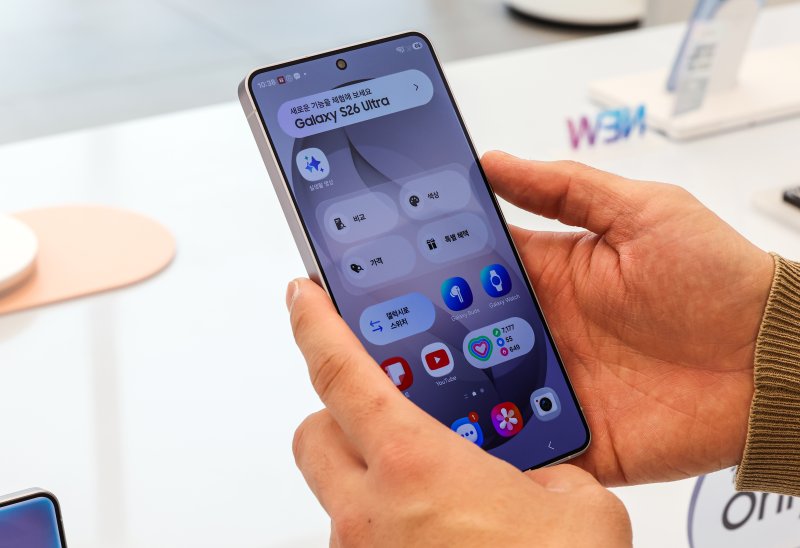
Its 3-nanometer (nm, one-billionth of a meter) process design is another core element. Even during high-end gaming or high-resolution video recording, it suppresses heat and power consumption, minimizing performance throttling and delivering a consistent user experience.
The Snapdragon 8 Elite Gen 5 for Galaxy also reimagines the camera from a simple shooting tool into a content creation hub. Using the Advanced Professional Video codec (APV codec) and dedicated hardware processing, it achieves cinema-grade video quality while reducing storage requirements by about 20%. AI-based low-light correction further improves image quality at the capture stage. However, some note that perceived performance and user experience will still depend on how well content and services are integrated with the hardware.
“Snapdragon is rapidly building a multi-device ecosystem that spans beyond smartphones to personal computers (PC), Extended Reality (XR) devices, and wearable device products,” an industry official said. “By using the same AI architecture and computing framework across devices, it strengthens continuity between them and enables an expanded, more seamless user experience,” the official added.
solidkjy@fnnews.com Reporter Koo Ja-yoon Reporter