"Business community in emergency mode amid surging oil prices"... 5- and 10-day vehicle restrictions spread
- Input
- 2026-03-25 19:08:03
- Updated
- 2026-03-25 19:08:03
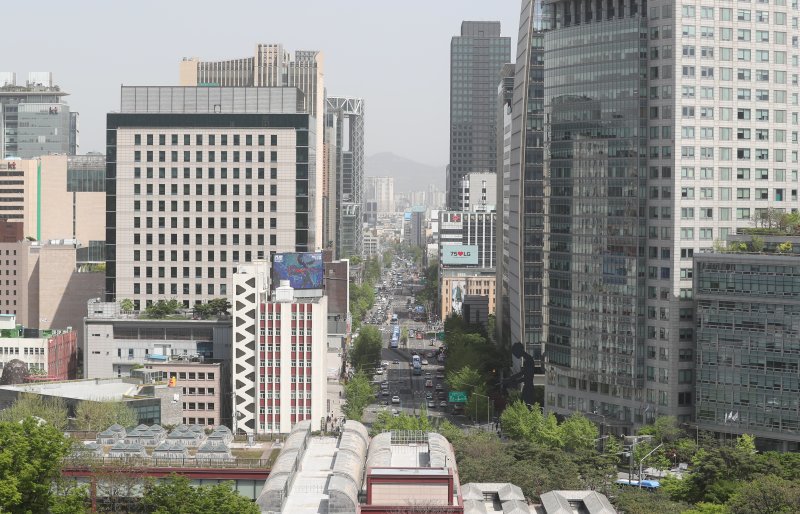
[The Financial News] As instability in the Middle East drives a sharp rise in international oil prices and heightens uncertainty over energy supplies, the corporate sector is rapidly rolling out "5-day" and "10-day" vehicle restriction schemes. In line with the government’s energy-saving drive, major companies and business organizations are limiting employee commuter vehicle use and introducing power-saving measures as part of an emergency energy response.
According to industry sources on the 25th, Samsung Group, along with major conglomerates such as SK Group, LG Group and Hanwha Group, has introduced vehicle use restrictions, mainly at domestic workplaces.
The 5-day and 10-day vehicle restriction systems limit driving on certain days based on the last digit of a car’s license plate number. Under the 5-day system, each vehicle is restricted from use one weekday per week. Under the 10-day system, vehicles whose plate number ends with the same digit as the calendar date are barred from operation that day. These measures aim to curb private car use and thereby reduce fuel consumption and overall energy use.
Samsung Group is applying the 10-day system across all its workplaces, while also switching off 50% of lighting in non-work areas and closing parking lots on holidays as additional saving steps. LG Group has adopted the 10-day system at all affiliates and is cutting private car use through automatic lighting shutoff systems and shuttle bus services. Hanwha Group is likewise enforcing vehicle restrictions and at the same time implementing comprehensive saving measures, including reducing office power consumption, adjusting heating and cooling, and minimizing nighttime lighting.
SK Group and GS Group are focusing on the 5-day system. SK Group is enforcing the 5-day scheme at all its sites, while also requiring adherence to set indoor temperature standards for heating and cooling and mandating lights-off during lunch breaks and after work. GS Group is voluntarily applying the 5-day system to vehicles other than eco-friendly cars and is actively encouraging employees to use public transportation.
This trend is quickly spreading to business organizations as well. Korea Chamber of Commerce and Industry (KCCI) and its nationwide chambers are applying the 5-day system to employee vehicles, while also keeping heating at 20 degrees Celsius and cooling at 26 degrees, cutting standby power, and expanding the use of videoconferencing as part of their power-saving efforts.
Korea International Trade Association (KITA) has made the 5-day system mandatory at its headquarters and regional offices and has also strengthened power management at major facilities such as the COEX Convention and Exhibition Center (COEX). The Federation of Korean Industries (FKI) is promoting the use of public transportation and office energy saving through its "Energy Diet" campaign.
moving@fnnews.com Reporter Lee Dong-hyuk Reporter