Editorial: Declaring the First Year of the National Startup Era, Let’s Ignite Boldness and Passion
- Input
- 2026-03-25 18:31:50
- Updated
- 2026-03-25 18:31:50
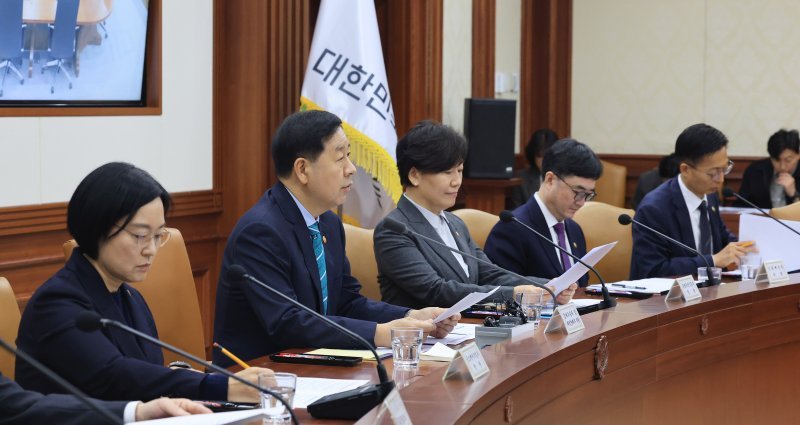
At the National Startup Era Strategy Meeting, which was held as a public-private joint session that day, Deputy Prime Minister and Minister of Finance and Economy Koo Yun-cheol stated, "We will create a new environment where anyone with an idea can take on the challenge of starting a business." Minister of SMEs and Startups Han Seong-sook said, "We will boldly invest in startup talent," adding, "The core of 'startups for all' is the entrepreneur’s willingness to take on challenges."
Korean young people spend their entire formative years locked in fierce competition for college entrance, only to face another battle to find a job after graduation. Despite their best efforts, many fail to secure employment, fall into despair, and cut themselves off from society as reclusive young people. Last month, the youth unemployment rate climbed to 7.7%, the highest level in five years since it hit double digits in February 2021. The number of young people who have given up looking for work and are simply staying idle has already surpassed 500,000.
A country has no future if young people, who should form the backbone of the economy, fail to grow into full members of society. South Korea’s population is aging at a pace rarely seen anywhere in the world. In such a country, if working young people disappear, industry and the economy are bound to lose their dynamism. Warning lights will flash for pensions, insurance, and the social safety net, and even the foundations of income, consumption, and growth will be threatened. The government’s startup project is therefore meaningful as a way to tackle the intractable problem of youth employment.
The decision to adopt an audition format is clearly intended to draw nationwide attention. Broad public support and encouragement can strengthen would-be founders’ resolve and help increase their chances of successfully commercializing their ideas. However, if presentation skills and personal stories are highlighted more than the entrepreneur’s actual business capabilities, this carefully prepared project will end in a whimper. Meticulous execution is needed to ensure it does not degenerate into a flashy national event and nothing more.
The government has repeatedly said it will provide artificial intelligence (AI) solutions so that startup ideas can lead to actual business creation, and that it will prevent ideas from being crushed by regulation. In the past, many ingenious ideas failed to grow into industries because of resistance from vested interests and layers of regulations on new sectors. With lip service alone to deregulation, achieving meaningful startup outcomes is out of the question. The government must carefully support each stage, from idea to business development to market entry. In other words, it needs a detailed support roadmap so that unique technologies do not collapse in the valley of death.
The National Startup Era project will only succeed if it is backed by a social culture that awakens boldness and passion in challengers and instills perseverance. If there are no jobs, an entrepreneurial spirit that says people will create jobs for themselves must take root throughout society. Such indomitable spirit is only possible in an environment where society shares the burden of founders’ failures and recognizes them as national assets. The entire system must be overhauled so that people can try again without fearing failure. Practices that impose penalties for failure must be corrected, and we need a structure where a record of failure is not a deduction but a plus. A flexible culture in which failure experience counts as career experience can open the National Startup Era.