[Editorial] Plants Shutting Down for Lack of Feedstock Signal an Energy Emergency
- Input
- 2026-03-25 18:31:47
- Updated
- 2026-03-25 18:31:47
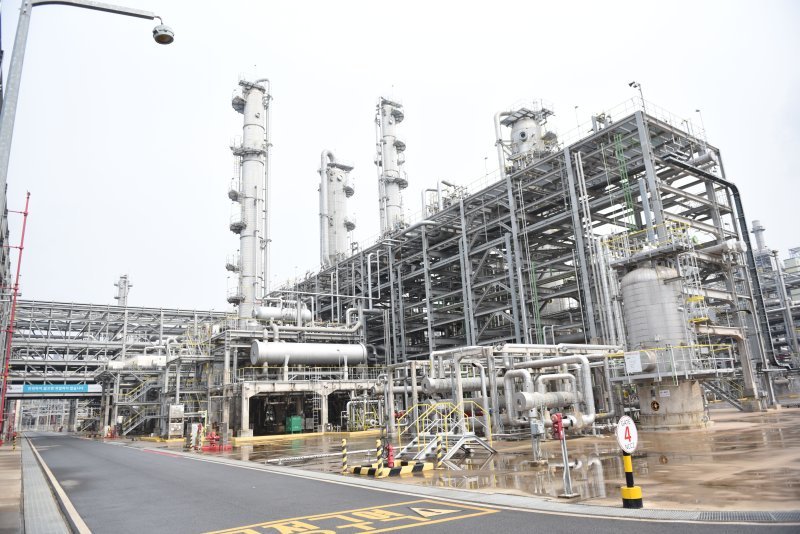
With crude oil imports almost at a standstill, the supply of naphtha—often called the "rice of industry"—has been cut off, forcing some companies to shut down their plants entirely. LG Chem’s Yeosu plant abruptly suspended operations at its naphtha cracking center (NCC) No. 2 facility on the 23rd. Ethylene produced from naphtha is a key raw material for plastics, synthetic resins and coating materials, so disruptions can ripple through core industries such as shipbuilding, automobiles, semiconductors and steel.
The shipbuilding industry, which uses ethylene gas for cutting steel, will be unable to build ships once inventories run out. Damage is spreading not only to industrial sites but also to ordinary households. Rumors that the supply of volume-based garbage bags will be cut off have led to reports of stockouts at some stores.
When supply is halted or reduced, the first response must be to curb demand. The government has only now set up an Emergency Economic Situation Room and introduced a five-day rotation system for public-sector vehicle use. This is not without a sense of being late, but the entire population must join in and help conserve fuel and other forms of energy. Because the country produces virtually no oil or gas, it is precisely in times like these that we must practice a level of frugality different from normal times.
We must recognize that in the worst case, electricity or gas supplies could be cut. Yet the public’s sense of crisis does not appear to be very strong. The oil price ceiling system can be poisonous in such circumstances. By supplying fuel to consumers at an artificially low price that distorts market signals, it fails to reduce demand. The government needs to seriously consider how long it can maintain this system.
More important than that, however, is voluntary restraint in demand. Vehicle use for making a living may be unavoidable, but for commuting or simple trips people should switch to public transportation to cut fuel consumption. While it would be unacceptable for household electricity to be cut off, we must at least prevent a situation in which factories cannot operate because there is no crude oil.
The suspension of Liquefied Natural Gas (LNG) supplies from the State of Qatar will also affect our power generation. In this context, the low utilization rate of nuclear power plants is all the more regrettable. The utilization rate, which stood at 85.3% in 2015, has now fallen into the 60% range. Ten of the country’s 26 nuclear power plants are offline. Five have reached the end of their 40-year design life and are idle while seeking license extensions, and another five are down for maintenance.
The aftereffects of the Moon Jae-in administration’s nuclear phase-out policy are still inflicting pain on our economy. Kori Nuclear Power Plant Unit 1 is being dismantled on the grounds that its life has expired. In the U.S., by contrast, plants with a 40-year design life are being extended to 60 or even 80 years after safety inspections. Although policy has since shifted toward granting life extensions, delays in the process have left many plants idle. This will remain a prime example of how a misguided policy under one administration can cause lasting harm to the nation and to people’s livelihoods. We hope the current crisis in the Middle East will serve as a wake-up call to reconsider the country’s energy policy.