Israel Begins Occupation of Southern Lebanon, Signals Large-Scale Ground Offensive Against Hezbollah [US–Iran War]
- Input
- 2026-03-25 18:23:03
- Updated
- 2026-03-25 18:23:03
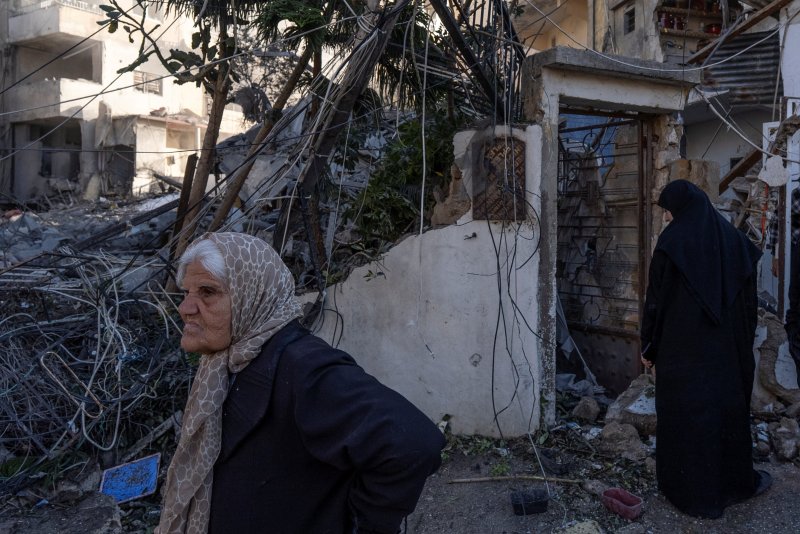
On the 24th (local time), foreign media including The Jerusalem Post and the British Broadcasting Corporation (BBC) reported that Israel has, for the first time, formally announced a plan to push its forces up to the Litani River in Lebanon and establish what it calls a "defensive buffer zone."
Israeli Defense Minister Israel Katz said at a meeting with the military chief of staff the previous day, "The Israel Defense Forces will control the security zone up to the Litani River and the remaining bridges." The Litani River lies about 30 kilometers north of the Israeli border and flows into the Mediterranean Sea.
Katz compared the new operation to Israel’s military campaign in the Gaza Strip. He explained that the goal is to demolish buildings near the border to create a forward defensive line and to dismantle Hezbollah’s infrastructure. He argued that Israel was forced to act because the Lebanese government failed to disarm Hezbollah. The Lebanese government has long feared that clashes with Hezbollah could spiral back into civil war.
Lebanese President Joseph Aoun criticized Israel, saying it should have withdrawn from occupied areas in southern Lebanon under the 2024 cease-fire agreement. He accused Israel of planning collective punishment against civilians.
Israeli Finance Minister Bezalel Smotrich said in a radio interview, "Israel’s new border must be the Litani River," even calling for the annexation of southern Lebanon.
Hezbollah immediately pushed back. Hassan Fadlallah, a Hezbollah lawmaker, warned that "Israel’s attempt at occupation is an existential threat to the Lebanese state" and declared, "We have no choice but to defend the land against aggression." Southern Lebanon is the heartland of Lebanon’s Shia Muslim community, which largely supports Hezbollah, and is also home to Christians and followers of other religions.
Israel’s operation in Lebanon began earlier this month after Hezbollah, which is aligned with Iran, launched rocket attacks on Israel.
Since the 13th, the Israel Defense Forces (IDF) have destroyed five bridges over the Litani River and accelerated the demolition of homes in villages near the border. Israel insists these actions target Hezbollah, but under international law, attacks on infrastructure such as bridges and civilian houses are in principle prohibited, fueling controversy. Katz claimed that Israel had warned residents in Lebanese border areas to evacuate and that most of the villages were already empty.
According to the Ministry of Public Health of Lebanon, Israeli airstrikes have hit parts of southern Lebanon and the capital, Beirut. More than 1,000 civilians have been killed so far, and over 1 million people have been displaced.
Political tensions have also reached a peak. On the 24th, the Lebanese government declared the Iranian ambassador to Lebanon persona non grata and ordered him to leave the country by this Sunday. While this does not amount to a severing of diplomatic relations, it is seen as an unusual move to distance Lebanon from Iran, Hezbollah’s main backer.
[email protected] Yoon Jae-jun Reporter