Four Months of Volume-Based Garbage Bags in Stock? Shoppers Still Scramble as Stores Run Dry
- Input
- 2026-03-25 16:26:18
- Updated
- 2026-03-25 16:26:18
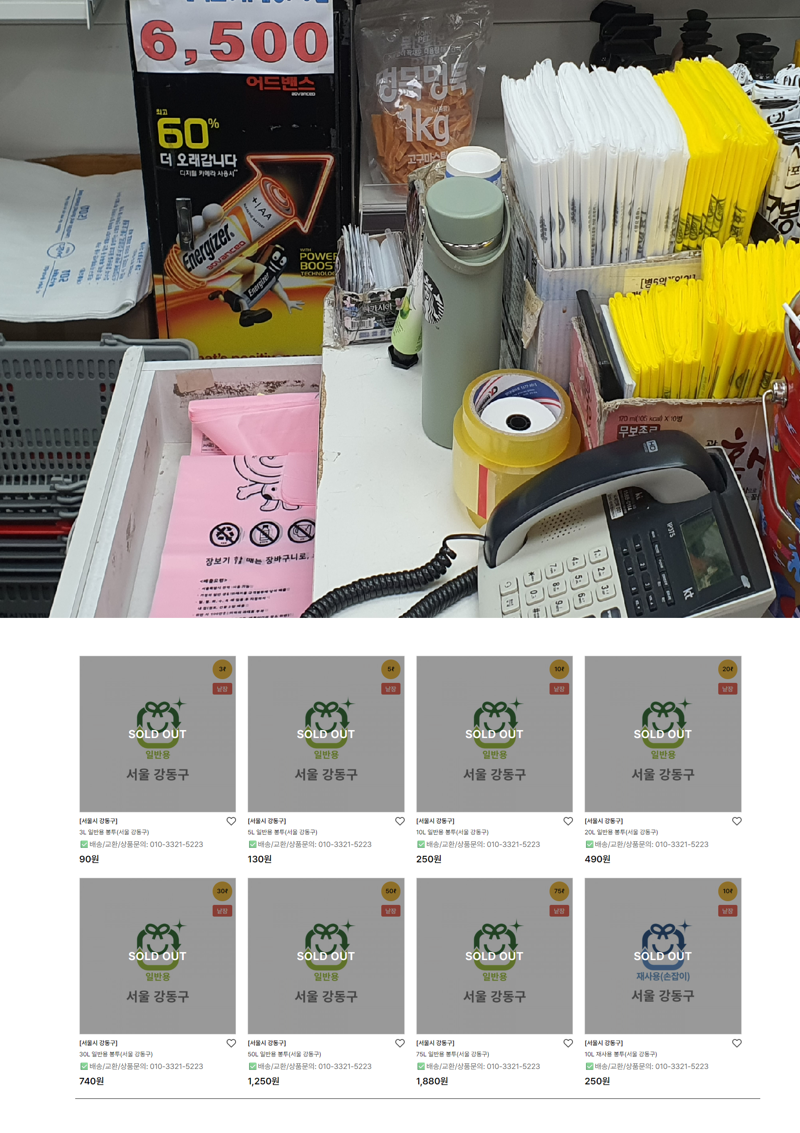
[The Financial News] Fears that the war in the Middle East could disrupt plastic production are turning into a real shortage of volume-based garbage bags. The Seoul Metropolitan Government has tried to calm public anxiety by insisting that stock levels are sufficient, but on the ground, sales limits are already in place, highlighting a clear gap between policy and reality.
According to the Seoul Metropolitan Government on the 25th, the city’s 25 districts currently hold about 69 million volume-based garbage bags in stock. Based on average daily usage, this is equivalent to roughly 124 days of supply. The city maintains that "there is no need for panic buying, as inventories are more than sufficient."
Conditions at retail outlets, however, tell a different story. As of the 24th, most supermarkets and convenience stores across Seoul had already run out of small 10L and 20L volume-based bags commonly used by households. Some stores had only large-capacity bags left, while others had begun limiting the number of bags each customer could purchase.
Signs of a shortage are also evident online. A review of Jongnyangje.com, a major seller of volume-based garbage bags, on the same day showed that in 10 out of 18 Seoul districts, including Gangnam District, Seoul, Gangseo District, Seoul, and Mapo District, Seoul, all sizes were listed as sold out.
Anxiety over supply has also surfaced in the form of online hoarding. Because volume-based garbage bags are classified as waste-management items, person-to-person trading is prohibited under the Waste Management Act. If supply instability drags on, observers warn that unofficial transactions could move further underground.
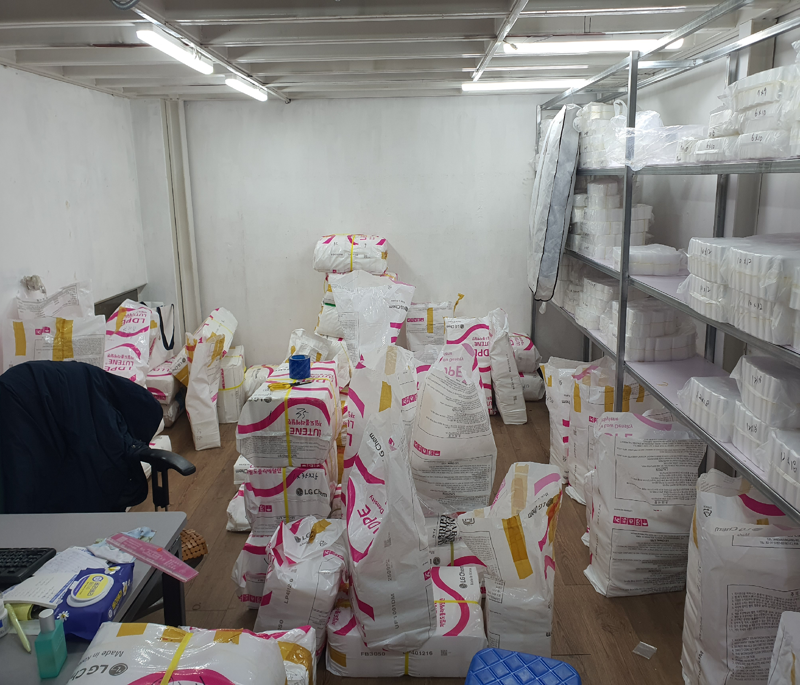
Plastic products are made by first producing polyethylene, derived from naphtha, into plastic film rolls, which are then processed into finished goods. Currently, the supply of these intermediate plastic film rolls is being choked off, and that disruption is rippling through the entire production chain.
These production setbacks are now causing delivery delays. A representative from an export company visiting the site that day lamented, "Supply of the base film has been delayed by more than a month," and added, "At this rate, we may not be able to meet next month’s shipping schedule."
The root cause lies at the raw-material stage. Naphtha, the key feedstock for plastics, is produced during crude oil refining, and a large share of South Korea’s imports passes through the Strait of Hormuz. Analysts say that the recent blockade of the strait by the Islamic Republic of Iran has shaken raw-material supplies and is now feeding into production delays.
Prices have also surged. Industry sources report that the price of naphtha has nearly doubled, jumping from 595 dollars per ton in January to 1,161 dollars recently.
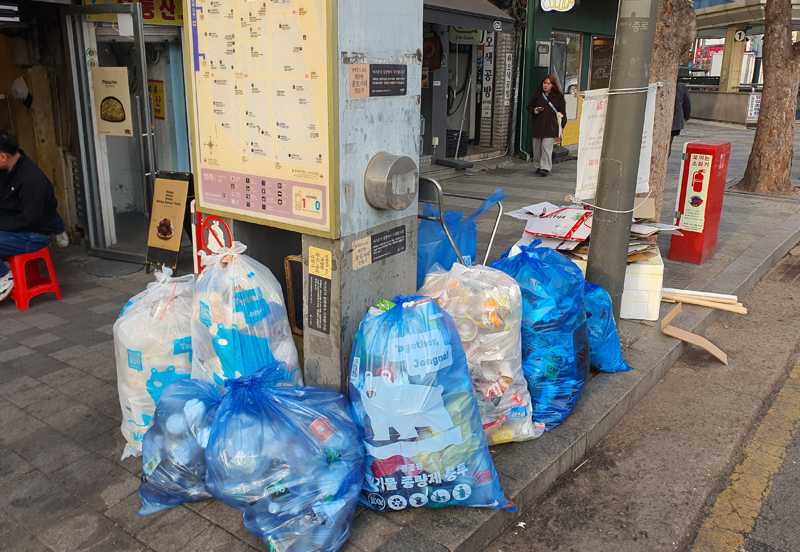
Experts say this crisis is not simply about increased demand, but a structural problem originating in the raw-material supply chain. Deok-Hwan Lee, emeritus professor in the Department of Chemistry, Sogang University, pointed out, "Naphtha is the starting point of the plastics industry. Once its supply is shaken, production disruptions will inevitably spread beyond plastic bags to packaging materials, synthetic fibers, and even pharmaceuticals." He warned, "This is a structural issue in which the supply of raw materials itself has been cut off. If it continues, a shock to both the cost of living and the broader industrial sector will be unavoidable."
[email protected] Choi Seung-han Reporter