Will Netanyahu Face Deeper Dilemmas as U.S.–Iran Talks Stir?
- Input
- 2026-03-25 10:41:28
- Updated
- 2026-03-25 10:41:28
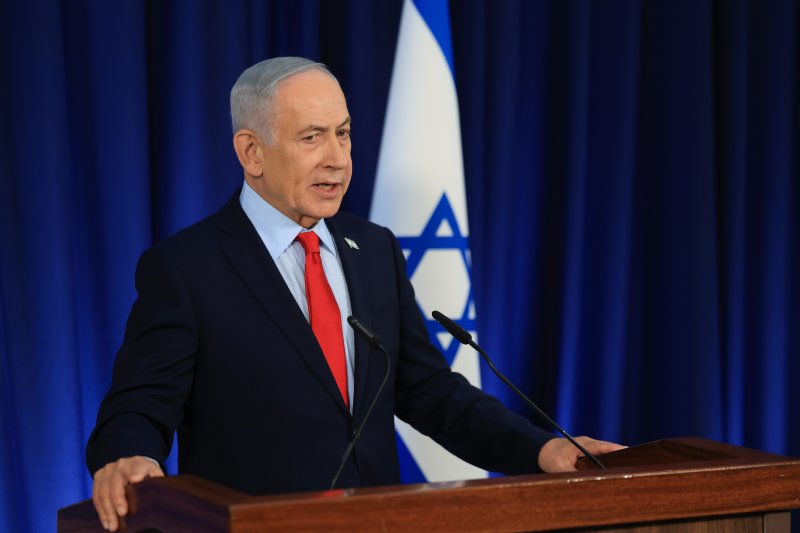
[The Financial News] As U.S. President Donald Trump has recently hinted at the possibility of negotiations with the Islamic Republic of Iran, the once-solid alignment of strategic goals between the United States and Israel is beginning to show signs of strain.
Political and military experts in Israel warn that Trump's "exit strategy" could collide with Israeli Prime Minister Benjamin Netanyahu's determination to continue the war, potentially driving Israel into diplomatic isolation.
On the 24th (local time), the British Broadcasting Corporation (BBC) reported that some in Israel are starting to see Washington's attempt to open talks with the Islamic Republic of Iran as evidence that Trump's plans are diverging from Israel's.
Michael Milstein, a former Israeli military intelligence officer and head of the Palestine Research Center at Tel Aviv University, stated, "Prime Minister Netanyahu does not want a deal." In an interview with the BBC, he added, "Netanyahu is aiming, through the war, for regime change in the Islamic Republic of Iran, but there is a clear gap between that and Trump's stance," noting, "The current battlefield reality is far removed from the promises Netanyahu has made."
He went on to say that if Trump begins to seriously press for an end to the war, Netanyahu will find himself in a dilemma with no easy way out.
Netanyahu cannot realistically continue the war without U.S. backing, yet the moment he agrees to negotiations he would, in effect, have to abandon his pledge of "complete victory."
Dan Illouz, a lawmaker from the ruling Likud party, maintained a hard-line position, saying, "Israelis also want the war to end, but it must end with the defeat of the Iranian regime." Recalling that the previous policy of "containment and maintaining the status quo" toward Hamas ultimately led to the October 7, 2023 attacks, he stressed, "We cannot repeat the same mistake with the Islamic Republic of Iran."
In fact, on the 24th the Ministry of Defense of Israel announced that it would establish a "security zone" south of the Litani River in the Lebanese Republic (Lebanon), signaling that it has no intention of easing its offensive against Hezbollah. Regardless of whether talks with the Islamic Republic of Iran move forward, Israel is pursuing a go-it-alone strategy of pressing ahead with military operations.
Experts, however, see the chances of successful U.S.–Iran negotiations as slim. Danny Citrinowicz, an Iran analyst at the Institute for National Security Studies (INSS) in Tel Aviv, assessed, "The Islamic Republic of Iran sees itself as the victor and will therefore demand massive compensation and guarantees, while Trump is under the illusion that Iran will accept all U.S. demands from the outset."
Given that Tehran believes it holds economic leverage by controlling the Strait of Hormuz, a key chokepoint for global oil shipments, he argued that the Islamic Republic of Iran is unlikely to simply accept tougher U.S. demands than in the past.
There is also debate over Trump's recent decision to withdraw his ultimatum on reopening the Strait of Hormuz after Iran threatened retaliation. Some interpret it as a sophisticated strategy aimed at stabilizing energy markets or fomenting internal divisions within the Islamic Republic of Iran. Others, however, remarked that they "would not be surprised to wake up Friday morning to news of fresh U.S. airstrikes."
[email protected] Yoon Jae-joon Reporter