Gangnam Perspective: Lisa Su, the "Ally"
- Input
- 2026-03-24 18:29:05
- Updated
- 2026-03-24 18:29:05
The plot twist in AMD’s story was something no one had foreseen. Riding the explosive demand for chips driven by the IBM Personal Computer (IBM PC), AMD accumulated cloning know-how and gradually turned its eyes to its own central processing unit (CPU) technology. After a long legal battle with Intel, AMD finally released its own Athlon CPU twenty years after its founding, and this chip beat Intel’s CPUs and came to dominate the market.
AMD’s comeback did not last long. Its brief, lightning-like moment as the number one player was soon overtaken by rivals in process technology, capital, ecosystem, and brand power. Its ill-timed acquisition of ATI Technologies (ATI), a graphics card company that did not look very promising at the time, also hastened its decline. Losses piled up and debt ballooned. The market was full of talk that AMD was finished. It was into this zombie-like AMD that today’s chief executive officer (CEO), Lisa Su, quietly stepped.
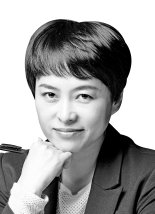
Su, who studied electrical engineering at the Massachusetts Institute of Technology (MIT), was an engineer to the core. It took her eight years to go from undergraduate to PhD. After graduating, she developed a technology at IBM that used copper instead of aluminum to form semiconductor circuits, and she quickly rose to prominence. She was then abruptly tapped as a technical adviser to the IBM CEO, and the person who took note of her at that time was Nicholas Michael Donofrio, then IBM’s vice chairman.
After retiring from IBM, Donofrio moved to a board seat at AMD. He was the one who thought of Lisa Su as the right person to save AMD, which was on the brink of collapse. For Su, who had been on a winning streak, the decision to board a sinking AMD must have come from a judgment that the challenge was still worth taking on. The first thing she tackled was a sweeping reorganization that put engineering talent at the center.
She began to overturn AMD’s old DNA of selling anything that made money. Her message was clear: "We will focus solely on high-performance computing." With the rebuilding of the CPU business as the goal, she demanded a 40% performance improvement over the previous generation from her engineers. What had seemed impossible started to materialize from 2017, her third year as CEO. The success story of AMD Ryzen processors and AMD Epyc server chips is Lisa Su’s creation.
Once she had saved AMD, the figure who likely came into sharper focus for her was Nvidia’s Taiwanese American founder, Jensen Huang, who shares Taiwanese roots with her. The two are distant cousins, but they have never met privately one-on-one. If Huang, deeply versed in development and equally adept at sales, is the kind of person who creates markets, Su, an engineer to the bone, is a tenacious leader who refuses to be outmatched in the marketplace. The ATI unit that had once driven AMD toward disaster was repurposed by Su into a rival organization to Nvidia graphics processing unit (GPU) products. Although AMD arrived a step later than Nvidia in artificial intelligence (AI), its powerful CPU capabilities and AI infrastructure, having already surpassed Intel, are making the future shape of the market highly unpredictable.
The reason to focus on Lisa Su now is to reflect on the significance of her first visit to South Korea last week. She is a CEO who has almost never personally visited foreign companies, with the exception of Taiwan Semiconductor Manufacturing Company (TSMC). While Jensen Huang was in California hosting Nvidia GTC 2026 (Nvidia GPU Technology Conference 2026), the company’s flagship event that drew global attention, Su was in South Korea. She was at Samsung Pyeongtaek Campus, wearing a cleanroom suit.
That night, Su had dinner with Chairman Lee Jae-yong at Seungjeongwon. The talks extended to prioritizing Samsung’s High Bandwidth Memory 4 (HBM4) for AMD’s next-generation AI accelerator and to producing AMD chips at Samsung’s foundry. Participants later said it felt like a night of forging a blood alliance. In a whirlwind one-night, two-day schedule, Su also visited Naver, Upstage, and government agencies. Overseas experts have even described this as the moment AMD effectively declared South Korea a forward base for the coalition challenging Nvidia. The back-to-back visits by old partner Jensen Huang and new ally Lisa Su have etched in the image of South Korea’s semiconductor industry as an "AI super subcontractor." The next summit to reach is design capability and ecosystem building. Becoming an AI powerhouse depends on what we do now.
jins@fnnews.com Reporter