"BTS Have Become a 'Second Family' to One Another... They Channel the Weight They Carry Into Creative Energy"
- Input
- 2026-03-23 18:34:06
- Updated
- 2026-03-23 18:34:06
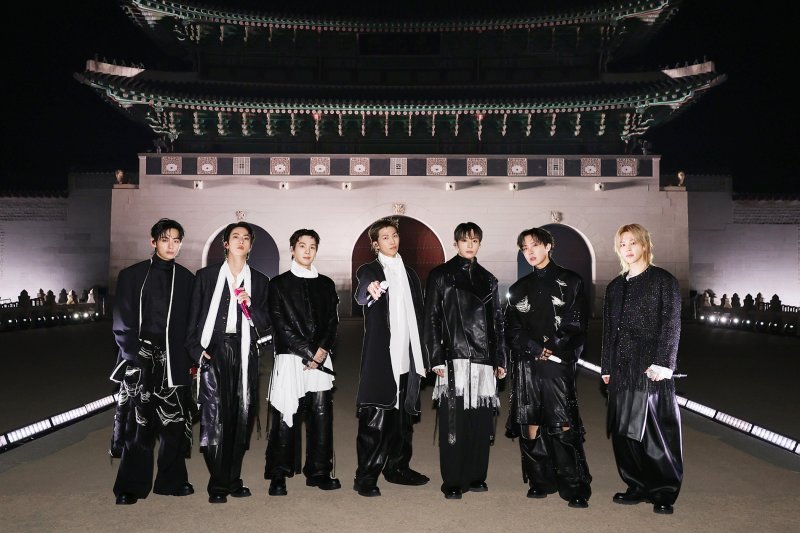
Director Bao Nguyen, who directed the Netflix feature documentary "BTS: THE RETURN," used these words as he reflected on the film, which will be released on Netflix on the 27th.
At a press conference held on the 20th at Cinecube Gwanghwamun in Jongno District, Seoul, director Bao Nguyen said, "We often overlook how much responsibility BTS carry as artists representing Korea and as global superstars," adding, "Through filming, I was able to witness firsthand how they shoulder that weight and ultimately transform it into creative energy." He continued, "The members never take their circumstances for granted. They are constantly thinking things through and approaching their work with deep consideration."
"BTS: THE RETURN" is a documentary that follows BTS as they craft their own music and make their comeback with their fifth full-length album "Arirang," released about four years after their previous studio record.
Bao Nguyen approached this project not just as a production log, but as a journey in itself. He described BTS’s path as "a long and arduous adventure, almost like an odyssey." The reactions of fans at their final concert before the members began military service became a turning point that shaped this perspective.
He explained, "Watching the emotions and reactions of ARMY, I realized that their journey is not just a series of activities, but a narrative in its own right, and I came to see the fans as companions walking that journey alongside them."
What drew his attention most in the directing process was the psychological pressure borne by the seven members. As he came to understand that the burden they feel is far heavier than many assume, the film evolved beyond a simple chronicle of music-making into a story of how they lean on one another as a "second family" and endure that weight together.
He also kept his directorial intervention to a minimum. Saying he "did not want to interfere with the flow of the story," he avoided handheld shooting and instead used tripods to create the feeling of an eavesdropping gaze, maintaining a certain distance. At the same time, he gave the members camcorders and adopted a home‐video style so he could naturally capture intimate moments that are hard to see from the outside, such as their playful teasing and brotherly bond.
He noted, "There are many documentaries that capture the beginning or the peak of a career, but it is rare to document the middle," and added, "In that sense, recording BTS as they are now was an incredibly special moment."
The film also includes more private scenes, such as the members drinking soju or exchanging rough language. On this point, Hyunjung Kim, Vice President at Big Hit Music, explained, "As they stand at the threshold of a new chapter, we wanted to show a more authentic and mature side of them," adding, "There was internal debate, but we ultimately concluded that honesty was necessary." She added, "The members themselves felt a bit strange watching the final cut, but they also expressed satisfaction with it."
jashin@fnnews.com Reporter Jina Shin Reporter