From Factory Brain to Muscles with Homegrown Technology: Korea Kicks Off Physical AI Localization
- Input
- 2026-03-23 18:25:52
- Updated
- 2026-03-23 18:25:52
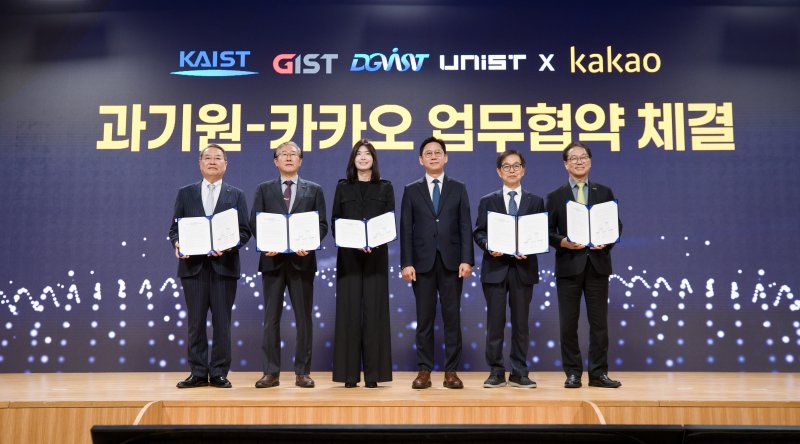
On the 23rd, the Ministry of Science and ICT unveiled a “Physical AI Integrated Platform” at KAIST in Daejeon Metropolitan City. The platform is designed to replace foreign-made solutions currently used in manufacturing plants with homegrown technologies. Based on this, the ministry also presented a draft “Strategy for Securing Core Competitiveness in Physical AI” to position Korea as a global leader in Physical AI.
The strategy builds a full-cycle framework that runs from “technology acquisition → demonstration → industrial deployment → global expansion,” with a focus on turning Physical AI into a driver of industrial competitiveness. Viewing the next three years as a golden window that will determine global leadership in Physical AI, the government plans to concentrate investment over this period in high-impact areas to secure world-class Physical AI capabilities.
■ Developing a Foundation Model for Robotics and a “world model”
To achieve this, the government will focus on four key initiatives. First, it will begin securing three world-class common base technologies to realize Physical AI capable of performing tasks traditionally done only by humans in industrial, public, and home settings.
It plans to develop a versatile “Foundation Model for Robotics” that can autonomously plan and carry out long-duration, high-precision tasks like a human worker. To ensure that this model operates in the real world without errors or delays, the government will also develop a “world model” that generates large-scale training data and supports virtual experiments. In addition, it will build a high-performance, low-power, low-latency computing platform based on AI semiconductor technology.
The government will also develop core humanoid technologies, as well as network and security technologies, to ensure smooth deployment in the field and guarantee safety. Focusing on key areas closely tied to everyday life—such as logistics, agriculture, disaster and safety, and care and home services—it will immediately introduce and demonstrate Physical AI technologies as they are developed each year, with the aim of delivering tangible results within one to two years.
Second, the government will develop manufacturing process automation technologies to strengthen the competitiveness of Korea’s flagship manufacturing sector. To implement AI-enabled equipment, it will collect sensor-based data, behavioral data for robots that can work like skilled technicians, and both real-world and virtual/synthetic data needed to run AI systems that manage entire factories.
Based on these datasets, Korea aims to independently secure autonomous precision manufacturing technology that allows production equipment to optimize its own control, as well as factory operation optimization technology that enables uninterrupted, flexible production.
By systematically integrating these homegrown Physical AI technologies, the government plans to build advanced autonomous factories. After applying them to three core industries—automobiles, precision manufacturing, and shipbuilding—it will then expand their use beyond Korea to markets around the world.
■ Building a Physical AI diffusion ecosystem through the National Technology AX Industry-Academia Cooperation Program
The government will also work to build an ecosystem for the spread of Physical AI. It plans to support corporate growth by identifying and improving on-site regulations, attracting investment, and assisting overseas expansion. At the same time, it will establish a comprehensive talent development system for Physical AI, ranging from master’s and doctoral-level experts to frontline practitioners. To secure leadership in global standards, the government will support cooperation with international standardization bodies and develop benchmarks for objective performance evaluation. It will also build an institutional framework to ensure the safety of Physical AI technologies and to improve related regulations. Finally, the government will establish a cooperative framework that brings together capabilities across ministries, industry, academia, and research institutes. By building collaboration mechanisms among Physical AI-related associations and alliances, it aims to link demand and supply and accelerate the spread of Physical AI. It also plans to expand inter-ministerial cooperation so that Korea’s proprietary Physical AI technologies can permeate all industries and everyday life. Deputy Prime Minister and Minister of Science and ICT Baek Young-hoon stated, “By pooling the capabilities of industry, academia, and research, we are launching a full-cycle support system that spans from the development of proprietary full-stack Physical AI technologies to their deployment in real-world settings. We must now move beyond merely developing technologies to transforming industries and exporting them.” He added, “As countries around the world compete to use artificial intelligence as a strategic technology for global dominance, I am convinced that the AX ecosystem will become a key forward base for Korea’s national technologies across diverse fields such as robotics, defense, and secondary batteries. I hope this will serve as a milestone for Korea to establish itself as one of the world’s top three AI powers.” To support these goals, a “Business Agreement Ceremony between the Four Major Institutes of Science and Technology and Regional AX Partner Companies” was also held that day. Leading companies from various sectors joined the joint research initiative, including LIG Nex1, Korea Aerospace Industries (KAI), Celltrion, Bioneer, Rebellions, Panecia, Korea Electric Power Corporation (KEPCO), POSCO Future M, SEBANG Lithium Battery, HL Mando, SL Corporation, L&F, Partron, HD Korea Shipbuilding & Offshore Engineering (HDKSOE), and POSCO Holdings. Together, they will drive AI transformation across all areas of national technology.
jiany@fnnews.com Reporter Yeon Ji-an Reporter