[Editorial] The ‘Three Highs’ Crisis Facing the Next BOK Governor
- Input
- 2026-03-23 18:13:22
- Updated
- 2026-03-23 18:13:22
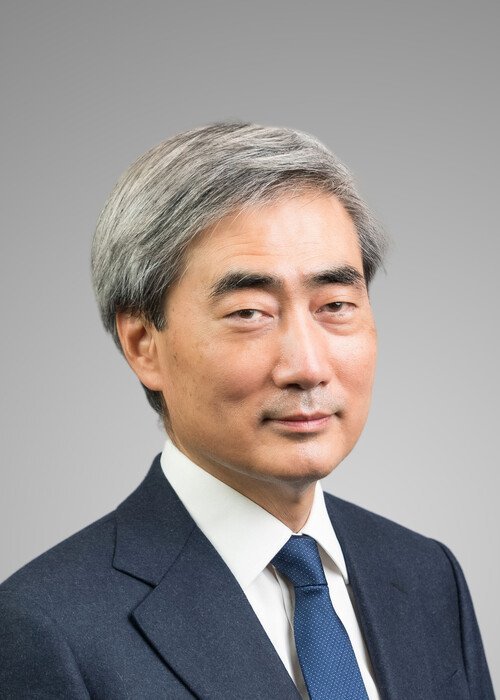
Shin is a globally recognized authority on international finance and macroeconomics, having served as Head of the Monetary and Economic Department at the Bank for International Settlements (BIS). Yet no matter how outstanding an expert may be, there are limits to what one can do in the face of a major market crisis. In fact, he is set to take office at a time when economic uncertainty at home and abroad is reaching a peak.
On the 23rd, the US Dollar–South Korean Won exchange rate briefly climbed above 1,510 won, repeatedly hitting its highest levels since the global financial crisis. International oil prices continue to soar in the wake of the Iran War, and uncertainty over U.S. tariff policy is adding to the strain. The so-called "three highs" of inflation, a weak currency, and high interest rates must be navigated with great care. If the damage to the global supply chain becomes prolonged, even Korea’s key export industries such as the semiconductor industry and the automobile industry could be hit. The risk that slower growth will threaten the broader economy must also be taken very seriously.
In particular, the Bank of Korea (BOK) governor is constantly required to make difficult, balanced judgments between price stability and economic growth. To curb inflation, interest rates must be raised, but higher rates inevitably dampen growth. For now, inflation appears relatively stable in the 2% range, yet the surge in oil prices is pushing inflationary pressures higher. Some in the market are already predicting that the BOK will raise rates once or twice this year. Any rate hike could deliver a direct blow to the economy. Given Korea’s current conditions, both raising and cutting interest rates carry significant risks.
Even so, the Bank of Korea (BOK) must not lose sight of its core role. In the past, the BOK has often been out of step with the government in debates over growth. At times, the central bank’s independence in setting monetary policy has appeared to waver between a government focused on supporting growth and a central bank whose mission is to prioritize price stability. What is clear is that the BOK’s role is not to simply fall in line with the government’s economic policy. Its very reason for being lies in faithfully carrying out the central bank’s unique mandate: safeguarding price stability and the soundness of the financial system.
Of course, the environment for making economic policy decisions has changed dramatically from the past. Complex uncertainties are mounting, and policymakers must take a broader view. The BOK needs to move beyond a rigid focus on short-term inflation control. With structural challenges such as declining potential growth due to low birthrates and an aging population, and stalled economic reforms, there is only so much that monetary policy alone can achieve. This is why an era has arrived in which a multifaceted approach, grounded in close communication with both the government and the market, is essential.
At this moment, it would be difficult for anyone to steer the Bank of Korea (BOK) through the storm. Achieving the twin goals of stabilizing prices while also sustaining growth is anything but easy. We hope the next governor will, with cool-headed judgment and firm principles, lead monetary policy in a way that keeps the market alive.