[Editorial] National Debt Tops 6,500 Trillion Won; Supplementary Budget Must Be Kept to the Bare Minimum
- Input
- 2026-03-23 18:13:18
- Updated
- 2026-03-23 18:13:18
Particular attention should be paid to the exceptionally rapid increase in central government debt. While household and corporate debt rose 3.0% and 3.6% respectively over the past year, government debt surged by nearly 10%. This can be seen as the result of aggressive expansionary fiscal policy implemented by the Lee Jae-myung administration to stimulate the economy. Two rounds of consumption coupons did help to some extent in thawing the chill in neighborhood commercial districts, but the resulting increase in government debt was unavoidable.
The speed of the debt buildup is an even greater problem. The Institute of International Finance (IIF) reports that the ratio of government debt to gross domestic product (GDP) climbed to 48.6% at the end of the fourth quarter last year. That is a jump of 5.0 percentage points in just one year, the highest on record. South Korea’s government-debt-to-GDP ratio is still lower than that of many major economies, but its steep upward trajectory is precisely what overseas institutions keep warning about. The ratio had gradually declined after 2024, falling to 43.6% at the end of the first quarter last year, but then rebounded and has now risen to just below 50%. At the current pace, breaking through the 50% mark could happen in no time.
A sharp increase in national debt undermines the country’s credit rating and weighs on the entire economy, including prices and interest rates. Inflation, in particular, could become a powder keg not only for us but for the global economy. If the conflict in the Middle East drags on, high oil prices will send raw material costs soaring, and the prices of daily necessities will follow suit, crushing the livelihoods of ordinary people for an extended period. With prices surging, financial authorities will have to contemplate raising interest rates rather than cutting them.
Meticulous efforts are urgently needed to ensure that government finances do not further stoke unstable prices. The announced supplementary budget must not degenerate into cash handouts and populist spending aimed at winning votes ahead of the local elections. Great care is required. The central government and the ruling party say they are pursuing the extra budget to minimize real-economy shocks in an emergency. In line with that stated purpose, funds should be tailored strictly to items that mitigate economic damage.
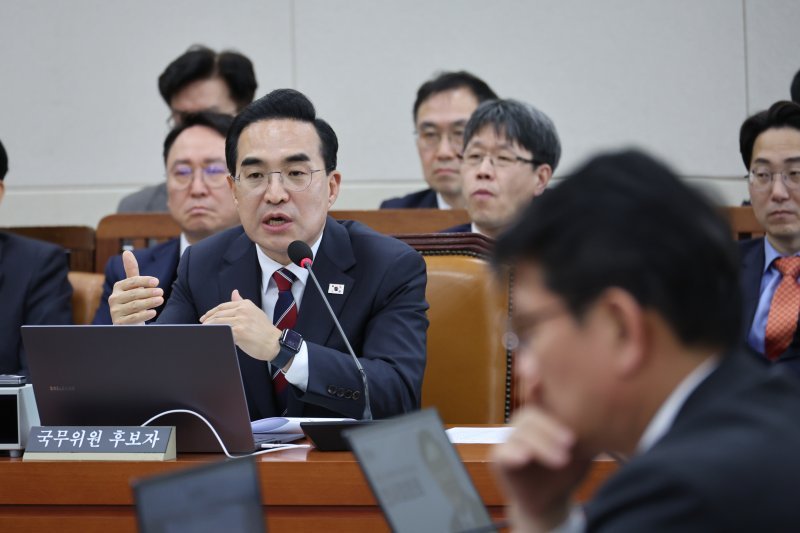
The authorities say the supplementary budget will be financed with surplus tax revenue rather than new government bonds, but even surplus revenue must not be used carelessly. Only with a firm resolve to spend tax money solely where it is absolutely necessary can we begin to rein in runaway debt. The burden on Park Hong-keun, the nominee for minister of the Ministry of Planning and Budget, should be that much heavier.
The same applies to household and corporate debt. Although the growth of household debt has slowed, its ratio to GDP remains among the highest in the world. According to the IIF, South Korea’s household-debt-to-GDP ratio stood at 89.4% at the end of last year, the second highest after Canada’s 100.4%. Corporate debt is also high at 110.8% of GDP. If households and companies cannot service their debts, the strain will spill over into the financial sector, creating a crisis of a different nature from a simple economic downturn. Warning signs of rising loan delinquencies are already appearing in many places. Household debt is shackling domestic demand. All economic actors must internalize a sense of alarm about the explosion of debt, or the country will sink even deeper into the mire of low growth.