"40,000 ARMY gathered, but we went hungry"... Mass disposal of food near BTS concert venue
- Input
- 2026-03-23 16:09:34
- Updated
- 2026-03-23 16:09:34
According to The Financial News, the BTS (Bangtan Boys) concert held on the 21st triggered a stark "polarization" in downtown businesses, with some seeing sales surge while others suffered inventory losses. Small business owners who were still stuck with stock two days after the show lamented that "it was practically like being closed."
On the 23rd, convenience store chains reported that stores close to the venue saw a sharp spike in demand for gimbap, sandwiches, bottled water, and batteries, driving sales sharply higher. A GS25 outlet near Gwanghwamun Intersection saw sales jump by up to 4.8 times, while some key CU Convenience Store (CU) branches recorded increases of five to six times. Long waits for spectators concentrated spending on ready-to-eat meals and daily necessities.
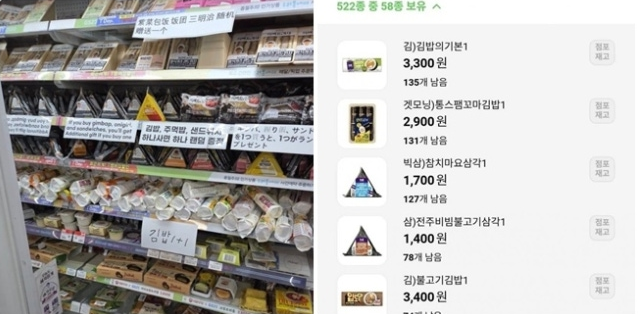
In contrast, stores cut off by crowd-control measures were left with heavy inventory burdens. At some convenience stores near Gwanghwamun, large amounts of fresh food such as gimbap and sandwiches remained unsold after the concert and were headed for disposal. Because of their short shelf life, many items did not sell out even with discounts and had to be thrown away within one or two days.
A convenience store manager in his 40s who runs a shop near Gwanghwamun Square said, "There were around 40,000 people in the audience, but because of the controls, access to the area was blocked and the surrounding roads were left empty," adding, "It was virtually like being shut down."
Observers say the situation stemmed from a mix of uncertain demand forecasts and stringent control measures. Orders are usually placed by franchisees in consultation with headquarters, based on data from past events. This time, however, actual foot traffic dropped sharply, while some stores had ordered more than 10 times their usual volume.
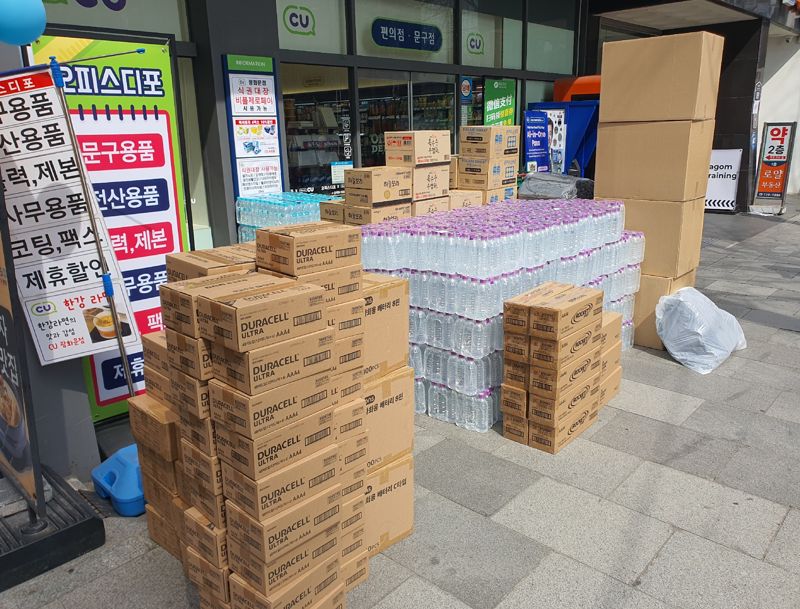
Even two days after the concert, on the 23rd, the excess stock had not been fully cleared. That afternoon, boxes of bottled water and batteries awaiting return were still piled up in front of a convenience store near Gwanghwamun.
Leftover items are handled through transfers between stores, returns, or disposal support from headquarters, but fresh food tends to be discarded at a higher rate. An industry official explained, "We are providing disposal support in consultation with franchisees in advance, and some products will be moved to other stores to be sold." However, because the support does not fully cover the losses, franchise owners are still bearing a significant burden.
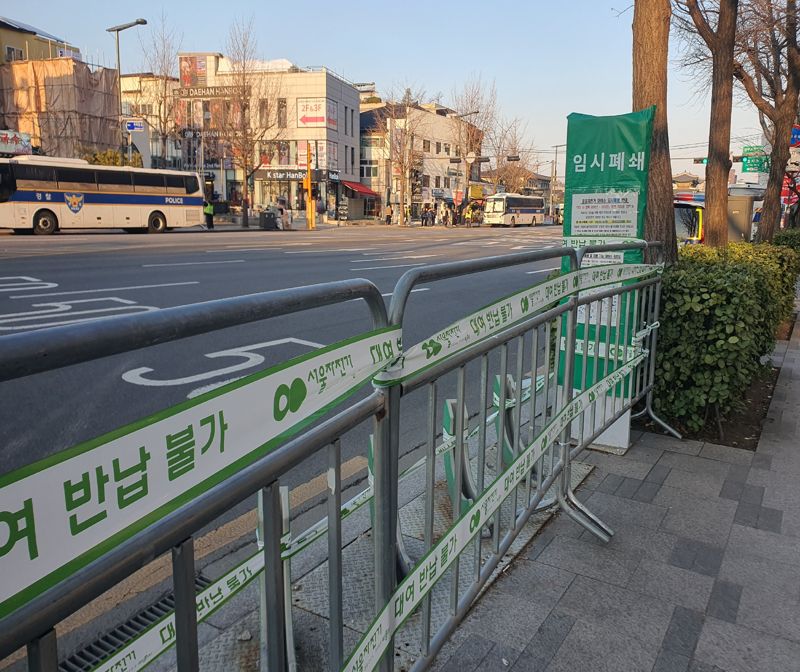
The damage was not limited to the Gwanghwamun area. Commercial districts in Bukchon Hanok Village and Seochon between Gyeongbokgung Palace and Anguk Station were also hit hard, as east–west traffic controls and separated pedestrian routes cut off customer inflows.
A café owner in his 40s near Anguk Station said, "With the area around Gyeongbokgung Palace practically a vacuum, we had almost no customers," adding, "We had prepared desserts expecting concert-goers, but most of them were left over." A self-employed business owner in Seochon likewise noted, "Expecting more weekend customers, we prepared nearly twice the usual amount of ingredients, but most of it remained and had to be discarded or sold at a discount."
Experts describe this as a case of "disconnection between demand and consumption." Lee Hong-joo, a professor in the Department of Consumer Economics at Sookmyung Women's University, said, "Demand increased, but because of access restrictions, it did not translate into actual transactions. It is a textbook example," adding, "Potential demand went up, but realized demand went down." Lee went on to point out, "Since risks such as inventory burdens are concentrated on franchisees, headquarters need to improve the clarity of their demand forecasts and information sharing."
[email protected] Choi Seung-han Reporter